P0191 Code: Fuel Rail Pressure Sensor Range/Performance
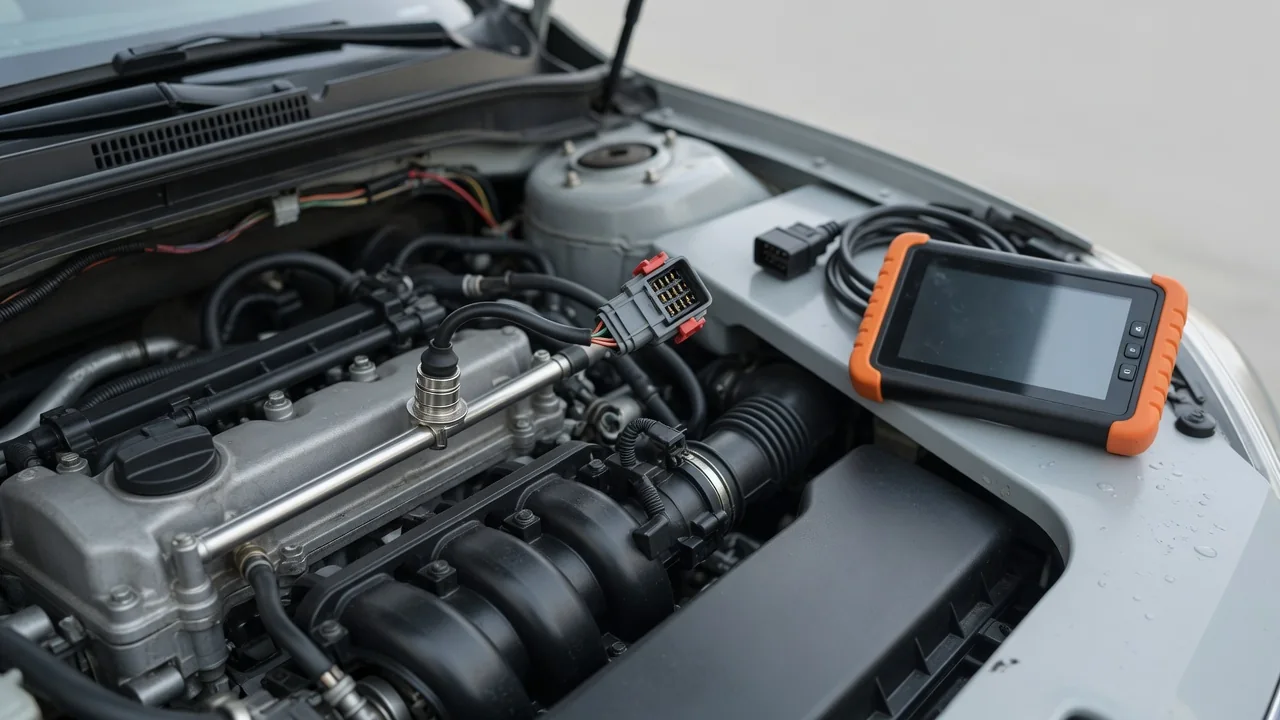
A P0191 code means the engine control module has flagged the fuel rail pressure sensor signal as untrustworthy. It does not mean a specific part has failed. This guide covers what the code means, the symptoms that can come with it, and the likely causes. It also explains how related codes such as P0190, P0192, P0193, and P0194 fit in, and how a professional diagnosis is done safely.
What P0191 Means for the Fuel Pressure Signal
The standard generic description for P0191 is fuel rail pressure sensor A circuit range/performance. The control module compares the sensor signal with what it expects under current conditions, such as engine speed, load, and commanded fuel pressure. If the reported value is implausible, changes too slowly, or disagrees with the fuel pressure regulation strategy, the module stores the code. The "A" label matters on engines with more than one pressure sensor, so finding out which sensor the module means is part of the diagnosis.
Monitoring criteria and test procedures differ by manufacturer. Check service information for the exact year, make, model, and engine before interpreting the code. A range/performance fault only says the signal failed a plausibility check. The sensor may be accurate and reporting a real pressure problem, or the signal may be distorted somewhere between the sensor and the module. Other stored codes can help narrow this down, but the main question is still why the module rejected this particular signal.
Symptoms That Can Accompany P0191
The most common sign of a P0191 code is an illuminated check-engine light. Depending on how far the reading strays from expectations and how the module responds, a driver may also notice hard starting, long cranking, rough running, hesitation under acceleration, reduced power, or stalling. Some engines switch to a protective reduced-power mode when the module cannot trust fuel pressure data. Other vehicles show no obvious drivability change at all, especially when the fault is marginal or appeared only briefly.
P0191 symptoms overlap with many fuel and ignition problems, so they cannot show whether the cause is electrical, a fuel delivery shortfall, or a regulation fault. What symptoms can do is point a technician toward the conditions that matter. Note whether trouble appears on cold starts, at idle, under hard acceleration, or only after the engine is fully warm. Also note whether it follows refueling, rain, or rough roads. That record makes the fault easier to reproduce during testing.
Faults That Can Disrupt Fuel Rail Pressure Readings
The module judges fuel pressure through a single voltage signal, so anything that distorts that signal can set the code. A worn sensor may drift or respond slowly. A chafed wiring harness, corroded or loose connector terminals, a weak reference voltage, or a poor ground can shift the reading until it no longer matches actual conditions. Sensors often share reference and ground circuits, so a problem elsewhere on a shared circuit can sometimes affect this reading too.
The signal may also be accurate while the actual fuel pressure is wrong. A weak supply, a restriction, or a regulation problem can keep actual fuel pressure away from commanded fuel pressure, and confirming that requires vehicle-specific testing. An intermittent electrical fault may disappear after the code sets, leaving a stored code while the engine runs normally. None of these possibilities justifies replacing a sensor, pump, or regulator based only on the code or the symptoms. Each one needs direct evidence.
Understanding Related P0190, P0192, P0193, and P0194 Codes
Related codes help interpret the diagnostic record. The standard description for P0190 is fuel rail pressure sensor A circuit malfunction. P0192 means a low circuit input, and P0193 means a high circuit input. These labels describe the electrical signal, not measured pressure. A low input does not confirm low fuel pressure, and a high input does not confirm excessive pressure. P0194 indicates an intermittent sensor A circuit fault without naming a failed component. Always confirm the manufacturer's wording.
P0193 symptoms can resemble those of P0191: a warning light, hard starting, rough running, or reduced power. Those complaints alone cannot confirm a high-input fault. Technicians record every accompanying code because the combination tells them something. A circuit code alongside P0191 may shift attention toward wiring, while unrelated fuel or sensor codes may suggest a broader cause. Manufacturer diagnostic priorities often say which code to address first, which avoids wasted effort on a secondary fault.
How a Technician Diagnoses P0191
Diagnosis starts by preserving evidence. Stored and pending codes, freeze-frame data, and the driver's symptom history should be saved before anything is cleared. Freeze-frame data shows the speed, load, temperature, and pressure readings at the moment the fault set. The technician then reviews fuel pressure scan data under similar operating conditions. The reported value is compared with vehicle-specific specifications and with commanded fuel pressure where the module provides it. A reading that lags behind or disagrees with the command narrows the search.
Scan-tool pressure values come from the same sensor that is under suspicion. Independent checks with approved professional equipment may be needed to learn whether actual pressure matches the reading. From there, a technician tests circuit integrity, sensor behavior, fuel delivery, and pressure regulation using the manufacturer's procedures. After a repair, the vehicle should be driven under the conditions that originally set the code. The technician then checks monitor status and code memory again to confirm the fault has not returned.
Safe Observations and When to Stop Driving
Owner checks should be limited to observation. With the engine off and cool, note warning lights, symptoms, and any recent fuel system or engine work. Look for visible damage you can see without disturbing anything, such as a disconnected connector or a rubbed harness. P0191 alone cannot tell you whether it is safe to keep driving. Stalling, severe hesitation, or major power loss can be dangerous in traffic, so stop somewhere safe and arrange assistance rather than pushing on.
If you smell fuel or see wetness or dripping around the engine or under the vehicle, shut the engine off and do not restart it. Keep ignition sources away and arrange professional help. Fuel systems can hold dangerous pressure long after the engine is shut off. Do not loosen fuel lines, remove the pressure sensor, or attempt improvised pressure tests. Leaving pressure-related work to a trained technician protects both you and the vehicle while the fault is properly identified.