P0152 Code: Bank 2 Sensor 1 High Voltage, Symptoms and Diagnosis
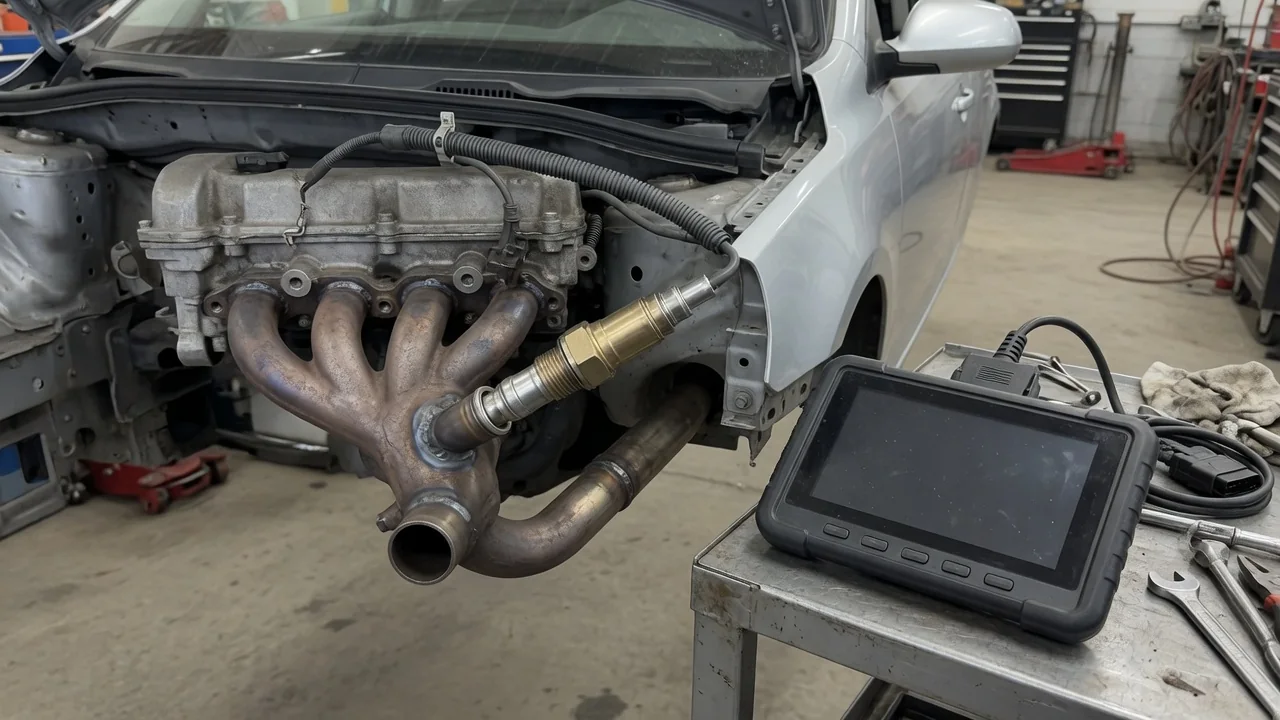
P0152 points to a high-voltage condition on Bank 2 Sensor 1, the upstream oxygen sensor on the bank that does not contain cylinder 1. The code is a starting clue, not a failed-part verdict. P0152 symptoms can range from a check-engine light alone to rough running, hesitation, or a fuel odor. Confirm bank layout, sensor type, and the vehicle's own code-setting rules before treating any reading as a rich exhaust condition.
What P0152 Means for Bank 2 Sensor 1
This diagnostic trouble code identifies an oxygen sensor circuit high-voltage condition for Bank 2 Sensor 1. That label describes what the control module reported, not which hardware has failed. Bank 2 is the cylinder bank that does not contain cylinder 1, and Sensor 1 is the upstream oxygen sensor mounted before the catalytic converter. High signal voltage can come from a genuinely rich exhaust condition or from an electrical problem in the circuit, so the stored code still needs supporting diagnostic evidence.
Vehicle-specific service information is required before those readings are interpreted. Bank location, sensor technology, code-setting criteria, and expected signal behavior all vary by manufacturer and engine family. A voltage that looks high on one design may be normal on another, and some sensors report in ways that do not map to a single universal scale. Confirming those details first keeps a circuit complaint from being mistaken for a failed sensor or an assumed fueling problem.
Symptoms That Can Accompany P0152
An illuminated check-engine light can accompany P0152. Drivers may also notice a rough idle, hesitation under load, reduced fuel economy, or a fuel odor at the exhaust. Those P0152 symptoms are not guaranteed on every trip. Some vehicles run with no obvious drivability change while the code is stored, and the presence of the code does not establish how severe any of those complaints will be.
The same complaints can come from many other faults, so they cannot identify a defective oxygen sensor by themselves. Note when the warning appeared and whether the engine felt different during startup, warm idle, or ordinary driving. Do not deliberately provoke a fault to make symptoms worse. A calm record of when the light came on and how the vehicle behaved under normal use is more useful than forcing a condition that could mask the original problem.
Faults That Can Produce a High Sensor Signal
When the vehicle's sensor design supports that interpretation, a genuinely rich exhaust condition can drive a high signal. Excess fuel in the exhaust can keep the upstream oxygen sensor on Bank 2 reporting a high value if the sensor and circuit are working as intended. That reading still has to match freeze-frame data, fuel trims, and other evidence. The code by itself does not prove the mixture is rich, and it does not rank one cause above another.
A sensor fault, damaged oxygen sensor wiring, or a connector problem can produce a misleading high signal even when the exhaust is not rich. Fuel-delivery and engine-management problems can also contribute when other tests support excessive fueling. None of those possibilities is assumed from the code number, and each remains only a candidate until supporting data agrees. Replacement of any part should wait for test results rather than follow P0152 alone.
Useful Information to Gather Before Diagnosis
Save all stored and pending codes and any available freeze-frame data before clearing anything. Freeze-frame data captures engine speed, load, temperature, and related values at the moment the code was set, which later tests can compare against live readings. Record recent repairs, when the warning light first appeared, and any change in engine behavior or fuel use. Related fuel-system, misfire, or sensor codes can change the diagnostic sequence, so the full code list matters as much as P0152 itself.
With the engine off and cool, a limited visual check of accessible connectors is reasonable. Look only for obvious disconnected plugs or damaged oxygen sensor wiring that can be seen without reaching into hot exhaust parts. Do not touch exhaust components and do not work beneath an unsupported vehicle. If a connector is unplugged or a harness is clearly crushed, that finding belongs in the notes. Anything beyond that accessible inspection belongs in a proper diagnostic setting.
How Professional Testing Narrows the Cause
Professional diagnosis starts with live sensor data, fuel trims, operating temperature, and freeze-frame conditions, all judged against the correct vehicle specifications. Sensor technology matters because different oxygen-sensor designs do not share one universal voltage threshold. Applying a single high-voltage number to every vehicle can misclassify a normal signal. The technician compares Bank 2 Sensor 1 behavior with the opposite bank and with commanded fueling so a high reading is not treated in isolation.
Circuit checks and controlled response testing help separate an electrical fault from an actual rich exhaust condition. A harness short, open, or poor ground can pin a signal high even when the mixture is not rich. When evidence points to excess fueling, fuel-system testing follows rather than automatic sensor replacement. The upstream oxygen sensor should be replaced only after its failure is confirmed, not because P0152 is present. Confirmation keeps a good sensor from being swapped for a wiring or fueling problem.
Driving Decisions and Repair Verification
Whether the vehicle is suitable to drive depends on symptoms and warning behavior. A steady check-engine light with otherwise normal operation still warrants prompt diagnosis, because an unresolved fueling problem can damage the catalytic converter. Stop safely and arrange assistance if the light is flashing, the engine shakes severely, power drops substantially, smoke appears, or a strong persistent fuel smell is present. Those signs go beyond a stored P0152 and should not be treated as a wait-and-see issue.
After work is completed, verification uses scan data, a fresh code check, and vehicle-specific monitor completion. Clearing the light alone does not prove the fault is fixed. Fuel trims and Bank 2 Sensor 1 response should return to the pattern expected for that vehicle under the same conditions captured in freeze-frame data. If the high signal voltage returns, or if fuel-system and oxygen-sensor monitors cannot complete without P0152, the original cause was not resolved.