P0148 and P0149 Codes: Fuel Delivery and Fuel Timing Errors
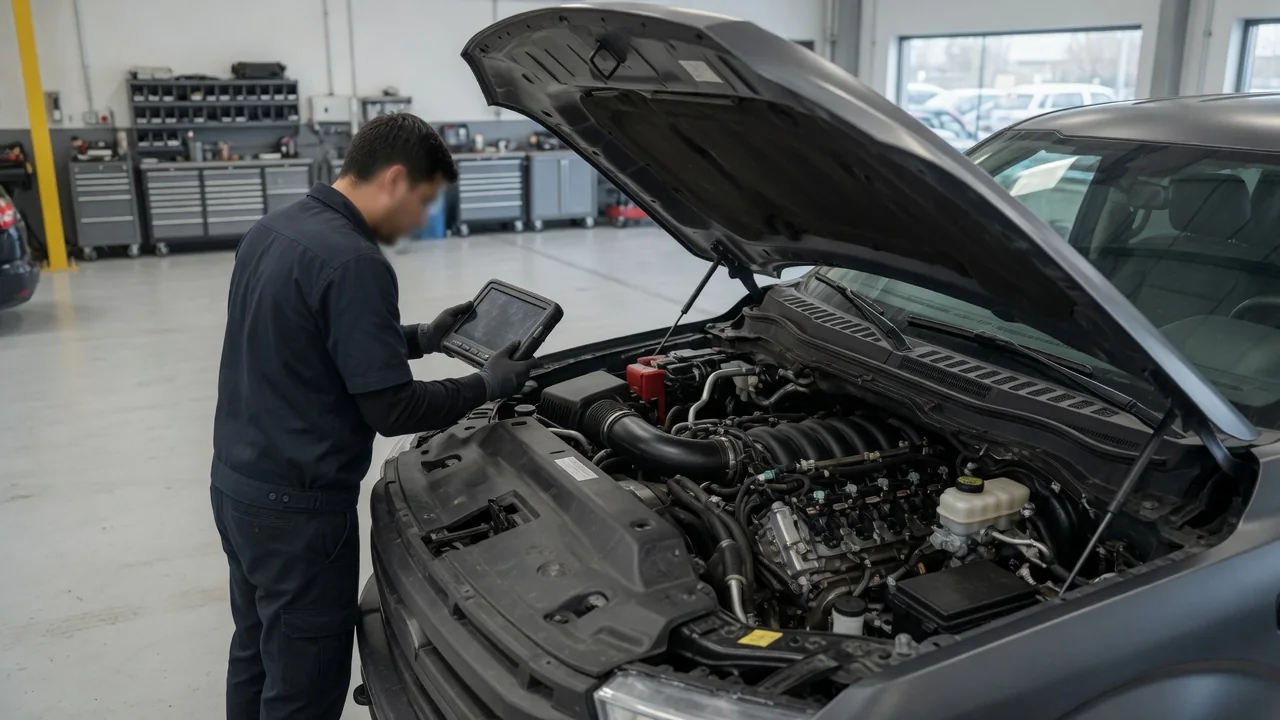
P0148 and P0149 are diagnostic trouble codes that often appear on diesel engines when the control module sees a fuel delivery error or a fuel timing error. Neither code names a failed part. Their exact labels and setting conditions depend on year, make, model, and engine, so those details must be confirmed before any interpretation. The codes point to monitored fuel-system behavior that fell outside expected limits.
What P0148 Fuel Delivery Error Means
P0148 is commonly labeled Fuel Delivery Error, yet that phrase is only a starting point. The module that stores it follows manufacturer logic for a specific year, make, model, and engine, so the definition, enable criteria, and trip conditions must be verified in the vehicle's service information before the code is treated as a diagnosis. On many diesel fuel systems the monitor compares expected supply or rail behavior with what sensors report. If that comparison falls outside programmed limits, P0148 can set even when no single part has been proven failed.
The code is evidence that a monitored fuel-delivery condition left the expected window, not a command to replace a pump, injector, or fuel pressure sensor. Which pressure, supply, and control checks apply depends on the verified engine and diesel fuel system design. A common-rail layout, a unit-injector arrangement, and a mechanically governed injection pump do not share the same tests. After the architecture is identified, commanded fuel pressure, actual fuel pressure, supply volume, and related electrical circuits can be evaluated in the order the diagnostic procedure specifies.
What P0149 Fuel Timing Error Means
P0149 is commonly labeled Fuel Timing Error, and that label likewise requires vehicle-specific confirmation. The diagnostic procedure, the sensors used for feedback, and the conditions that allow the monitor to run all vary with engine family. Fuel timing describes when fuel delivery or injection occurs relative to piston position and commanded injection timing. Until the identified engine's mechanism is known, a generic timing explanation can send testing toward hardware the vehicle does not use.
On the confirmed design, timing may be inferred from cam or crank correlation, pump position, solenoid response, or rail-event data rather than from a single dedicated timing sensor. P0149 by itself does not establish a mechanical timing fault and does not justify replacing an injection pump. Wiring, control signals, and software limits can produce the same stored result. The code should be read as a request to follow the manufacturer sequence and gather supporting evidence before any hardware is condemned.
Symptoms and Conditions That Need Immediate Attention
A vehicle that stores P0148 or P0149 may show hard starting, rough running, reduced power, stalling, or a warning light, but none of those symptoms is guaranteed. Some engines set the code with little more than a lamp, while others hesitate under load. The same complaints appear with many other diesel fuel system faults, so drivability alone cannot confirm either code's underlying cause. Freeze-frame data captured when the monitor failed is more useful than trying to match a symptom list to a part.
Continued driving cannot be judged safe from the code number alone. Visible fuel leakage, a strong fuel odor, repeated stalling, or severe power loss that makes traffic movement unsafe are reasons to stop in a safe location and arrange assistance. Diesel fuel on hot surfaces and loss of propulsion in traffic create hazards that a scan tool reading does not describe. Until a technician evaluates the vehicle, treat those conditions as immediate safety concerns rather than as proof of a particular failed component.
Possible Causes Within the Vehicle’s Fuel System
For P0148, the vehicle-specific diagnostic procedure may point toward restricted fuel supply, air entering the low-pressure circuit, fuel contamination, pressure-control faults, or a fuel pressure sensor and its wiring. Filters, lines, and tanks can starve a pump without the pump itself being defective. Water or debris in diesel fuel can disturb metering and pressure regulation. Sensor readings that disagree with commanded fuel pressure versus actual fuel pressure can also set a fuel delivery error when the hydraulic side is still capable.
For P0149, timing-control hardware, feedback signals, wiring, and mechanical synchronization belong in the discussion only after the engine's system design is confirmed. Recent fueling, filter service, or related repairs can supply diagnostic context without proving causation. Finding both P0148 and P0149 does not establish a shared cause; each code's setting conditions and supporting evidence must be assessed. A supply problem can disturb injection timing on some designs, yet that overlap still requires separate confirmation rather than assuming one failed part explains both codes.
Safe Information to Collect Before Diagnosis
Before anything is cleared, record all stored and pending codes, freeze-frame data, and warning messages. Freeze-frame snapshots often include engine speed, load, temperature, and, where the scan tool supports it, commanded fuel pressure and actual fuel pressure or injection timing at the moment the monitor failed. Note whether symptoms appear during cold starts, warm starts, idling, or acceleration, and write down recent fueling and service history. That context helps a technician reproduce the condition instead of chasing a code that no longer has supporting data.
Owner checks should stay limited to accessible visual observations with the engine off, such as wetness around fittings or damaged connectors. Do not touch suspected leaks, loosen fuel lines, hunt for leaks by hand, attempt timing adjustments, disconnect components, or keep cranking the engine. Diesel fuel pressure can remain hazardous after shutdown, and high-pressure circuits are not a do-it-yourself inspection point. Photographs of warning messages and a written symptom log are safer contributions than any attempt to bleed, prime, or time the system at home.
Professional Testing and Repair Verification
A technician should follow the vehicle-specific diagnostic sequence and evaluate related codes that may affect fuel delivery or injection timing. Scan data that shows commanded fuel pressure against actual fuel pressure, or commanded versus reported timing where those parameters exist, guides which circuit to test next. Those readings still do not prove a component has failed on their own. Related codes for sensors, pumps, or control circuits can change how a fuel delivery error or fuel timing error should be interpreted.
Professional work then uses suitable equipment for supply, electrical, pressure-control, and timing tests under safe procedures, rather than guesswork around high-pressure diesel hardware. After a repair, verification means confirming normal operation under the conditions that originally set the monitor and checking that P0148 or P0149 does not return. Clearing a warning light without a road test or monitor completion is not confirmation. The same freeze-frame clues used at the start should be compared with post-repair data so the original fault path is actually closed.