P0141 Code: O2 Sensor Heater Circuit Bank 1 Sensor 2
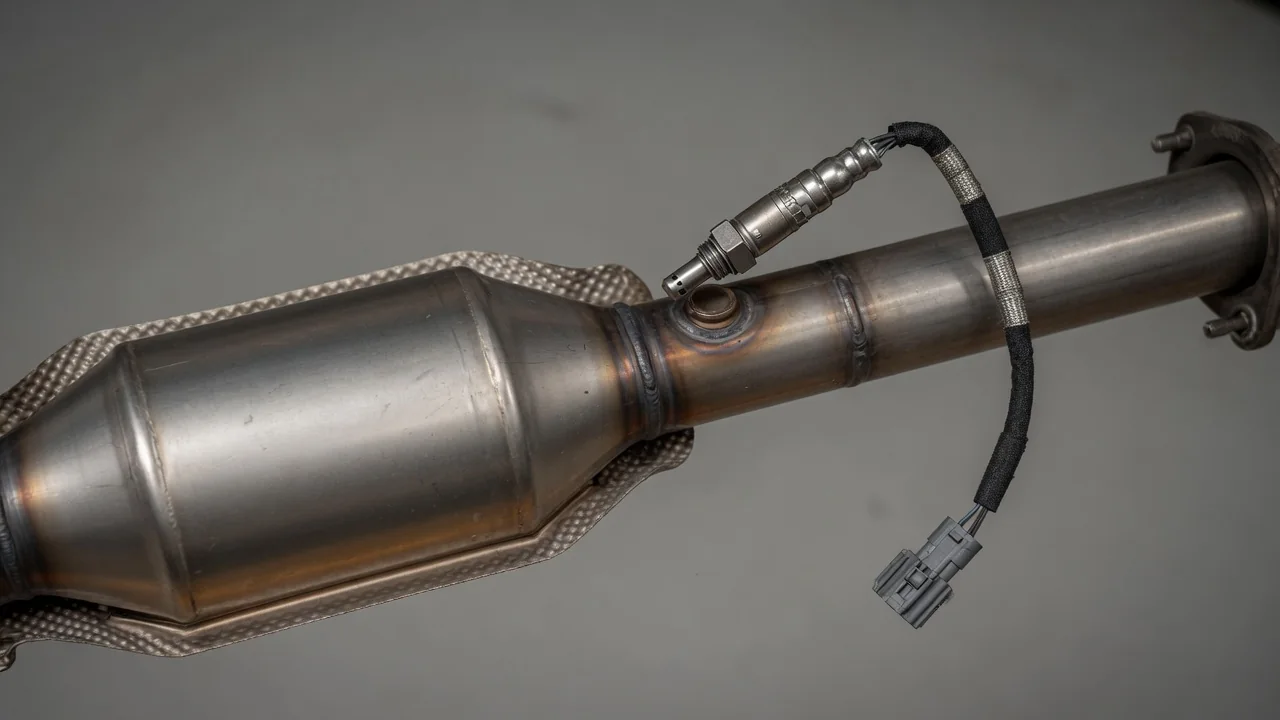
P0141 means the engine computer has found a problem in the heater circuit of the Bank 1 Sensor 2 oxygen sensor, which is usually the downstream sensor behind the catalytic converter. The code points to a circuit, not to a part that has definitely failed. Knowing what the heater does, which symptoms matter and how the circuit is tested can keep you from buying a sensor that won't fix the fault.
What P0141 Means and Where Bank 1 Sensor 2 Is Located
P0141 is the generic trouble code for an oxygen sensor heater circuit malfunction at Bank 1 Sensor 2. It means the powertrain control module saw heater circuit behavior outside the range it expects, such as current, voltage or warm-up time that doesn't match what it commanded. That tells you about a monitored electrical circuit. The heater element could be at fault, but so could the wiring, a connector, the heater power supply or the control side of the circuit.
An oxygen sensor gives a reliable signal only when it's hot, and exhaust heat alone can take a while to warm it, especially downstream. The built-in heater shortens that wait, and the module monitors the heater so it knows when it can trust the sensor's data. Bank 1 is the side of the engine with cylinder 1, and Sensor 2 generally means the downstream sensor. Before naming any component, confirm the complete code, the vehicle's details and the correct service procedure.
P0141 Symptoms and When Driving Needs to Stop
The most common sign is a lit check-engine light, often with no obvious change in how the vehicle drives. That makes sense because the downstream sensor mainly checks how well the catalytic converter is working. It doesn't set the main fuel mixture. A heater fault can still delay the sensor's warm-up and keep the related emissions monitor from finishing. That matters for an emissions inspection even when the engine feels normal.
Don't blame rough running, stalling or a big change in fuel use on P0141 alone. If you notice those symptoms, look for more codes and other causes, because a downstream heater fault doesn't usually explain them. Some warning signs mean you should stop as soon as it's safe: a flashing check-engine light, a severe loss of power, smoke or a strong fuel smell. In those cases, get help instead of guessing how far the vehicle can go.
Faults That Can Trigger the P0141 Heater Circuit Code
The heater inside the oxygen sensor is a resistive element. Age, repeated heating and cooling, or contamination can make it wear out or break, leaving the module with little or no heater current. Even so, don't assume the sensor needs replacing. If a new sensor is plugged into a damaged harness or a dead power feed, the same code will come back, and the old sensor may have been fine all along.
Wiring near the exhaust has a hard life. The harness can melt, rub against brackets or break where it flexes, and water and road salt can loosen or corrode the electrical connector. On vehicles that route heater power through a fuse or shared supply, a failure there can disable the heater, sometimes on more than one sensor. Faults in the control circuit are also possible. All of these can set the same code, so only testing shows which one failed.
Safe Observations and Professional Tests for P0141
Before you clear anything, write down every stored and pending code, the freeze-frame data and when the light first came on. Freeze-frame data shows conditions like engine temperature and speed when the fault was recorded, which helps a technician reproduce it. If you want to look for obvious damage, turn the engine off and let the exhaust cool completely. Only check wiring and connectors you can see without reaching near exhaust parts or moving components.
A technician works from the vehicle's wiring diagram and specifications. Typical checks include whether the heater is getting power, whether the circuit is continuous between the connector and the module, whether the heater's resistance or current is within spec and whether the module is actually switching the heater on. Owners shouldn't bypass circuits, connect battery power directly to the sensor, probe live wiring or work under a vehicle that isn't properly supported.
Related Heater Codes: P0161, P0135, and P0155
P0141 has related codes for other sensor positions. P0161 covers the Bank 2 Sensor 2 heater, so it only applies to engines with a second bank and a downstream sensor on that bank. Confirm the layout first. P0135 generally covers the Bank 1 Sensor 1 heater and P0155 the Bank 2 Sensor 1 heater, but check the service information for your vehicle. Like P0141, P0161 may only turn on the warning light, and symptoms can't tell you which bank or sensor is affected.
When one of these codes shows up along with P0141, the pattern is a useful clue. Several heater faults at once are less likely to mean several sensors failed together. They more often point to something the circuits share, like a fuse, power feed, ground or connector. A technician checks the wiring design for shared paths like these before recommending more than one sensor. Replacing a part for each code can cost a lot and still leave the shared fault in place.
P0056, P0057, and P0058 in a Heater Circuit Diagnosis
P0056 generally describes the heater control circuit for the Bank 2 Sensor 2 heated oxygen sensor. P0057 means the module sees a low condition in that control circuit, and P0058 means it sees a high condition. Low and high describe electrical readings, not how much oxygen is in the exhaust. Wording and circuit layout can vary by manufacturer, so confirm the definition for your vehicle and make sure the engine actually has a Bank 2 downstream sensor.
As with P0141, a check-engine light may be the only thing you notice with P0057 or P0058, and the way the vehicle drives can't tell you whether the reading is low or high. When these codes appear together with P0141, it makes sense to look at how the heater circuits on both banks get their power and control signals. Only testing against the manufacturer's specifications can tell an open circuit from a short, a connector problem or a failed heater.
Confirming the Repair and Checking Emissions Readiness
The repair should match what testing actually found. A heater that measures out of spec points toward a new sensor, while a corroded connector or damaged harness calls for a wiring repair. Confirm that any replacement part fits your vehicle using the parts catalog or service information. If a fuse blew, a new one may fail again unless someone finds the reason it blew, because a short or rubbed-through wire can still be there.
After the repair, a technician can confirm the heater works and watch for stored or pending codes that return under the driving conditions the vehicle needs to rerun its tests. Clearing codes turns off the light, but it also resets the readiness data and doesn't prove the repair worked. The emissions monitors need to finish according to the vehicle's own requirements. Checking readiness before an inspection helps you avoid failing because a monitor hasn't finished yet.