P0136–P0140: Bank 1 Sensor 2 Oxygen Sensor Codes Explained
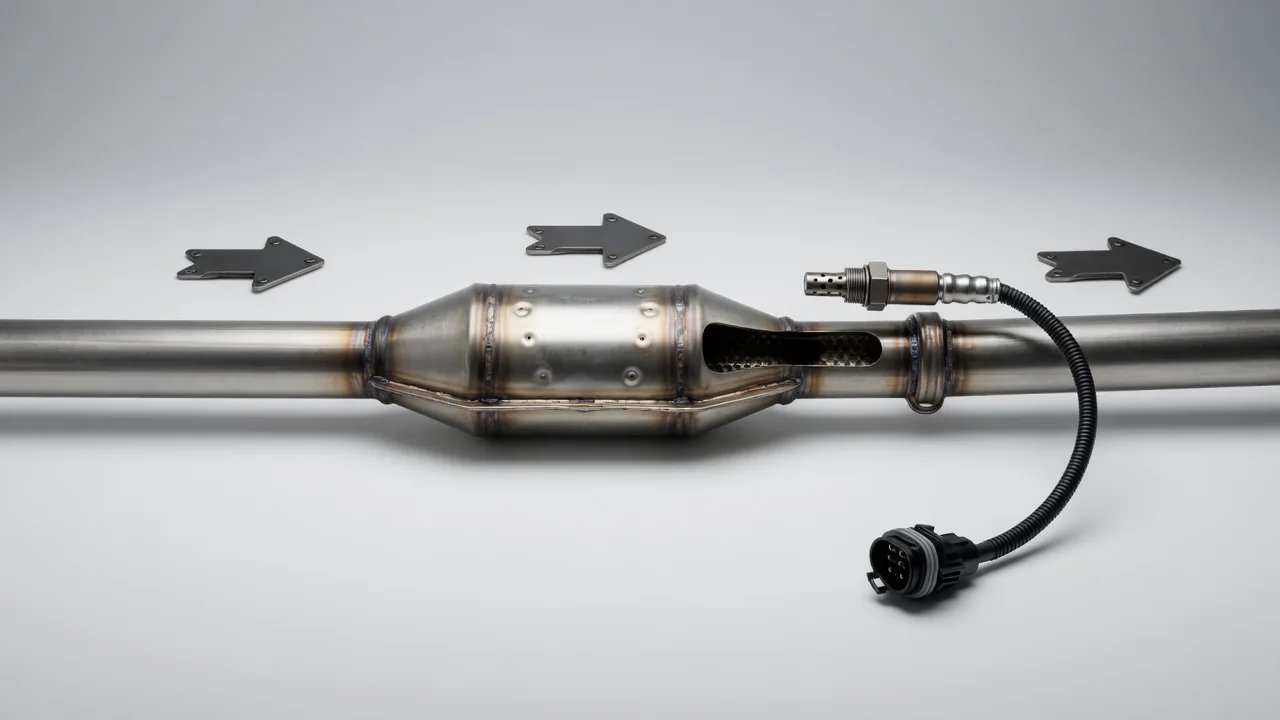
When a scan tool reports P0137 or a related code, the engine computer is flagging a problem with the oxygen sensor after the catalytic converter on Bank 1. These codes describe a circuit or signal condition. They don't prove that a part has failed. It helps to know what each code means, how exhaust leaks and catalyst behavior affect the reading, and how to confirm a repair. That knowledge can keep you from paying for parts you don't need.
P0136 Meaning and Bank 1 Sensor 2 Location
P0136 is a generic powertrain code for a malfunction in the Bank 1 Sensor 2 oxygen sensor circuit. It means the engine computer saw something in that circuit that it did not accept. That could be an unexpected signal, an electrical fault, or a reading that doesn't match the expected behavior. The code does not show that the sensor itself has failed. The wiring, the connectors, the exhaust around the sensor, and the conditions during the test all affect what the module detected.
Bank 1 is the side of the engine that contains cylinder 1. In this code family, Sensor 2 is the downstream sensor after the catalytic converter. Inline engines have only one bank, while V-type engines have two, so the sensor's physical location varies. The downstream sensor mainly supports catalyst monitoring, and some vehicles also use it to fine-tune fuel control. Check the exact code description, sensor design, and test criteria in the service information for your vehicle before you interpret any readings.
P0137: Low Downstream Oxygen Sensor Voltage
P0137 means the Bank 1 Sensor 2 signal stayed lower than the engine computer expected while its diagnostic monitor was running. Each manufacturer sets its own test conditions, such as engine temperature, load, and run time, and decides what counts as low. A conventional zirconia sensor puts out lower voltage when it sees more oxygen. The reading therefore reflects both the sensor's health and the actual gas flowing past it, so it has to be interpreted before any parts are replaced.
Several different problems can cause that low reading. The sensor element may be worn out, the signal wire may be shorted to ground, or a corroded connector may be adding resistance. An exhaust leak near the sensor can pull in outside air and dilute the gas the sensor measures. The exhaust stream may also truly contain extra oxygen. For these reasons, low voltage alone does not prove that the engine is running lean. There is also no single voltage cutoff that applies to every vehicle.
P0138: High Downstream Oxygen Sensor Voltage
P0138 is the opposite condition. The Bank 1 Sensor 2 signal reads higher than the monitor allows under the vehicle's test conditions. Possible causes include an internally failed sensor, a signal wire shorted to a voltage source, damaged or chafed wiring, and a truly rich exhaust stream reaching the downstream sensor. Don't assume any of these is the cause until testing points to it. The vehicle's own criteria decide what counts as high for that particular sensor and engine.
A high downstream signal by itself cannot confirm that the engine is getting too much fuel, that the sensor is bad, or that the catalytic converter is damaged. Other codes provide important context. Fuel trim, rich or lean condition, misfire, or upstream sensor codes stored along with P0138 help a technician judge whether the reading reflects real exhaust conditions. Misfires can change the exhaust mixture and also put the converter at risk, so they should be checked early in the diagnosis.
P0139 Slow Response and P0140 No Activity
P0139 means the downstream sensor responded more slowly than the vehicle's timing criteria allow when the engine computer tested it. P0140 means the monitor saw no meaningful activity from the Bank 1 Sensor 2 circuit, even though the conditions for checking it were met. P0139 points to a sensor or circuit that reacts too slowly. P0140 points to a signal that seems stuck or disconnected, or that never became active during the test.
Several things can affect these results: an aging sensor, contamination from oil, coolant, or silicone reaching the exhaust, open or high-resistance wiring, and connector faults. The results also depend on whether the monitor's operating conditions were actually met. A fairly steady downstream reading is normal when a healthy catalytic converter is storing oxygen and smoothing out swings in the exhaust. One scan-tool snapshot showing a flat line cannot prove a fault on its own. The reading has to be judged under the proper test conditions.
Symptoms and Signs That Need Prompt Attention
Many drivers notice nothing except the check-engine light. The downstream sensor is used mainly for monitoring, so P0136, P0137, P0139, and P0140 often show up with no change in how the car drives. P0138 can behave the same way. Some owners may notice rough running, a change in fuel economy, or an unusual exhaust smell. These signs may be related to the code, but they can also come from separate problems. They are reasons to diagnose the car, not proof of the cause.
Some signs call for immediate action. A flashing check-engine light usually means misfiring severe enough to harm the catalytic converter. Severe rough running or a major loss of power can make driving unsafe. In those cases, pull over safely and call for assistance. If exhaust fumes seem to be getting into the cabin, stop driving the vehicle and have it inspected, because exhaust contains carbon monoxide. Don't try to find a leak by smelling around the exhaust system.
How Exhaust Leaks and Catalyst Operation Affect These Codes
An exhaust leak near or ahead of the downstream sensor can let outside air into the exhaust stream. This can pull the signal lower or make it erratic. How much a leak matters depends on where it is and on operating conditions, such as idling versus driving under load. Heat-damaged wiring, loose or corroded connectors, and a sensor tip coated with contaminants also need to be checked. Any of these can look like an exhaust or catalyst problem.
These sensor codes alone do not prove that the catalytic converter needs replacement. The engine computer uses the downstream sensor to judge how well the catalyst is working. If that signal is unreliable, any conclusion about the converter is unreliable too. If a catalyst efficiency code appears along with a Bank 1 Sensor 2 fault, fix the signal problem first. Then recheck catalyst performance with a reading you can trust. Replacing a converter because of a bad sensor signal can be an expensive mistake.
Safe Diagnostic Steps Before Replacing Parts
Before clearing anything, record the stored and pending codes and the freeze-frame data. Freeze-frame data shows conditions such as engine temperature, speed, and load at the moment the fault was set. Also note any recent repairs, especially exhaust work, sensor replacement, or engine repairs. If you want to look for obvious damage, check only areas you can reach easily, with the engine off and the exhaust fully cool. Don't touch hot parts, and never go under a vehicle that isn't properly supported.
A professional technician follows the vehicle's service procedure to test the wiring, the connectors, the sensor signal, and the exhaust system for leaks, using the right equipment. The technician does not rely on guesswork or change the fuel mixture on purpose to provoke a reading. After a repair, confirm that the relevant monitors run to completion under the required conditions and that the code does not come back. Clearing codes only erases the evidence for a while. It does not show whether the real cause was fixed.