P0130 Code: Upstream O2 Sensor Circuit Causes and Diagnosis
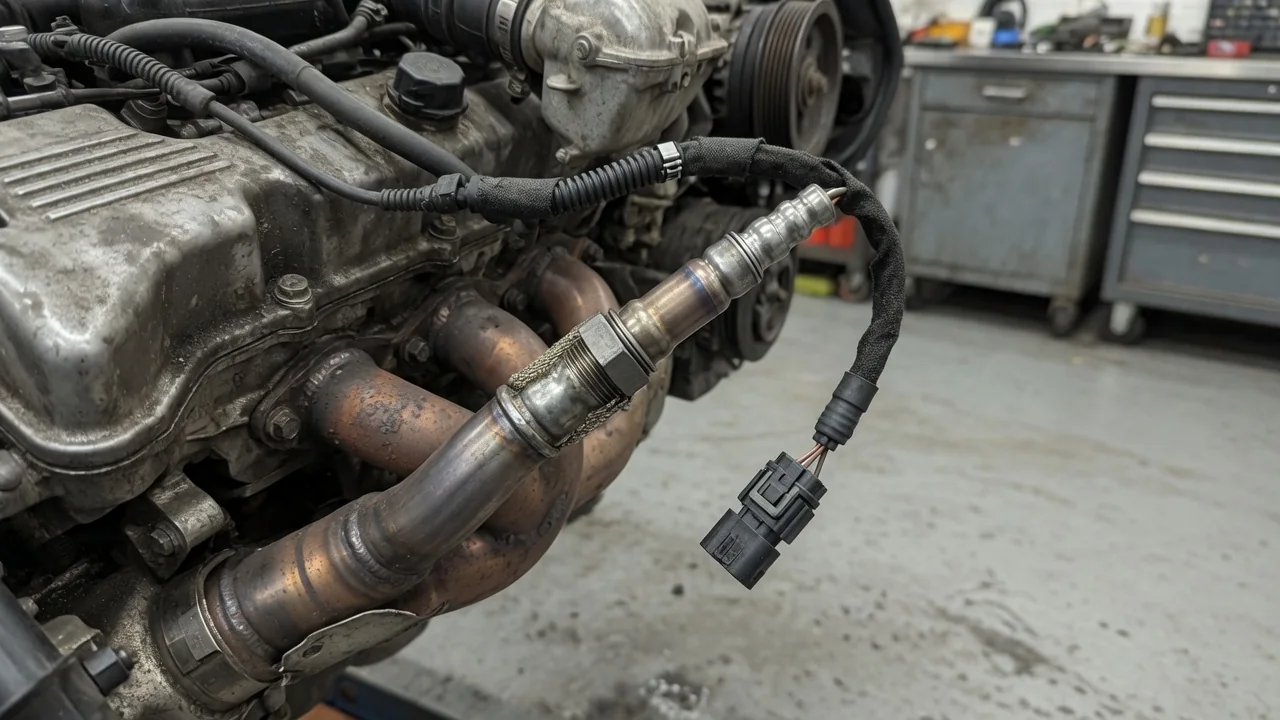
A stored P0130 code means the engine controller has detected an oxygen sensor circuit malfunction at bank 1 sensor 1, the upstream oxygen sensor generally ahead of the catalytic converter. The code is evidence of a circuit or signal problem, not proof the sensor has failed. Vehicle-specific confirmation is required because sensor technology, location, and code-setting conditions vary by manufacturer.
What P0130 Means and Which Sensor It Identifies
P0130 identifies an oxygen sensor circuit malfunction associated with bank 1, sensor 1. Bank 1 contains cylinder 1, and sensor 1 is the upstream oxygen sensor, generally mounted in the exhaust ahead of the catalytic converter. That sensor may be a conventional oxygen sensor or a wideband air-fuel ratio sensor. The code reports a detected circuit or signal problem. It does not prove the sensing element has failed, because wiring, connector, or exhaust conditions can set the same fault.
Before interpreting live readings, consult vehicle-specific service information for sensor location, sensor technology, the conditions that set P0130, and the diagnostic specifications that apply. Upstream oxygen or air-fuel ratio feedback tells the engine controller how the mixture compares with the target, so the controller can add or subtract fuel through short-term and long-term fuel trim. When that circuit is unreliable, closed-loop fueling can drift even if the engine still runs. Manufacturer-dependent code definitions and pinouts require confirmation on the vehicle in front of you.
Symptoms and Signs That Need Prompt Attention
A P0130 code often turns on the check-engine light, yet drivability can range from no noticeable change to rough idle, hesitation, or increased fuel consumption. Those signs appear because the controller may fall back on a default fueling strategy when bank 1 sensor 1 feedback is missing or implausible. The same symptoms can also come from an unrelated misfire, vacuum leak, or fuel delivery issue. Symptoms alone cannot establish whether the sensor, its oxygen sensor circuit, or an engine-running condition caused the stored fault.
How soon you need service depends on how the vehicle behaves, not on the code number. A steady check-engine light with normal running still warrants diagnosis, because fuel trim and catalyst protection can suffer while the circuit remains unresolved. Do not treat any remaining range as a guaranteed safe driving distance. Stop as soon as it is safe and arrange assistance if the check-engine light is flashing, the engine shakes severely, the engine stalls, or a strong fuel smell is present.
Faults That Can Trigger the Upstream Sensor Circuit Code
Sensor deterioration or contamination can distort the upstream oxygen sensor signal, but replacement is not the default response to P0130. Oil, coolant, or silicone residue on the sensing element, along with age-related heater or circuit wear, can produce a sluggish or biased reading. Damaged wiring, poor connector contact, corrosion at the sensor wiring connector, open circuits, and short-to-power or short-to-ground faults can interrupt the same signal. Heat, vibration, and chafing near the exhaust often injure the harness before the sensor itself fails.
An exhaust leak near or ahead of bank 1 sensor 1 can pull in outside air and make the oxygen reading look lean, or it can disturb the pulse of exhaust that the sensor is supposed to sample. Intake leaks, misfires, and fueling problems can also swing the mixture and influence upstream readings. Those engine-running conditions deserve evaluation when other codes, fuel trim direction, or test results support them. Treating P0130 as a parts list without checking leaks and combustion quality often leaves the circuit code returning after a sensor swap.
Safe Checks Before Clearing Codes or Buying Parts
Record every stored and pending code, plus available freeze-frame data, before clearing anything. Freeze-frame captures the operating conditions at the moment P0130 set, including engine speed, load, coolant temperature, fuel trim, and related sensor values, so later tests can be compared with the same window. Note when symptoms occur and whether the code appeared after recent engine or exhaust work, because a disturbed sensor wiring connector or a new exhaust leak is a common follow-up. Clearing first erases that context and can reset emissions readiness monitors.
Limit visual inspection to accessible wiring and connectors with the engine off and cool. Look for melted insulation, pulled terminals, corrosion, and obvious damage at the sensor wiring connector without reaching near hot exhaust or moving parts. A basic code reader can display P0130 and sometimes freeze-frame data, but it cannot prove circuit integrity. Avoid probing circuits without a diagram, disconnecting sensors while the engine is running, or working beneath an unsupported vehicle. Those shortcuts can create new faults and unsafe conditions.
Professional Tests That Help Pinpoint the Fault
A professional diagnosis follows a vehicle-specific sequence rather than a universal voltage chart. Related codes, freeze-frame data, fuel trim, and upstream sensor data are compared with the conditions that actually set P0130. Conventional oxygen sensor traces and wideband air-fuel ratio sensor data must be read according to the technology installed; swapping those interpretations produces false conclusions. There is no single voltage threshold or waveform shape that proves a good or bad circuit on every vehicle, so service specifications for that controller and sensor type govern the next step.
Technicians then check wiring integrity, connector contact, grounds, and any applicable heater or reference supplies against service specifications. Controlled sensor-response testing, when the procedure calls for it, helps show whether the upstream oxygen sensor can still move with a known mixture change. Intake or exhaust leak testing is used when data suggest a running-condition bias rather than an open or shorted circuit. Separating a true oxygen sensor circuit fault from an engine-running problem prevents replacing bank 1 sensor 1 when the harness, a leak, or a misfire is the actual source.
Choosing a Repair and Confirming P0130 Is Resolved
Repairs should match confirmed findings. That may mean repairing wiring, restoring connector contact, correcting an exhaust leak, addressing an intake leak or misfire, or replacing a sensor that has been verified faulty. Confirm the correct bank 1 sensor 1 part and the installation requirements for the specific vehicle; do not assume another listing is interchangeable. Installing the wrong sensor type, or a sensor that does not match the vehicle circuit design, can recreate P0130 even after the original wiring issue is gone.
Clearing P0130 by itself does not demonstrate a successful repair and can reset emissions readiness monitors, leaving an inspection gap until those monitors run again. Confirmation comes from completing the applicable monitors, repeating the data checks used during diagnosis, and verifying that the oxygen sensor circuit fault does not return as a stored or pending code. If P0130 or related fuel-trim codes reappear, further diagnosis is needed rather than another parts swap. The goal is a stable upstream signal and fueling strategy under the same conditions captured in the original freeze-frame data.