P0128 Engine Code: Meaning and Cooling System Diagnosis
What the P0128 Code Means
P0128 is a diagnostic trouble code that means the engine is not reaching its expected operating temperature quickly enough. The vehicle's computer, commonly called the powertrain control module, expects the coolant temperature to rise to a specified level within a set period after the engine starts. When that target is not met, the computer stores P0128.
Unlike many cooling system warnings, P0128 is associated with the engine running too cool rather than overheating. It is often referred to as a coolant thermostat below regulating temperature condition, but the code covers any situation where warm-up takes too long or the engine stays colder than expected.
How Engine Coolant Temperature Control Works
The cooling system uses coolant to absorb heat from the engine and transfer it to the radiator. When the engine is cold, the thermostat stays closed so coolant circulates mainly through the engine and warms up quickly. Once the coolant reaches the thermostat's opening temperature, the thermostat opens and allows coolant to pass through the radiator.
The powertrain control module monitors the engine coolant temperature sensor to track warm-up and regulate fuel mixture, idle speed, and other functions. If the sensor is accurate and the temperature still remains too low, the thermostat is often staying open when it should be closed. This results in slow warm-up, reduced heater output, and potentially higher fuel consumption because the engine runs in a cold-start fuel strategy longer than normal.
Common Causes of Code P0128
A thermostat that is stuck open, opens too early, or no longer seals properly is the most common cause of P0128. When this happens, coolant can flow to the radiator before the engine is warm, delaying normal temperature gain and preventing the engine from reaching the expected range.
Other possible causes include a faulty engine coolant temperature sensor, a wiring or connector problem in the sensor circuit, low coolant level, or a cooling fan that runs continuously when it should not. In cold weather, these issues can become more noticeable because the cooling system is already working against low ambient temperatures.
What to Check Next
Check the coolant level when the engine is cold and top it up only with the correct coolant specified for the vehicle. Observe the temperature gauge after a cold start. A gauge that remains near the bottom for longer than usual may support a thermostat or sensor problem. Check whether the cooling fan runs at full speed immediately after a cold start. Continuous fan operation can prevent proper warm-up. Have the sensor readings checked against the actual coolant temperature when practical. A scan tool or diagnostic equipment may be required to confirm whether the sensor is reporting correctly.
A P0128 code alone may not make the vehicle unsafe to drive, but it should not be ignored. Persistent slow warm-up can reduce heater performance in cold weather, increase fuel consumption, and prevent the emission control system from operating as intended. If the coolant level is dropping, there are signs of leakage, or the engine is also overheating, stop driving and seek diagnosis promptly.
What a Diagnosis May Show
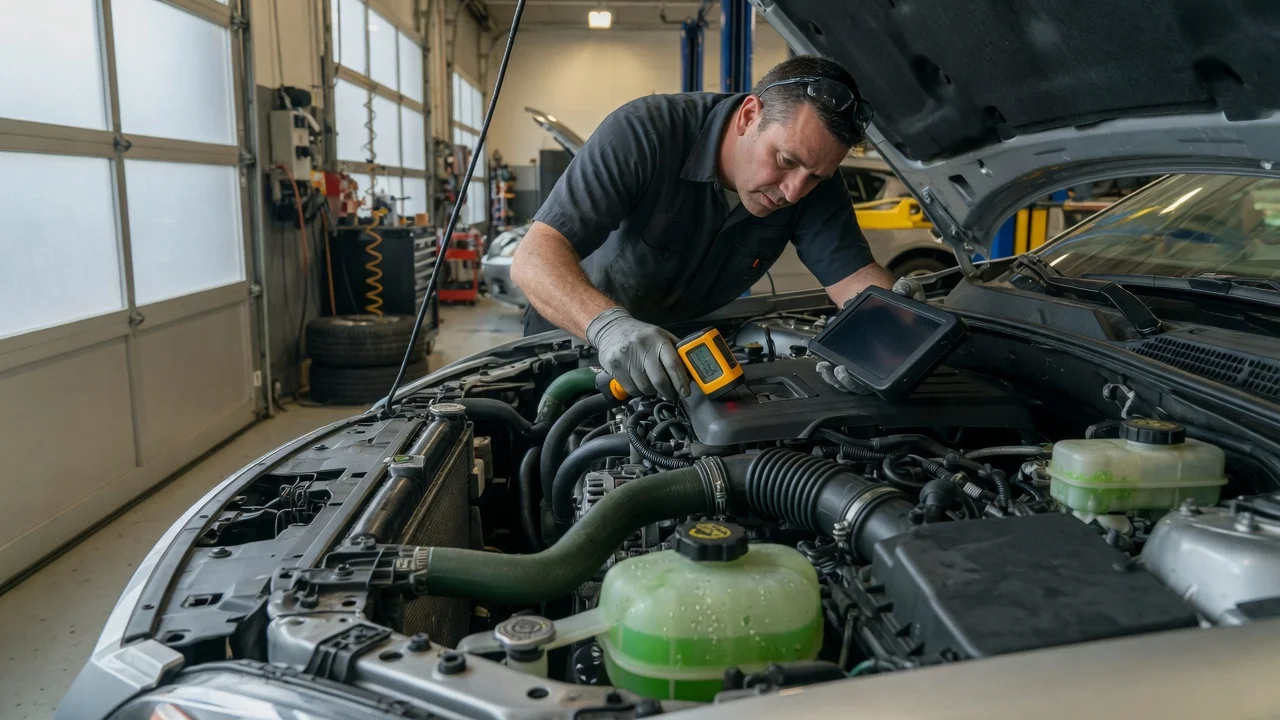
Diagnosis is usually needed to separate a genuine thermostat fault from a sensor or circuit issue. A technician may monitor the engine coolant temperature sensor during a cold start, compare it with radiator hose temperature or an independent measurement, and test thermostat operation. Replacing a thermostat that is stuck open can resolve P0128 when the sensor and cooling system are otherwise functioning correctly.
Because this code relies on comparing the sensor signal with the engine's expected warm-up pattern, other faults that affect that signal can lead to a false indication. Confirming the actual coolant temperature is therefore an important step before replacing parts.