P0128 Engine Code: Meaning and Diagnostic Next Steps
What P0128 means
P0128 is an onboard diagnostics II (OBD-II) powertrain trouble code that reports engine coolant stayed below the temperature the thermostat is expected to regulate. The engine control computer has judged that the engine remained cooler than it should during warm-up. Scan tools commonly describe it as coolant thermostat, coolant temperature below thermostat regulating temperature.
On most vehicles P0128 is a generic P0 code, so the name is shared across makes. The time, temperature, and driving conditions the computer uses to set it still vary by model, year, and engine. The malfunction indicator lamp (the check engine light) typically turns on after the computer confirms the condition, and freeze-frame data from that moment is often stored with the code.
How the thermostat check works and what it affects
The thermostat is a temperature-controlled valve in the engine cooling system. When the engine is cold, the valve stays closed so coolant remains in the engine and warms more quickly. As coolant approaches the thermostat’s rated opening temperature, the valve opens and coolant can circulate through the radiator to shed heat. That warm-up path also helps the cabin heater and the catalytic converter reach working temperature.
The powertrain control module (PCM), also called the engine control module (ECM) on some vehicles, reads engine coolant temperature from the engine coolant temperature (ECT) sensor. After a start, it compares that reading with an expected warm-up profile. That model typically considers time since start, ambient or intake-air temperature, engine load, and vehicle speed. If reported coolant temperature stays below the expected thermostat range for too long, the PCM sets P0128.
The code means the computer sees a too-cool engine, or a temperature signal that looks cooler than the cooling system should allow. While the fault is active, the PCM may keep extra fuel enrichment intended for a cold engine, which can raise fuel use and exhaust emissions. Cabin heat may be weak. Related readiness monitors can stay incomplete, which matters for an emissions inspection until the fault is repaired and the monitor runs successfully. Exact enable criteria, temperature thresholds, and time limits are application-specific and are not the same on every vehicle.
What could explain the code
P0128 is a rationality check. The stored code and any driveability clues are the observation; the cause may be the cooling system, the temperature sensor circuit, or conditions that keep the engine from warming as the PCM expects. Useful explanations to consider, in practical order, include:
A thermostat that is stuck open, opens too early, or is rated cooler than the engine was designed for, so coolant flows to the radiator before the engine is fully warm. Low coolant, trapped air, or a leak that keeps the ECT sensor from seeing a true, rising temperature. A faulty ECT sensor, poor connector, or damaged wiring that reports a temperature lower than actual. An electric cooling fan that runs continuously when it should be off, overcooling the engine. Repeated short trips in very cold weather, which on some vehicles can slow warm-up enough to fail the PCM’s model. Less often, PCM software or another cooling-system fault that changes warm-up behavior.
Drivers often notice a check engine light, a temperature gauge that stays lower than usual, slow cabin heat, and sometimes slightly higher fuel use. Some vehicles show little change in how they drive. A rising temperature gauge, steam, a coolant smell, or visible overheating is a separate cooling-system emergency: stop when it is safe and treat it as urgent.
What to check next
Several checks are possible before parts are replaced. Opening a hot cooling system can spray pressurized coolant and cause severe burns, so wait until the engine is fully cool before removing a cap. Engine coolant is toxic if swallowed; keep it away from children and animals. Use only the coolant type specified for the vehicle. Fastener torque, bleed steps, and thermostat temperature rating come from that vehicle’s service information; there is no universal set of figures for every engine.
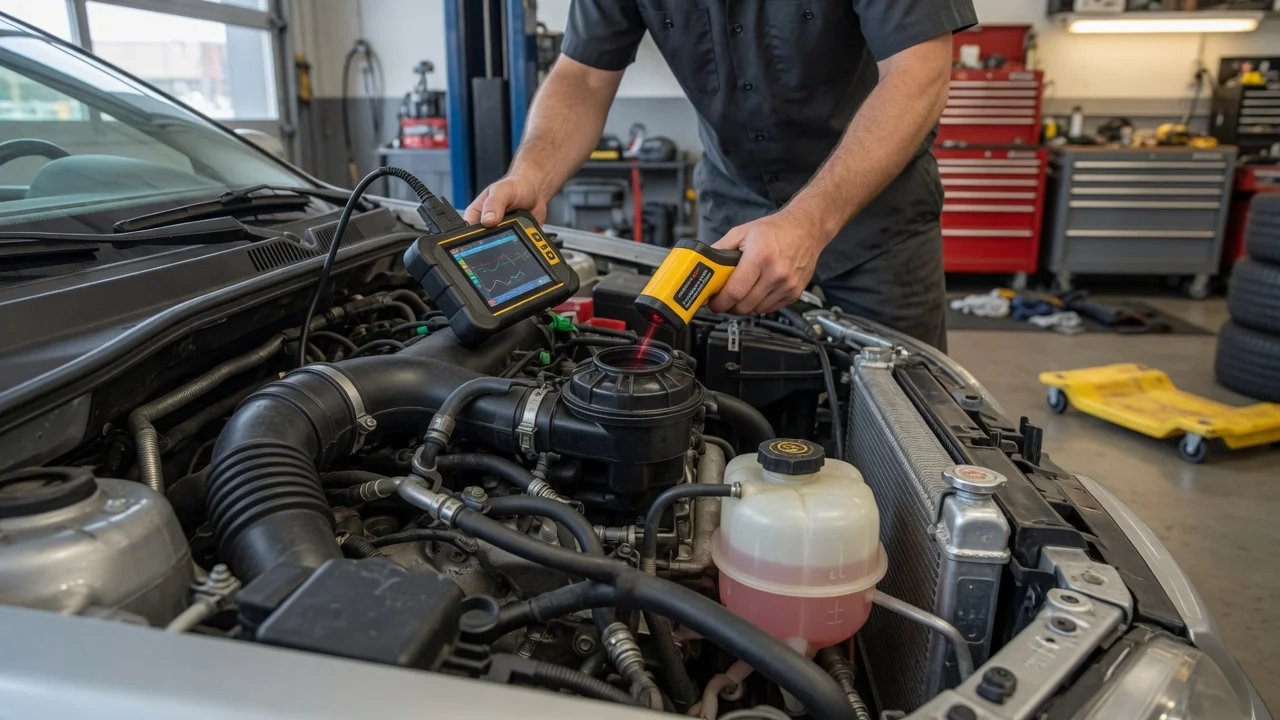
Read P0128 and any related coolant, thermostat, or fan codes with a scan tool, and save freeze-frame data (engine temperature, intake-air or ambient temperature, load, and vehicle speed when the code set). With the engine cold, check the coolant level in the reservoir and, if the design allows safe access, in the radiator. Look for leaks, a collapsed hose, or a loose clamp, and correct the level if it is low. At a cold start, compare the ECT reading on live data with the intake-air temperature reading. They should be close to each other and to the actual outdoor temperature. A large gap points to a sensor or wiring problem. Watch coolant temperature on a moderate drive. If it never enters the normal operating band, or it rises then falls and stays low, a stuck-open thermostat or constant fan operation is more likely. Check whether the electric cooling fan runs right after a cold start with the air conditioning off. Continuous run at cold idle is a reason to inspect fan control. If level, sensor readings, and fan behavior look normal and temperature still will not stabilize in the normal range, the thermostat is a common next replacement, using the rating and installation procedure specified for that engine. After the repair, clear the code and complete a warm-up drive so the PCM can run the thermostat monitor again.
The job is complete when a scan tool shows P0128 gone, coolant temperature rises into the normal range and holds there in steady driving, cabin heat is adequate, and the thermostat monitor can finish. If the code returns, stop swapping parts and move to professional diagnosis.
When professional diagnosis is required
See a qualified shop if you cannot confirm coolant level safely, if live data is unavailable, if ECT and intake-air readings disagree after a cold soak, if the fan runs without a command, or if a correctly specified thermostat does not restore normal warm-up. Electrical testing of the ECT circuit, fan control, and PCM enable criteria requires the service procedure for the specific make, model, year, and engine. Manufacturer information is also required for thermostat opening temperature, cooling-system bleed steps, fill specifications, and fastener torque. Generic guidance cannot give those values, because the PCM’s test is calibrated per application.