P0125 and P0126 Codes: Coolant Warm-Up Problems Explained
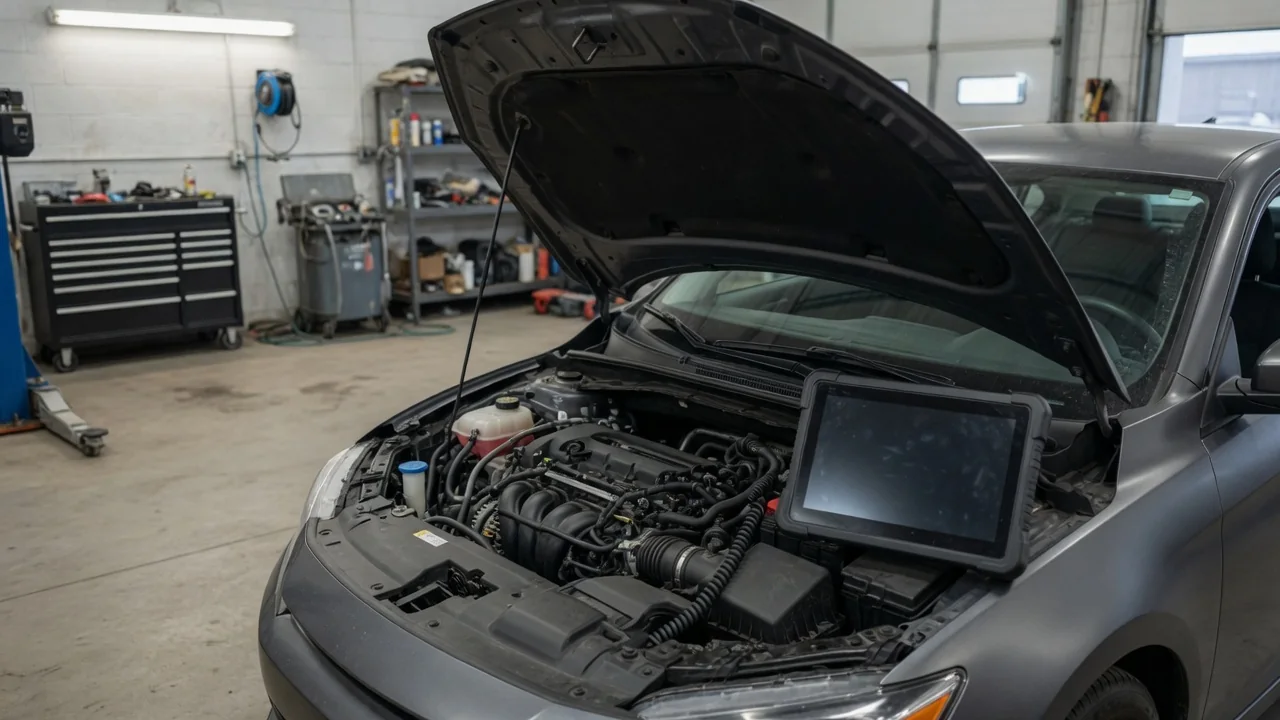
P0125 and P0126 report that engine coolant temperature did not reach the level the control module expected for closed-loop fuel control or stable operation. They often share causes such as a thermostat that stays open, an ECT sensor problem, or low coolant, yet they are not interchangeable with P0128. A stored P0125 code or P0126 code is a monitoring result to interpret, not proof that any single part has failed.
What P0125 Means for Coolant Temperature and Fuel Control
On many vehicles, P0125 means insufficient coolant temperature for closed-loop fuel control. Closed-loop fuel control is the period after start-up when the engine computer uses oxygen-sensor feedback to trim fuel instead of relying mainly on open-loop maps. Engine coolant temperature is one of the inputs that tells the module the engine is warm enough for that strategy, because a cold engine needs richer mixtures and different spark and idle targets. If coolant warm-up is slower than the monitor allows, the P0125 code can set even though the engine still runs.
That standard wording is a starting point, not a substitute for the vehicle's service information. Enabling conditions, time windows, and temperature targets vary by year, make, model, and engine, so the exact P0125 definition and monitor logic must be confirmed before parts are blamed. The fault records that a readiness condition was not met under the recorded operating snapshot. It does not identify a failed thermostat, ECT sensor, or wiring fault by itself. Temperature signal plausibility still has to be tested against live data and freeze-frame data.
What P0126 Means for Stable Engine Operation
A P0126 code is commonly described as insufficient coolant temperature for stable operation. In practice, the module expected the cooling system to bring engine coolant temperature into a band where idle, fueling, and emissions control behave predictably, and that condition was not reached while the monitor ran. Warm-up should show a reasonably steady climb after a cold start, then thermostat operation that holds temperature instead of letting it stall far below the usual operating range. No single degree or minute applies to every engine, so those values belong in the vehicle's diagnostic information.
Monitoring strategies and failure criteria for P0126 also differ among manufacturers, so a technician should use the procedure written for that powertrain rather than a generic flowchart. P0128 sits outside this diagnostic scope even though it also involves coolant temperature and thermostat-related monitoring. Record the exact stored code first. If the scan tool shows P0126, follow the P0126 path; if it shows P0128, use that code's applicable tests instead of mixing enable conditions, temperature comparisons, or pass/fail rules from a different monitor.
Symptoms Drivers May Notice
Typical P0125 symptoms start with a check-engine light after the control module decides coolant warm-up was incomplete. The temperature gauge may climb slowly or stay lower than usual, and cabin heat can stay weak because heater cores need hot coolant. Some drivers also notice higher fuel use or a slightly rough, cold-running feel if the engine remains in a richer strategy longer than expected. Those clues support a cooling-system or temperature-signal investigation; they still do not prove whether the thermostat, the ECT sensor, or coolant level is at fault.
Other vehicles store P0125 or P0126 with little obvious drivability change, especially if the engine still starts and idles normally. Dashboard temperature readings and heater output are useful observations, yet a low gauge or cool air from the vents cannot confirm thermostat failure or an ECT sensor error, because the display can follow a faulty signal. Overheating warnings, steam, or substantial coolant loss are different. Those signs call for stopping safely, keeping the hood closed on a hot pressurized system, and arranging assistance rather than continuing to drive.
Possible Causes Behind an Incomplete Warm-Up
A thermostat stuck open lets coolant circulate through the radiator too early, so the engine may never reach the temperature the monitor expects during the test window. That pattern is a common explanation for incomplete coolant warm-up, particularly in cooler weather or short-trip driving, but it is still a hypothesis until flow and temperature data are compared. An ECT sensor or its wiring can create the opposite problem: the module sees a cold reading while the engine is actually warmer, or a noisy, stuck, or implausible signal that fails temperature signal plausibility checks.
Low coolant or trapped air can interrupt circulation past the thermostat and the sensor, so both actual warm-up and the reported engine coolant temperature become unreliable. Low coolant can also accompany overheating if a leak is large enough, which is why the same family of codes should not be treated only as a cold-running condition without checking coolant level. Ambient temperature, idle versus highway load, and recent cooling-system work are diagnostic context. They help explain why a monitor ran or failed, but they do not by themselves pick one cause.
Safe Observations and Professional Diagnostic Checks
Before clearing anything, save stored and pending codes and freeze-frame data. That snapshot shows engine coolant temperature, engine speed, load, and related inputs at the moment the monitor failed, which later scan data cannot reconstruct. Check the reservoir coolant level only with the engine fully cold and only as the owner's manual describes. Never open a hot pressurized cooling system; steam and scalding fluid can escape from a radiator cap or reservoir. Visible leaks, recent coolant loss, heater behavior, and when the warning appeared can be noted without touching hot or moving parts.
A technician then compares cold-start temperature signal plausibility with ambient conditions, watches warm-up on a scan tool, and evaluates thermostat operation and ECT sensor circuits with the vehicle-specific tests. Those steps separate a cooling system that truly stays cold from a sensor that reports cold while the engine is warmer. Circuit voltage, connector condition, and comparison with a second temperature source, when the procedure calls for them, matter more than replacing parts from the code number. Manufacturer-dependent enable criteria still govern pass or fail after any repair.
Repair Decisions and Confirmation
Thermostat or ECT sensor replacement should follow those tests, not the P0125 or P0126 number alone. A stuck-open thermostat, a biased sensor, and an air-bound system can look similar in a single freeze-frame reading. If coolant was low, finding the leak, hose, gasket, or other loss path is the repair; a top-up only restores a level and does not close the cause. Urgency should be based on coolant level, overheating warnings, visible leaks, and how the engine behaves, not on an assumption that either code is always safe to ignore.
After work is complete, confirmation means seeing plausible engine coolant temperature from cold start through closed-loop fuel control, plus a completed monitor rather than a blank or failed readiness flag. Clearing the check-engine light erases evidence; it does not prove the coolant warm-up problem is gone. A short retest drive that never lets the thermostat operate or never repeats the original enable conditions can also be misleading. Use the vehicle's confirmation steps, then recapture freeze-frame data only if P0125 or P0126 returns, so the next comparison is based on new evidence.