P0121 Code: Throttle Position Symptoms and Diagnosis
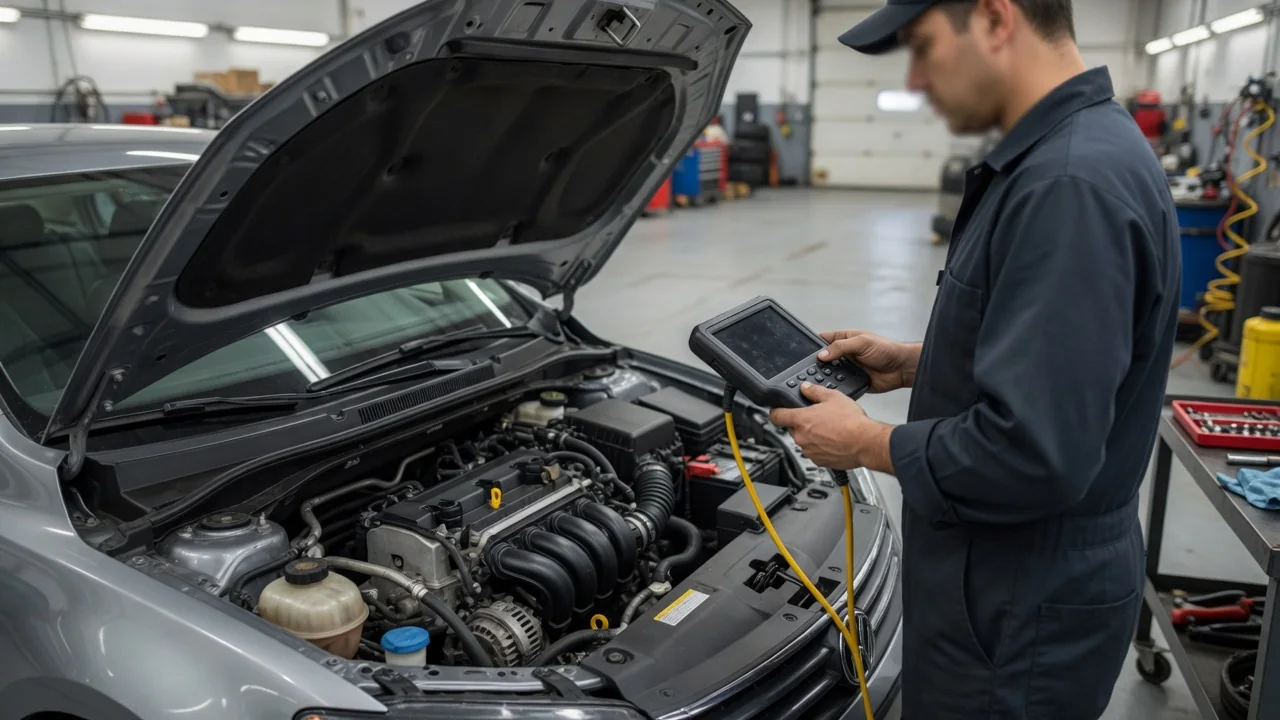
When the check-engine light comes on and a scan tool reports P0121, the engine computer has flagged a throttle or pedal position signal that does not behave the way it expects. The code points to a range/performance fault rather than a signal that is simply too high or too low. Understanding its symptoms, its likely causes and a careful approach to diagnosis helps you avoid replacing parts that were never faulty.
What P0121 Means for Your Vehicle
In generic terms, P0121 stands for throttle/pedal position sensor or switch A circuit range/performance. That wording covers several different designs. On an older engine with a cable-operated throttle, it usually concerns the throttle position sensor on the throttle body. On a vehicle with electronic throttle control, the engine computer may compare two throttle position signals with each other and with the accelerator pedal position sensor. Which sensor counts as A, and exactly what the computer monitors, varies by manufacturer.
Before deciding which component is involved, check the vehicle's year, make, model and engine against service information. That information defines the monitored circuit and the conditions that set the code. A range/performance fault usually means the sensor signal stayed within its electrical limits but looked implausible. For example, it may have changed too little as engine speed and load rose, jumped unexpectedly, or disagreed with a related signal. That is evidence of a problem somewhere in the signal path, not proof that the sensor needs replacement.
Symptoms That May Accompany P0121
The most common sign is a lit check-engine light, and on some vehicles a separate throttle or powertrain warning appears as well. Drivers may also notice hesitation when pulling away, an uneven or hunting idle, weak throttle response, or a reduced engine power mode. In that mode the computer limits throttle opening to keep the vehicle controllable. Not every vehicle with P0121 shows all of these symptoms, and some show nothing beyond the warning lamp.
Because the fault may be intermittent, the car can feel normal by the time someone checks it. This is especially likely if the problem appears only over bumps, in wet weather or at a certain temperature. Hesitation and a rough idle can also come from vacuum leaks, ignition misfires or fuel delivery problems, so symptoms alone do not confirm the cause. If the vehicle stalls, responds unpredictably to the accelerator or cannot hold a safe road speed, pull over where it is safe and arrange assistance rather than continuing.
Faults That Can Disrupt the Throttle Position Signal
A failing sensor can produce a signal that drifts or drops out as the throttle moves. On potentiometer-type units this is often caused by a worn internal track, and on other designs by faulty internal electronics. The fault can just as easily be in the wiring and connectors between the sensor and the engine computer. A loose terminal, corrosion, a harness chafed near a hot or moving part, or damaged insulation can all distort the signal. Position sensors also depend on a stable reference voltage and a clean ground, so a problem in either circuit can make a healthy sensor report implausible values.
Mechanical conditions can also contribute on some systems. On electronic throttle bodies, a throttle plate that sticks, binds or returns slowly, or heavy carbon deposits in the bore, can create a mismatch the computer notices. Contamination should only be suspected when an inspection and the data support it. On many modern engines the throttle position sensor is built into the throttle body assembly, and pedal sensors may be built into the pedal. Where the sensor sits and whether it can be replaced separately must be checked for the specific vehicle.
Safe Observations to Record Before Testing
Good diagnosis starts with a clear record of when the problem happens. Note whether symptoms appear during starting, at idle, under light or hard acceleration, or only after the engine warms up, and whether weather, road surface or steering movement seems to matter. If you have a scan tool, save stored and pending codes and the freeze-frame data before clearing anything. Freeze-frame values such as engine speed, load, coolant temperature and throttle position show the conditions when the fault was recorded, which helps a technician recreate them.
Clearing codes first erases that evidence and can make an intermittent fault harder to find. Owner inspection should stay limited to what you can see with the engine off and cool. Look for a connector that has clearly backed off, a harness that is rubbing, melted or broken, or damage from recent work nearby. Do not probe terminals, unplug components or force the throttle plate by hand. Doing so can damage delicate terminals or the throttle mechanism and create new faults that complicate the original diagnosis.
How a Technician Tests the TPS Circuit
A technician starts with the vehicle-specific diagnostic procedure and any other stored codes. Related faults, such as a reference voltage code, a second position sensor code or an electronic throttle control code, change the logical order of testing. Live data is then checked under controlled conditions. As the pedal moves slowly, throttle and pedal position readings should rise and fall smoothly without dropouts or spikes. Paired sensors should keep the relationship the manufacturer specifies. Graphing the data often shows brief glitches that a number display hides.
Professional circuit checks use the correct wiring diagram and suitable equipment, such as a digital multimeter or an oscilloscope. They confirm reference voltage, ground integrity and signal quality, along with how well the connector terminals fit and what condition the harness is in. Some checks are done while gently flexing the harness to bring out an intermittent open or short. A single scan-tool reading can miss a brief fault, so technicians collect circuit evidence before condemning a sensor or a whole throttle assembly. Replacing parts based on the code alone often leaves a wiring fault in place.
Confirming the Repair and Handling a Returning Code
The repair should match the confirmed fault. A repaired section of harness, a cleaned or replaced connector, a restored ground and a truly defective sensor or throttle assembly each fix a different root cause. None of them is the right fix for every P0121. After the repair, check service information for any required adaptation or relearn. Some electronic throttle systems need the computer to learn new idle or closed-throttle positions after a part is replaced or cleaned, while others adapt on their own. No single reset procedure works for every vehicle.
Clearing P0121 alone does not prove the repair worked. To verify it, review the throttle and pedal position data again for smooth, believable behavior and confirm the original symptoms are gone. Then drive the vehicle under conditions similar to those in the freeze-frame record while watching for pending codes. If the code returns, throttle response still feels wrong or reduced engine power comes back, get further professional diagnosis. An intermittent wiring fault, a second problem or a wrong first conclusion may still be present.