P0116 Code: Coolant Temperature Symptoms, Causes, and Diagnosis
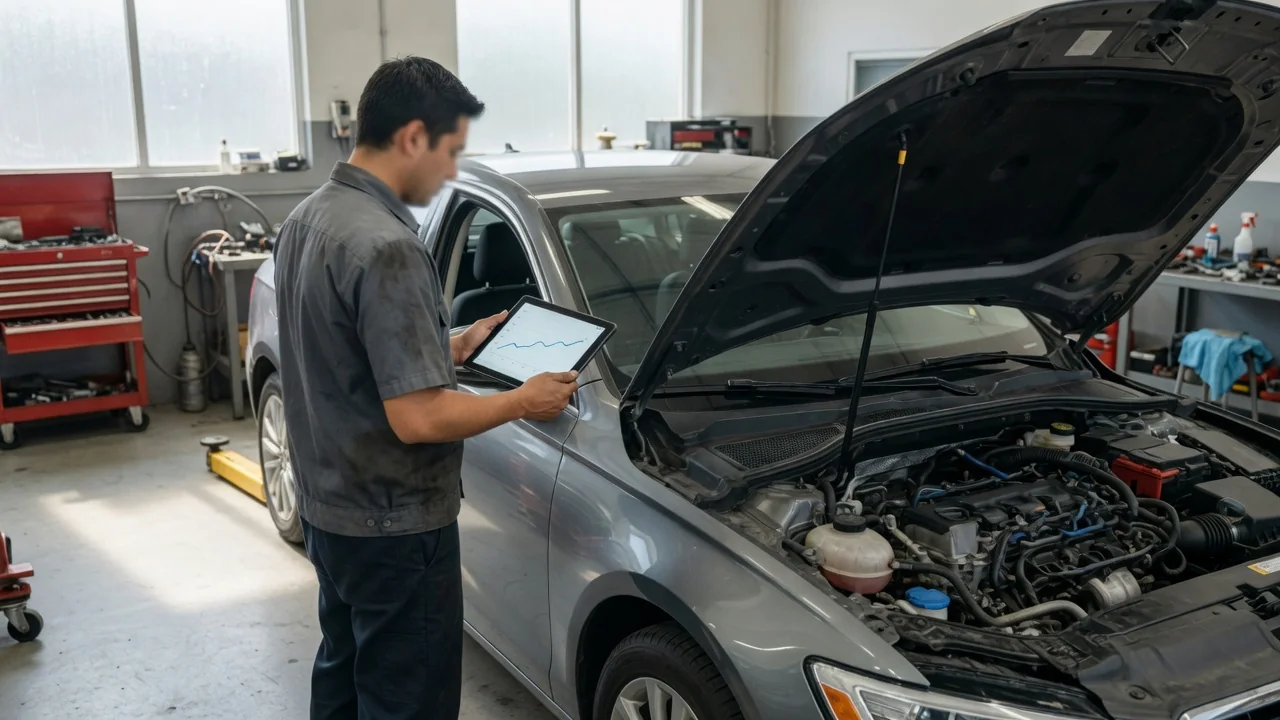
A P0116 code means the engine control module has judged engine coolant temperature sensor data implausible. The P0116 code is a range and performance concern rather than a simple open or short, so the starting value, the rate of change, or warm-up behavior may fall outside the expected pattern. That finding is evidence to interpret with freeze-frame data and live scan data, not proof that the ECT sensor, thermostat, or cooling system has failed.
What P0116 Means for Coolant Temperature Data
P0116 identifies an engine coolant temperature sensor circuit range/performance problem. The controller expected a particular coolant temperature plausibility pattern and did not see it. Unlike a hard open or short, this judgment can rest on how the reading starts after a cold soak, how quickly it moves, or how it behaves during warm-up compared with other inputs. The stored P0116 code therefore describes a mismatch with the strategy, not a measured failure of a named part.
An implausible cold-start temperature reading, a stall or jump during the first minutes of running, or a warm-up curve that does not track expected thermostat operation can all set the same P0116 code. Detection windows, enable conditions, and comparison sensors differ by manufacturer, so vehicle-specific service information must be checked before scan data is treated as a diagnosis. The code also does not confirm actual overheating. Coolant may be at a normal temperature while the signal the module receives is still outside its allowed pattern.
Symptoms and Warning Signs That Need Attention
A P0116 code often turns on the check engine light, and some drivers also notice hard starting, rough idle, unusual cooling-fan operation, or a temperature gauge that does not match how the engine feels. Fueling and idle strategy can shift when the module treats coolant temperature as unreliable, which is why drivability can change even if the engine is not actually too hot or too cold. Those signs still do not identify the failed component. Sensor, wiring, thermostat, and coolant-level problems can produce overlapping complaints.
Some vehicles store P0116 with no obvious drivability change, so the warning light may be the only early cue. If an overheating warning appears, steam is visible, or the gauge rises rapidly, stop in a safe place and shut the engine off. Do not keep driving to see if it settles. Whether limited driving is reasonable otherwise depends on actual temperature behavior, coolant condition, and the vehicle's own warning instructions, not on the presence of the P0116 code by itself.
How Sensor, Wiring, and Cooling Faults Can Trigger P0116
A drifting or intermittently failing engine coolant temperature sensor can send values that look electrically valid yet fail coolant temperature plausibility checks. The ECT sensor may read too high after a cold soak, too low after a drive, or jump between plausible numbers as vibration or heat changes. Damaged sensor wiring and connector problems can do the same. A loose pin, corrosion, or a chafed return circuit can drop, spike, or distort the signal without setting a dedicated open-circuit code.
Thermostat operation also affects the temperature curve the module expects. A thermostat that sticks open can slow warm-up, while one that sticks closed or opens late can make the reading climb too quickly relative to the strategy. That pattern still requires evidence before replacement, because a biased ECT sensor or poor connector contact can mimic the same curve. Low coolant or trapped air may affect temperature sensing as well, depending on cooling-system design and where the sensor sits in the circuit.
Safe Observations Before Diagnostic Testing
Before any code is cleared, record stored and pending codes, freeze-frame data, current symptoms, and any recent cooling-system work. Freeze-frame snapshots show engine speed, load, and temperature context at the moment P0116 set, which later live scan data cannot reconstruct. Note whether the engine was cold, recently driven, or idling, and whether related temperature or cooling-fan codes were present. Clearing first erases that sequence. The goal at this stage is a written baseline, not a repair decision.
Check the coolant reservoir only when the engine is fully cool and only as the owner's manual describes. Never open a hot, pressurized cooling system. With the engine off and fans stopped, look for coolant traces around hoses, the reservoir, and the thermostat housing, and inspect accessible ECT sensor wiring and connector condition without reaching toward belts, fans, or hot parts. A normal gauge reading and a lack of visible leaks still cannot rule out an intermittent signal problem that set P0116.
Tests That Help Diagnose a P0116 Code
A technician typically begins with a cold-soak check of coolant temperature plausibility. After the vehicle has sat long enough for temperatures to equalize, the ECT sensor reading is compared with ambient conditions and other relevant temperature inputs using that vehicle's specified tolerances. Then live scan data is watched during a controlled warm-up for abrupt jumps, dropouts, a stalled reading, or a rise that does not match expected thermostat operation. Those observations point toward a signal problem or a cooling-system behavior issue, not yet to a parts list.
When scan data suggests an electrical fault, circuit testing belongs with a professional who can use the correct wiring diagram and the sensor specifications for that vehicle. Resistance, reference voltage, and ground integrity are confirmed against those documents rather than against generic numbers. If the temperature curve instead supports a mechanical check, thermostat operation and cooling-system condition are assessed next, still without assuming universal opening temperatures. Related codes and freeze-frame conditions help order those tests. They do not prove a particular cause on their own.
Repair the Confirmed Cause and Verify the Result
Repairs should follow the confirmed cause: ECT sensor replacement, sensor wiring and connector repair, thermostat service, or correction of a verified coolant-system problem such as a leak or air that actually affected the reading. Guessing at a sensor because P0116 is stored wastes time when the signal path or warm-up hardware is the real issue. Coolant draining, filling, bleeding, and work around hot or pressurized components require vehicle-specific procedures and qualified service. Clearing the P0116 code or disconnecting the battery does not repair the underlying fault.
Verification means the cold-start temperature reading is plausible, warm-up follows expected thermostat operation, and a follow-up scan after the applicable monitor runs does not reset P0116. Live scan data should remain stable through idle and a moderate drive, without dropouts that previously matched the freeze-frame conditions. If the P0116 code returns, especially when the fault is intermittent or other cooling-system warnings remain, further professional diagnosis is needed. Recurring range/performance faults often involve a connector, a wiring chafe, or a cooling issue that a single parts swap did not correct.