P0111 Code: Intake Air Temperature Symptoms, Causes, and Fixes
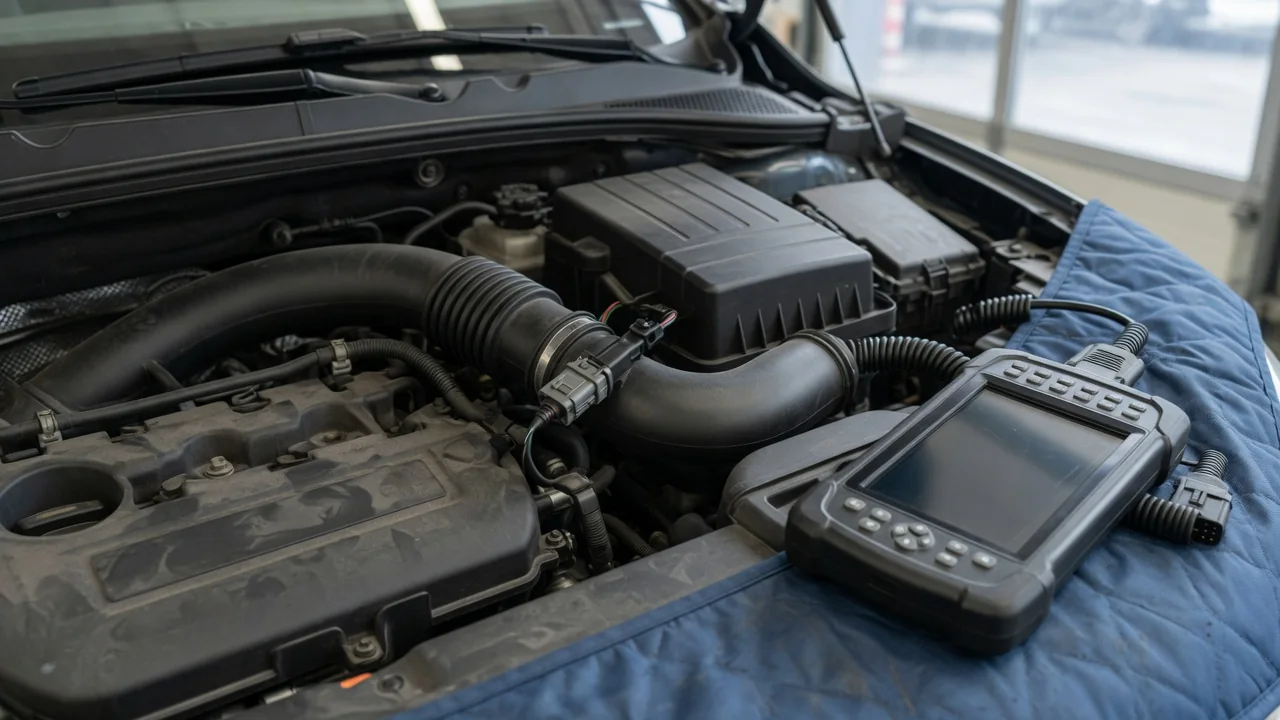
A P0111 code points to a range or performance problem with the intake air temperature signal the engine controller uses to shape fuel and spark. The stored fault is a starting point, not a parts list. P0111 symptoms can be subtle or missing, so freeze-frame data, live sensor data, and vehicle-specific service information decide whether the IAT sensor circuit, a wiring fault, or another cause produced the implausible temperature reading.
What P0111 Means for the Intake Air Temperature Signal
On many vehicles the standard wording for P0111 is intake air temperature sensor 1 circuit range/performance. That means the controller saw a temperature signal outside the band it expects for current conditions, or a reading that did not change when software says it should. The module compares the IAT input with other temperatures, engine run time, and airflow context. When that comparison fails a plausibility or response check, it stores the range/performance fault instead of waiting for a complete open or short.
Exact code text, which sensor is called sensor 1, and the enable conditions that set P0111 vary by manufacturer and engine. Service information for that vehicle is required before treating the definition as settled. The stored code is evidence that the intake air temperature path failed a check, not proof that the sensor itself has failed. Replacing the sensor without confirming circuit integrity, connector condition, and the published set criteria can leave the same implausible temperature reading in place.
Symptoms That Can Accompany P0111
An illuminated check-engine light is the most consistent companion of a P0111 code. Some drivers notice nothing else because the controller can still run using substitute values when the intake air temperature input looks wrong. When drivability does change, starting can be harder, idle can feel rough, throttle response can hesitate, or fuel use can rise. Those complaints are not inevitable and are not unique to this fault, so they should be treated as clues rather than a diagnosis on their own.
When P0111 symptoms appear, their timing often matters more than their severity. Trouble mainly on a cold start can point toward a stuck or slow temperature signal, while a complaint after recent intake work can point toward a disturbed sensor connector or a fitting that was left loose. If power drops sharply, the engine stalls, or the check-engine light begins to flash, stop in a safe place and seek assistance. Those events can involve misfire or other control problems that go beyond an implausible IAT reading.
Why an Intake Air Temperature Reading Becomes Implausible
An implausible temperature reading can come from a sensor that is electrically out of range, mechanically sluggish, or simply reporting a value that does not match the rest of the engine’s thermal picture. The controller expects intake air temperature to move as the engine warms and as airflow changes. A stuck, delayed, or wildly offset signal fails those checks even when the circuit is not fully open or shorted. That is why a range/performance fault is a logic problem as much as a hardware problem.
Loose terminals, corrosion, damaged insulation, and intermittent connections can corrupt the IAT sensor circuit just as readily as a failed sensing element. Incorrect installation, a sensor left unseated, or intake parts disturbed during other work can also put the reading outside expected conditions when the layout and repair history support that possibility. The IAT sensor may be a separate part or built into another assembly, so its location and how it is replaced must be confirmed in vehicle-specific information rather than assumed from a generic diagram.
How Scan Data Helps Diagnose a P0111 Code
Before any codes are cleared, record stored and pending faults and capture available freeze-frame data. Those snapshots show engine speed, load, coolant temperature, and the intake air temperature value at the moment P0111 set, which helps separate a cold-soak problem from a running-condition problem. Clearing first erases that context. Related codes should stay in the record as well, because they often decide whether the next step is the IAT path or another sensor the controller used in its comparison.
After the vehicle has cooled enough that residual engine heat is no longer dominating the intake, a technician compares the IAT reading with expected ambient conditions, still allowing for heat soak near the engine. Live sensor data is then watched for values that make no physical sense, for abrupt jumps, or for a signal that barely moves as conditions change. Manufacturer diagnostic criteria and any companion codes set the test order. Universal temperature limits or resistance numbers do not substitute for that vehicle’s published checks.
Safe Observations and the Limits of Sensor Testing
Owner checks should stay visual, with the engine off and cool. Look for a sensor connector that is unlatched or only partly seated, obvious wire damage along the IAT sensor circuit, and intake fittings that look disturbed after recent service. Those observations can explain an intermittent wiring fault or a poor connection, but they do not measure contact quality inside the connector or prove the circuit can carry a valid signal. Anything beyond that visual pass belongs with a technician who has the correct diagram.
Professional testing of sensor response and circuit integrity uses the vehicle’s wiring diagram and manufacturer specifications, not generic probing habits. Appearance of a connector is not the same as continuity, correct reference voltage, or a clean ground. Do not unplug components with the engine running, pierce insulation to take a reading, or apply heat in an attempt to force the sensor to move. Those shortcuts can create new faults, injure the wiring, or produce a misleading change that is not a valid response test.
Repairs That Address the Confirmed Fault
Repair should follow the evidence, not the code lettering. A restored connection, repaired damaged wiring, corrected sensor installation, or replacement of a verified faulty sensor or the assembly that contains it can each be the right fix when testing supports that choice. Confirm the sensor configuration and the correct replacement part for the specific vehicle before ordering, because an IAT element may stand alone or share a housing with another intake sensor. The wrong part can restore a code even after careful installation.
Clearing P0111 without recording diagnostic information and completing the confirmed repair does not fix the cause. After the work, live sensor data should show a plausible intake air temperature reading, the fault should not return, and the vehicle’s applicable monitoring conditions should complete. If the range/performance fault comes back, treat that as a sign that the original evidence was incomplete and continue professional diagnosis rather than repeating the same replacement.