P0070–P0074 Ambient Air Temperature Sensor Codes Explained
Codes P0070 through P0074 point to the ambient air temperature sensor circuit, which tells the vehicle how warm or cold the outside air is. The P0073 code and P0071 deserve the closest attention because both can leave the outside temperature display showing numbers that make no sense. Knowing what each code measures, and what it doesn't prove, keeps diagnosis focused and repairs justified.
What P0070 Through P0074 Indicate
In generic OBD-II terms, P0070 describes an ambient air temperature sensor circuit fault, P0071 a range/performance problem, P0072 a circuit low input, P0073 a circuit high input, and P0074 an intermittent signal. These standard definitions are a starting point, not the final word. Manufacturers set their own diagnostic criteria, enable conditions, and circuit layouts. The exact description for your year, make, model, and powertrain should be confirmed in service information before anyone interprets scan tool live data or decides what failed.
A circuit code means the control module detected an electrical or signal condition it didn't expect. By itself, the code doesn't prove the sensor needs replacing. A P0072 code or P0073 code can come from wiring, a connector, the sensor, or sometimes the module reading it. Also, low and high describe electrical input, not the weather. A circuit high input code can set on a hot afternoon or a freezing morning because it reflects the signal the module receives, not the actual outdoor temperature.
P0073: Why the Ambient Temperature Circuit Reads High
When P0073 sets, the module is seeing a signal above its expected electrical range for the ambient air temperature sensor. Many of these sensors are thermistors, which change resistance with temperature, and the module reads the resulting voltage on a reference circuit. Depending on the design, an open circuit, a disconnected sensor, a damaged connector, a broken wire, or an internal sensor fault can push that voltage toward the top of the scale. Because circuit designs differ, the same symptom can have different electrical causes on different vehicles.
On some systems, an open circuit makes the outside temperature display show an unrealistically cold value because the module reads the high voltage as extreme cold. Other vehicles blank the reading, show dashes, or substitute a default value, so what you see and how the system falls back vary. The code narrows the search but doesn't name the cause. Circuit-specific testing is needed before blaming the sensor, the harness, or the control module. A module should never be judged faulty from the code alone, since external wiring and connector problems must be ruled out first.
P0071: When the Temperature Signal Fails a Plausibility Check
P0071 differs from the circuit codes because the signal may sit within a normal electrical range yet still fail the vehicle's plausibility or response checks. A module might compare the ambient reading against other temperature inputs after a long cold soak, or watch whether the value changes as expected over time. Possible explanations include inaccurate sensor output, a sensor mounted loosely or out of position, heat from nearby components, or an intermittent connection that distorts the reading. Each possibility needs supporting evidence, not assumption.
Heat soak complicates the picture. After a vehicle is parked, warmth from the engine bay and pavement can raise the sensor reading. Many systems also filter or delay the displayed value to avoid misleading jumps. Either effect can make the dashboard look wrong without proving a fault. That's why technicians review cold-soak conditions, the freeze-frame data showing what the module saw when the P0071 code set, and signal behavior over a drive cycle. They follow the manufacturer's diagnostic procedure to decide whether the reading truly fails its test.
P0072 and P0074: Low Input and Intermittent Signals
P0072 means the input is below the expected electrical range. Depending on the circuit design, causes can include a signal wire shorted to ground, pinched or chafed insulation, moisture bridging connector terminals, or a failed sensor. P0074 concerns an intermittent signal, meaning the reading dropped out or jumped briefly and then recovered. The condition may be gone by the time the vehicle is inspected, so diagnosing a P0074 code often depends on catching the fault as it happens with scan tool data recorded under the conditions that trigger it.
Owner observations can guide that search. An outside temperature display that jumps suddenly, or faults that show up after rain, washing, rough roads, or recent front-end or bumper work, can point toward connector corrosion, wiring damage, or a loose terminal. These patterns are clues, not proof. Replacing the sensor without checking the connector and harness often leaves either code unresolved. A new part plugged into a corroded or stretched terminal can produce the same low or intermittent signal as the old one.
Sensor Location and Symptoms You Can Safely Observe
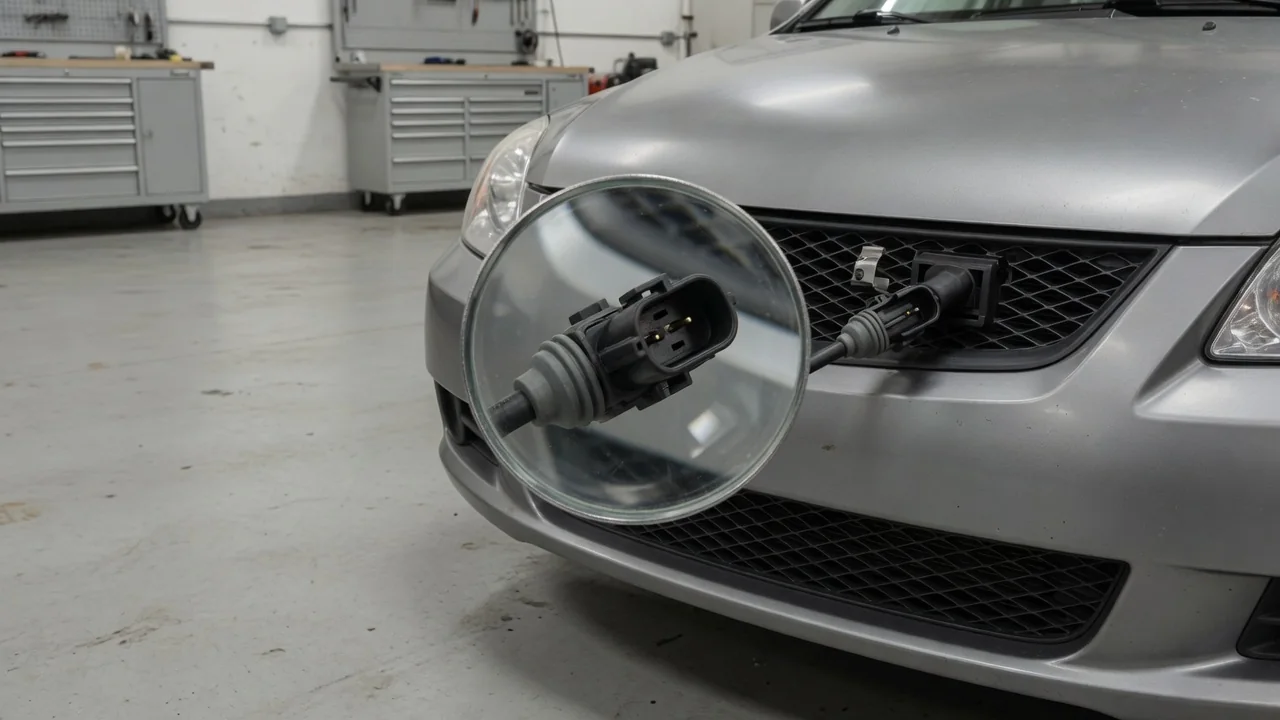
The ambient air temperature sensor is usually mounted near the front of the vehicle, such as behind the grille, inside a bumper opening, or on the radiator support, where it can sample incoming outside air. Exact placement varies widely, so check vehicle-specific location information. Typical symptoms include a wrong, stuck, missing, or erratic outside temperature display, and some vehicles also turn on a warning light. Whether automatic climate control, fan speed, or other features are affected depends on how each system uses the reading.
This sensor measures outside air, not coolant or engine temperature. A P0070 code or any of its related codes doesn't, by itself, mean the engine is overheating; separate sensors and gauges monitor that. If you want to look, park on level ground, switch the vehicle off, and let it cool. Limit your inspection to what you can see without tools: visible damage, a loose mounting, or an obviously disconnected plug. Keep your hands away from cooling fans, which can start unexpectedly on some vehicles, and don't remove protective panels.
How Testing Confirms the Cause and the Repair
Before clearing anything, record every stored and pending code, the freeze-frame information, the displayed outside temperature, and any recent repair, collision, or flooding history. That record preserves evidence the module may otherwise lose. Professional testing then compares scan tool live data with actual conditions, uses the wiring diagram for the specific circuit, inspects connectors for corrosion or spread terminals, and performs the electrical checks the manufacturer specifies. Probing, powered-circuit testing, harness access, and component removal belong with qualified service. Jumper-wire shortcuts and universal resistance or voltage targets have no place in accurate diagnosis.
The repair should follow confirmed findings, whether that means a sensor, a connector, or a section of wiring. Afterward, verification means watching for stable temperature data and confirming code status under the vehicle's prescribed conditions. The outside temperature display may update gradually, so a slow change right after a repair isn't necessarily a failure. Recurring faults or climate-control problems deserve prompt diagnosis. If a related problem keeps the defroster from clearing the windshield, don't drive until visibility is restored. A fogged or frosted windshield is a far more immediate hazard than a wrong temperature reading.