P0020 Code: Bank 2 Intake Cam Actuator Circuit Diagnosis
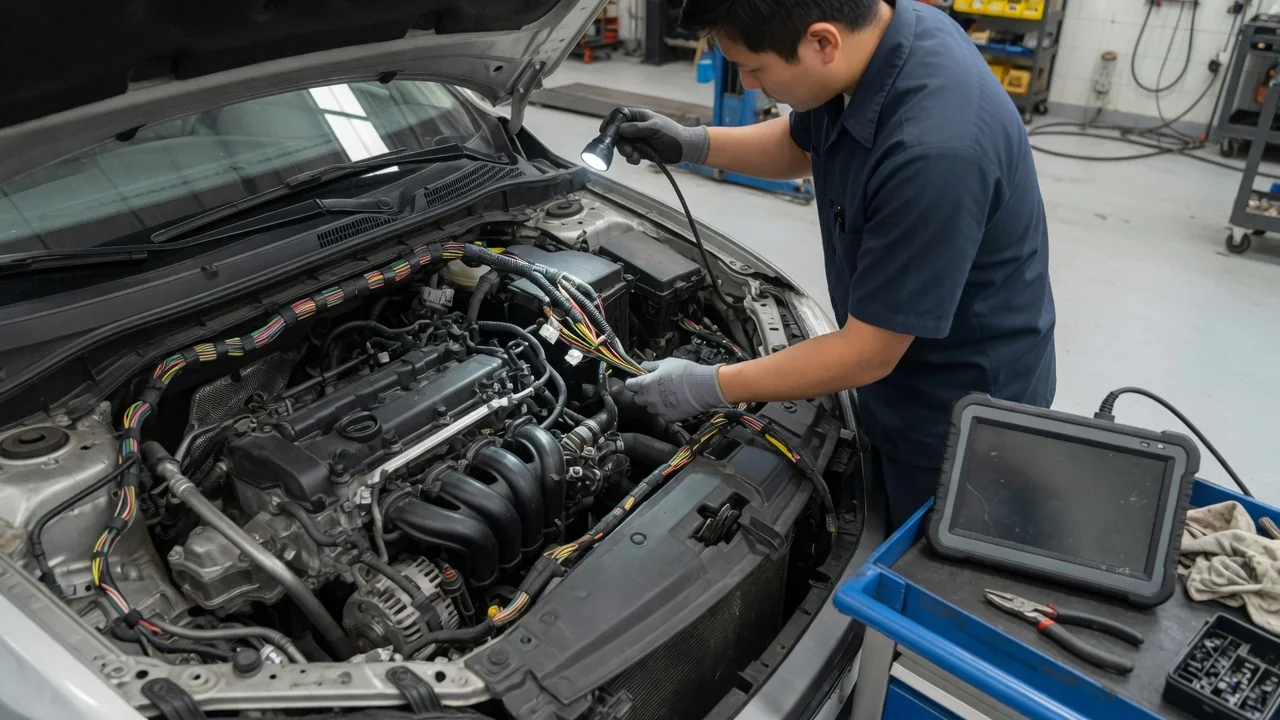
P0020 identifies an A camshaft position actuator circuit or open fault on bank 2, generally the intake camshaft in variable valve timing. A P0023 code may also store for the B, or exhaust, actuator on the same bank. Neither code proves the actuator, wiring, or control module has failed. Confirm the description, location, and test path in vehicle-specific service information before interpreting the reading.
What P0020 Means for the Bank 2 Intake Cam Actuator
The P0020 code is a standardized description for an A camshaft position actuator circuit or open condition on bank 2. In published descriptions, A generally identifies the intake camshaft actuator, often an oil control solenoid that the control module commands to change cam timing. That convention is not a substitute for the manufacturer's wording. Before treating the reading as an intake-side fault, confirm the published code definition, camshaft designation, and component location for that engine, because camshaft labels and actuator locations can differ from a generic diagram.
Bank 2 is the cylinder bank that does not contain cylinder 1. Which physical side that is depends on the engine architecture, so locating the bank 2 intake camshaft actuator requires the vehicle's service information rather than a universal left-or-right rule. A circuit or open fault reports an electrical problem in the actuator circuit. It does not establish that the intake camshaft actuator has failed internally, and it does not justify replacing the camshaft position sensor on the same bank without supporting electrical or mechanical evidence from the specified tests.
Symptoms and When to Stop Driving
An illuminated check-engine light can be the only obvious sign of P0020. Some engines also idle roughly, hesitate under load, or feel down on power if variable valve timing on bank 2 is not responding as commanded. Other vehicles store the code with little or no noticeable drivability change, so the absence of roughness does not rule the fault out. Those symptoms also overlap with many other ignition, fuel, and mechanical problems, which means the way the engine feels cannot identify which part of the actuator circuit is at fault.
Stop driving as soon as it is safe and arrange assistance if an oil-pressure warning appears, the engine makes severe noise, it stalls, or the check-engine light flashes. Those conditions can indicate lubrication, misfire, or mechanical trouble that a circuit code does not fully describe. When the light is steady and the engine still runs smoothly, whether to continue driving is a judgment based on present symptoms and any guidance in the owner's manual. No general rule can promise a safe remaining distance, because the underlying electrical or oil-control problem can change without further warning.
Electrical Faults That Can Trigger P0020
The intake camshaft actuator circuit can open or behave as open when the actuator wiring harness is damaged, a terminal is loose, corrosion interrupts contact, or the electrical connector is not fully seated. Heat, vibration, and oil contamination around the valve cover area can stress those connections. An internal open or short in the oil control solenoid of the bank 2 intake actuator is also possible, but that is a hypothesis until resistance and circuit continuity are measured against the manufacturer's specifications for that solenoid.
Depending on the vehicle's wiring design, the same P0020 reading can come from a missing power supply, a failed ground, or a problem on the control-module driver that commands the actuator. Those paths must be identified from the circuit diagram rather than assumed from the code text. A control-module fault is possible, yet it is a last-place conclusion that needs evidence after power, ground, wiring, connector, and solenoid tests have been completed. The code by itself does not prove the module is defective.
Safe Observations Before Scheduling Diagnosis
Before any codes are cleared, record every stored and pending diagnostic trouble code, capture available freeze-frame data, and note the operating conditions when symptoms appear. Freeze-frame data can show engine speed, load, temperature, and related parameters at the moment the P0020 code set, which helps a technician reproduce the fault. Check oil level using the procedure in the owner's manual. Oil condition matters to variable valve timing because the oil control solenoid meters pressurized oil, but dirty or low oil does not by itself prove the cause of an electrical circuit or open code.
With the engine off and cool, a visual look at accessible portions of the actuator wiring harness and electrical connector can reveal pinched insulation, oil-soaked plugs, or an obviously disconnected connector. Stay clear of moving parts and do not probe terminals or back-probe connectors during this check. Recent repairs, oil changes, or valve-cover work are worth noting because they can focus a later inspection on a disturbed harness or connector, without assuming that the last service caused P0020. Those observations belong in the history given to the technician.
Professional Tests That Support a Repair Decision
A technician starts from vehicle-specific wiring diagrams and diagnostic procedures so the correct bank 2 intake cam actuator and its circuit are identified before any parts are changed. Circuit integrity checks look for opens, shorts, and excessive resistance, then confirm power supply, ground, and terminal condition at the connector. Control-side operation is compared with the manufacturer's specifications for voltage, current, or commanded duty, depending on how that system is designed. Those measurements, not the code label, decide whether the problem is in the harness, the solenoid, or elsewhere.
Commanded actuator tests and live scan data can show whether the control module is attempting to move bank 2 intake timing and whether the reported cam position follows. Those results still need interpretation next to the electrical tests, because a circuit that is open under load may look normal at rest. Components should be replaced only after evidence points to that part. After a repair, operational checks and a scan for returning faults confirm that the circuit remains intact under the conditions that originally set P0020.
Interpreting P0023 When It Is Also Recorded
When a P0023 code is also recorded, it denotes a B camshaft position actuator circuit or open fault on bank 2. B generally identifies the exhaust camshaft, so P0023 usually points at a different oil control solenoid and circuit from the intake-side P0020 code. That pairing is still manufacturer-dependent. Verify the vehicle-specific definition and actuator location before interpreting P0023 or choosing a diagnostic procedure, because some engines label A and B differently or place both actuators where a generic bank-2 sketch would mislead the inspection.
P0023 identifies its own diagnostic target and should be documented separately whenever it accompanies P0020. Shared power feeds, grounds, or harness sections merit investigation only when the vehicle's circuit diagram shows those paths in common; two codes do not prove two failed actuators. One damaged connector, a shared supply, or a control-side problem can set both readings, just as two independent opens can. Treat each code as evidence of a circuit condition that still needs continuity, power, and solenoid tests before any replacement decision.