P0012 Code: Meaning, Causes, Diagnosis and Repair Options
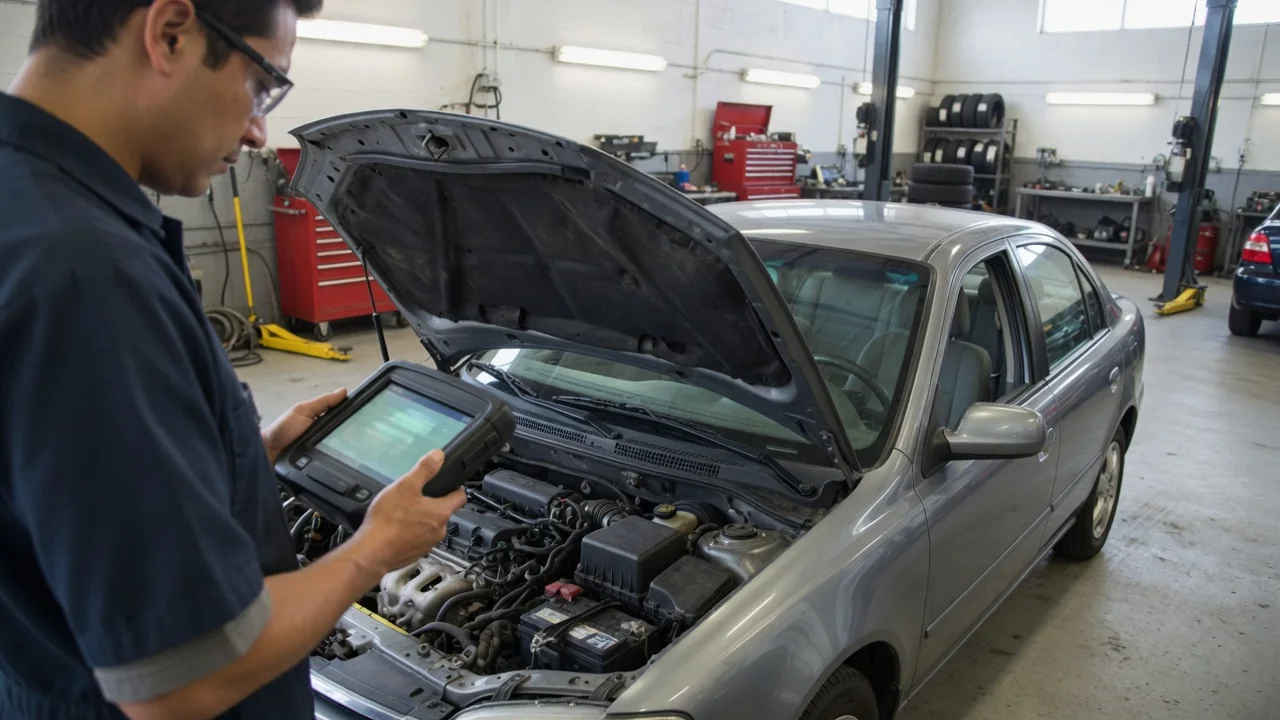
A P0012 code indicates the engine control module found intake camshaft timing over-retarded on bank 1, meaning the “A” camshaft is later than commanded. Variable valve timing often depends on oil flow, so oil condition and control hardware can matter, yet the code is evidence to interpret rather than proof a part has failed. Confirm the description, camshaft identity, and bank location in service information for the exact vehicle before drawing conclusions.
What P0012 Means for Intake Camshaft Timing
On many engines, the standard P0012 description is “A” camshaft timing over-retarded on bank 1, and “A” generally refers to the intake camshaft. The control module compares commanded and actual positions and sets the code when timing stays outside the expected range. That finding does not name a failed solenoid, actuator, sensor, or chain. Bank numbering, camshaft labels, and even which bank is bank 1 can differ by engine layout, so the stored description must be matched to the vehicle’s service information before any interpretation.
Variable valve timing advances or retards the camshaft so the engine can meet load, idle, and emissions targets. The module commands a camshaft timing actuator, and on many designs engine oil is the working fluid that moves the mechanism. If oil does not arrive with enough pressure or cleanliness, actual intake camshaft timing can lag behind the command and appear over-retarded. Related codes and freeze-frame data can show whether the condition appeared at idle, during a cold start, or under load, but they still do not replace a confirmed diagnosis.
Symptoms and Signs That Call for Stopping
The stored P0012 code typically illuminates the check-engine light. Drivers may also notice a rough idle, reduced power, hesitation, hard starting, or stalling, while others feel little change if the timing error is modest or intermittent. Accompanying noises, smoke, or drivability complaints can point toward oil or mechanical trouble, yet their absence does not clear the fault. Because the same code can appear with mild or severe symptoms, the light by itself does not establish how the engine will behave on the next drive.
Urgency depends on how the engine is running and which warnings appear with it. A P0012 code alone cannot prove continued driving is safe. Stop as soon as it is safe and shut the engine off if an oil-pressure warning appears, if severe rattling or knocking develops, or if power drops sharply. Repeated stalling, a severely rough idle, or a flashing check-engine light calls for prompt assessment and towing rather than continued operation, because those signs can indicate misfire, lubrication loss, or timing trouble that can worsen with more running.
Oil, Control and Mechanical Conditions Behind P0012
Oil-operated variable valve timing is sensitive to engine oil level, the specified oil, contamination, and restricted passages that feed the camshaft timing actuator. Low oil, sludge, or the wrong specification can slow the response of intake camshaft timing on bank 1 so the position stays retarded relative to the command. An oil control solenoid that sticks, a damaged connector, or a weak camshaft timing actuator can produce the same stored result. Those items are possible contributors, not confirmed causes, until testing isolates which condition is actually present.
Inadequate oil pressure and mechanical timing problems belong on the same list of possibilities that require professional testing. A stretched chain, a jumped sprocket, or worn actuator vanes can keep the camshaft from reaching the commanded angle even when oil and electrical control look acceptable. A cause list is not a frequency ranking, and it does not justify replacing a timing chain, camshaft sensor, or oil control solenoid simply because a P0012 code is stored. Evidence from oil pressure testing, electrical checks, and mechanical inspection should drive any parts decision.
Safe Checks and Information to Gather
Owner checks should stay limited to accessible items with the engine off and cool. Confirm engine oil level using the owner’s manual procedure, on level ground, and with the engine off when the manual directs that method. Look at the specified oil on the cap, dipstick, or service information, and review recent oil-change or engine-repair records without guessing viscosity or substituting a different grade. Do not unplug the oil control solenoid, probe circuits, or work near belts, fans, or other moving parts while trying to chase intake camshaft timing.
Before anyone clears memory, record every stored code and any freeze-frame data the scan tool can display, including engine speed, load, coolant temperature, and whether the fault set while intake camshaft timing was being commanded. Note when the check-engine light came on, whether the engine rattled after a cold start, and whether oil was recently topped off or changed. Those notes help a technician recreate the condition. Clearing the P0012 code to see if it returns discards evidence and does not correct the underlying control, oil, or mechanical issue.
How Professional Testing Identifies the Cause
A technician starts with vehicle-specific diagnostic procedures rather than a generic parts list. Related codes, freeze-frame data, and the exact description for that engine determine whether the next step is an oil inspection, a control test, or a mechanical timing check. Commanded versus actual camshaft angle is then observed under the conditions the procedure specifies, such as idle, a commanded advance, or a specified oil temperature. If actual intake camshaft timing on bank 1 stays retarded while the command looks reasonable, the test plan moves toward oil delivery, the actuator, or the timing drive.
When evidence points to the oil or control side, oil pressure testing, oil control solenoid operation, and related wiring checks come next. A solenoid that does not respond, a circuit that cannot carry the command, or pressure that falls below the specification used for that engine can explain an over-retarded reading. Mechanical timing or camshaft timing actuator inspection becomes necessary when oil and electrical control look intact yet the camshaft still cannot reach the commanded position. A code scan identifies the complaint; it cannot settle whether the fault is oil, electrical, or mechanical.
Repair Options and Confirming the Problem Is Resolved
Repairs should match a verified finding. Correcting a documented oil-level or specification problem, repairing damaged wiring, servicing a confirmed oil control solenoid fault, or addressing mechanical timing are different jobs, and only the confirmed path belongs on the work order. An oil change may help when dirty, incorrect, or degraded oil contributed to sluggish variable valve timing, but draining and filling does nothing if the actuator, chain, or circuit is at fault. Clearing the P0012 code after service is not a repair; it only empties memory until the monitor runs again.
Additives, engine flushes, and speculative replacement of a camshaft timing actuator or solenoid are not universal fixes for a P0012 code. After the confirmed work, verification should include specified checks of camshaft timing operation, symptom resolution, and monitors that complete without the same code. Cost depends on the confirmed cause, how much labor is required to reach the component, and whether related damage must be corrected. Access, engine design, and the extent of mechanical work vary widely, so estimates should follow diagnosis rather than a flat parts guess.