P0008 and P0009 Codes: Meaning, Symptoms, and Diagnostic Steps
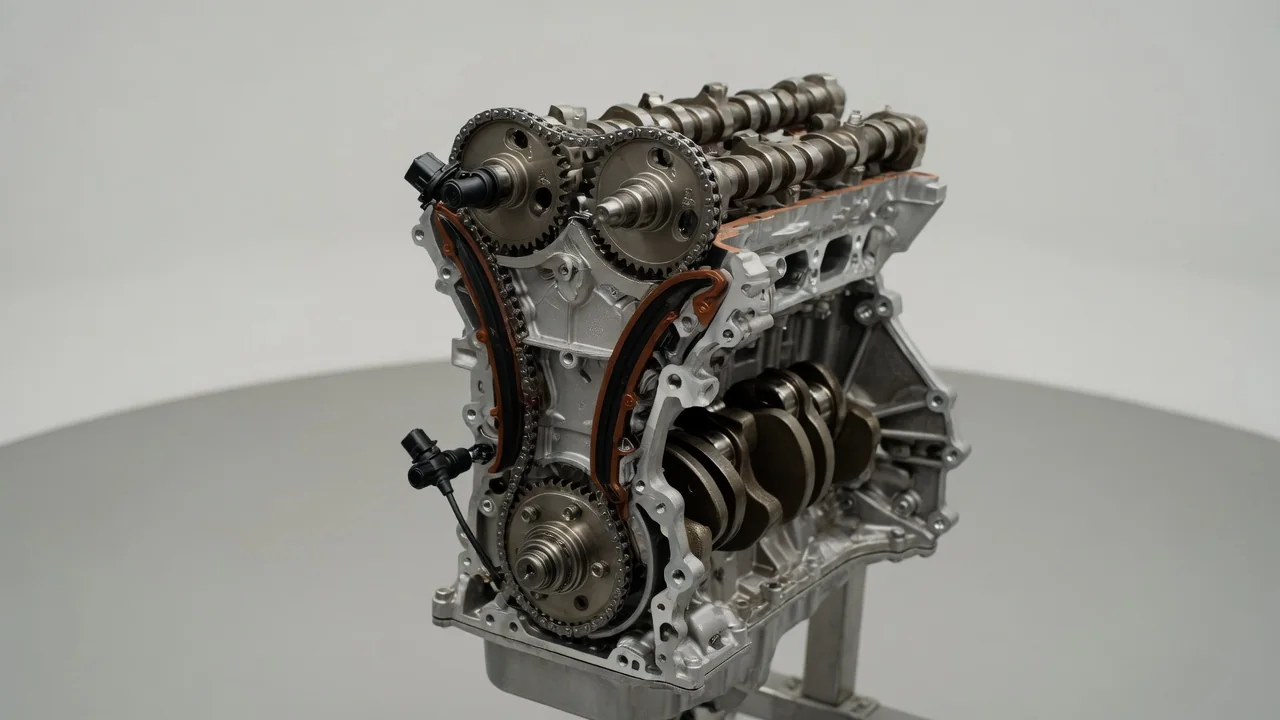
When a scan tool reports a P0008 or P0009 code, the engine control module has found that camshaft and crankshaft correlation is not matching expected engine position system performance. These manufacturer-dependent codes describe a detected relationship problem rather than a named failed part. Confirm the exact definition for the year, make, model, and engine first, because Bank 1 and Bank 2 assignments and test criteria vary by design.
Verify What P0008 Means for the Vehicle
Before treating a P0008 code as a timing-chain diagnosis, identify the vehicle year, make, model, and engine and open the matching service information. The stored definition and enable criteria are not identical across every manufacturer, so the same label can describe a slightly different test of engine position system performance. In general terms, P0008 concerns Bank 1 and the expected relationship between crankshaft and camshaft positions during the module's correlation check. That check compares learned timing with actual position signals rather than naming a failed component.
Service information, not a universal driver-side or passenger-side rule, identifies Bank 1 for that engine. On some layouts Bank 1 is the bank that contains cylinder one; on others the physical side in the engine bay is less obvious, especially in transverse or rear-wheel-drive packages. Treating the P0008 code as proof that a camshaft, chain, or sensor has failed skips this step. The control module has recorded that Bank 1 engine position performance fell outside its diagnostic window. Interpreting that result still requires the vehicle-specific failure criteria, related codes, and supporting tests.
Verify What P0009 Means and Locate Bank 2
A P0009 code should be read the same way: confirm the vehicle-specific definition first. In many applications it generally identifies engine position system performance on Bank 2, focusing on camshaft and crankshaft correlation rather than a single part name. Bank 2 is the opposite bank from Bank 1, but that still does not assign a universal physical side of the vehicle. Engine layout, cylinder numbering, and the published service diagram establish which bank the module is evaluating. Without that confirmation, a Bank 2 diagnosis can start on the wrong camshaft, sensor, or timing assembly.
When P0008 and P0009 appear together, investigation often widens toward shared timing hardware, oil control, or crankshaft position information, because both banks failed a similar correlation test. That pattern is useful context, not proof of a shared failure. One bank can have a local sensor, connector, or phaser issue while the other bank reacts to a common reference. Inline engines may use different labeling than V-type engines, so dual codes still need layout confirmation. Treat simultaneous storage as a reason to compare both banks with the published procedure, not as a shortcut to replace one assembly.
Symptoms and Warning Signs That Need Prompt Attention
An illuminated check-engine light is often the first sign of a P0008 or P0009 code, and some engines continue to run with little change in feel. Others show rough running, reduced power, difficult starting, or unusual mechanical noise from the front of the engine. Noticeable symptoms may be absent, especially if the correlation error is intermittent or only appears under certain temperature and load conditions captured in freeze-frame data. Those driving complaints still cannot confirm timing chain elongation or a camshaft position sensor fault, because the same sensations can come from ignition, fuel, or unrelated mechanical problems.
A steady warning light or an engine that feels normal does not establish that the vehicle is safe to keep driving. If an oil-pressure warning appears, loud mechanical noise develops, the engine shakes severely, or it stalls, stop as soon as it is safe and shut the engine off. Those conditions can indicate lubrication or mechanical timing distress that further running may worsen. Arrange professional assistance rather than continuing to a distant shop. Until a technician evaluates the stored engine position performance data, treat drivability as unknown rather than assuming the fault is only electronic.
Timing Chain, Oil Control, and Sensor Fault Possibilities
Where the engine uses a timing chain, elongation, a weak timing chain tensioner, worn guides, or incorrect mechanical timing can shift camshaft position relative to the crankshaft enough to fail the correlation test. That change can set P0008 on Bank 1, P0009 on Bank 2, or both, depending on which camshafts the module monitors. The code still does not prove the chain has stretched. Oil level and oil condition matter on designs that use oil-controlled variable valve timing, because low or degraded oil can slow phaser response and disturb the expected camshaft and crankshaft relationship.
A camshaft position sensor, crankshaft position sensor, damaged wiring, loose connectors, or a damaged signal target can also corrupt the position information the module uses for correlation. A P0008 or P0009 code is not proof that a sensor needs replacement; circuit and signal tests must support that conclusion. Recent timing work, camshaft actuator service, or other engine repairs can provide useful history because a mistimed assembly or an incompletely seated connector can disturb the same relationship. That history is context only. It does not assume the last repair caused the current fault.
Safe Information to Gather Before Diagnosis
Before clearing anything, record all stored and pending codes and save available freeze-frame data. Freeze-frame captures operating conditions when the correlation fault matured, such as engine speed, load, coolant temperature, and whether variable valve timing was active. Those snapshots help a technician reproduce the P0008 or P0009 condition instead of chasing a cold-engine problem during a fully warm test. Also document when symptoms occur, including cold starts, warm operation, and any recent change in idle quality, power, or starting behavior. That timeline often matters as much as the five-character code itself.
Check oil level only with the engine off, on level ground, and by following the owner's manual procedure. Report a low level or any oil-pressure warning to the technician, because lubrication affects both chain tensioner behavior and variable valve timing on many designs. Collect maintenance and repair records, including oil-change intervals and any prior camshaft or crankshaft sensor work. Do not remove timing covers or inspect components near moving engine parts. Mechanical timing inspection belongs in a shop with the engine secured and the published procedure in hand, not as a roadside look behind a cover.
Professional Tests and Confirmation After Repair
A useful diagnostic sequence starts with companion codes, the vehicle-specific service information, and relevant scan data before any part is recommended. Related camshaft, crankshaft, variable valve timing, or oil-control codes can change the order of tests. A technician may need to evaluate camshaft position sensor and crankshaft position sensor circuits, compare desired versus actual camshaft angles, and verify mechanical timing only after the published electrical and oil-control checks are complete. Replacing a timing chain, tensioner, or sensor without those results treats the P0008 or P0009 flag as a parts list rather than evidence that needs interpretation.
Supporting test results should exist before concluding that timing chain elongation, a sensor, a tensioner, or another component needs replacement. After work is completed, confirmation follows the applicable verification procedure in service information, not simply erasing the light. That usually includes a drive cycle or monitor run, a reassessment of starting and running symptoms, and a later scan for returning P0008 or P0009 codes. Clearing the malfunction indicator alone does not confirm a repair, because the engine position correlation test may not have run yet or the original condition may still be present under the freeze-frame operating point.