P0001 to P0004 Codes: Fuel Volume Regulator Control Circuit Explained
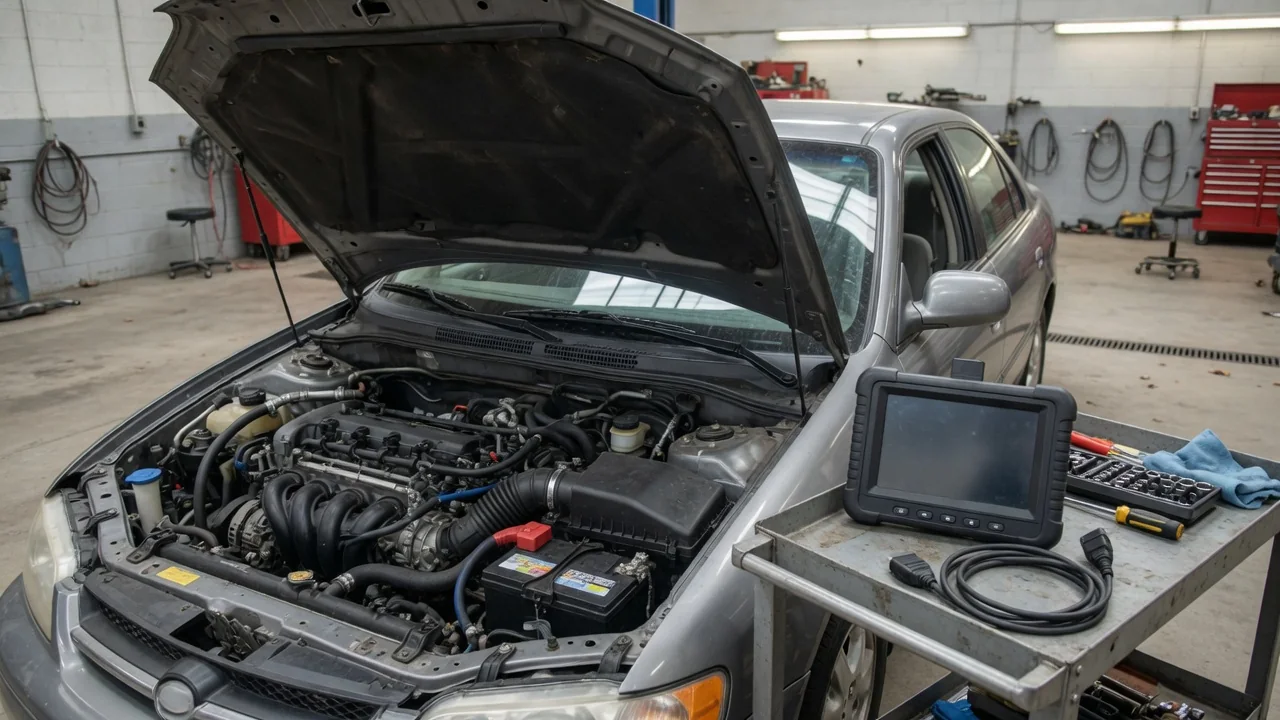
When a scan tool reports a P0001 code, or a related P0002, P0003, or P0004 code, the control module has flagged a problem in the fuel volume regulator control circuit. These four faults describe different electrical conditions—open, range/performance, circuit low, and circuit high—rather than a confirmed failed part. Interpreting them requires the exact vehicle, engine, and manufacturer diagnostic information, because circuit layout, monitoring, and thresholds are not the same on every application.
What P0001, P0002, P0003, and P0004 Mean
The published description for a P0001 code is fuel volume regulator control circuit/open. An open-circuit result means the module did not see expected continuity or signal on the monitored path; it does not identify which connector, wire, or component is at fault. A P0002 code is fuel volume regulator control circuit range/performance. That designation means the observed circuit behavior, or the system's response to regulator control, fell outside the expected window for that application. Expected operation and fault thresholds come from manufacturer diagnostic information for the specific vehicle and engine.
A P0003 code is fuel volume regulator control circuit low. The low label refers to the monitored electrical condition, such as voltage or signal on the control circuit, and does not by itself establish low fuel pressure. A P0004 code is fuel volume regulator control circuit high, and that high label likewise concerns the electrical condition rather than high fuel pressure. Component location, circuit operation, and trip criteria vary by manufacturer, so the same P0003 or P0004 result still requires vehicle-specific confirmation before any part is treated as failed.
How the Fuel Volume Regulator Fits Into the System
On engines that use one, an electronically controlled fuel-metering device can vary how much fuel is delivered by changing regulator position or flow in response to control-module commands. That arrangement is meant to match supply to demand rather than leaving delivery fixed. Names, mounting locations, and how the regulator is integrated with the pump differ with engine and fuel-system design. Treating a familiar layout from another vehicle as the same circuit can send diagnosis toward the wrong harness, connector, or assembly.
The control module monitors the fuel volume regulator control circuit for opens, range/performance problems, and circuit-low or circuit-high conditions. Where the application supports it, the module may also compare commanded fuel pressure with actual fuel pressure as evidence of how the system responded. Not every vehicle uses the same sensors, drivers, or monitoring strategy, so a P0001 through P0004 family result should be read against that application's circuit and, if provided, its pressure-response data rather than a generic fuel-system story.
Symptoms and When to Stop Driving
A stored P0001, P0002, P0003, or P0004 code may illuminate a warning light, yet drivability can range from nearly normal to difficult starting, rough running, reduced power, or stalling. None of those symptoms is guaranteed for every circuit fault, and some vehicles show little more than the lamp. The code by itself cannot establish whether continued driving is safe, because the electrical condition it reports does not measure remaining fuel delivery or whether a leak is present.
If the engine stalls, power drops severely, fuel is visibly leaking, or a strong fuel odor is present, stop in a safe location and arrange assistance rather than continuing. Do not restart when a leak is suspected, because restarting can add heat, spark risk, and further spillage. A vehicle that still runs with only a warning light still needs diagnosis of the control circuit, but those urgent signs take priority over finishing a trip or attempting on-the-spot regulator work.
Faults That Can Trigger These Circuit Codes
A damaged wiring harness, a loose terminal, or connector corrosion can interrupt the control circuit and set an open, low, or high condition depending on how the fault appears electrically. Supply or ground problems on the same circuit can produce similar results and still need confirmation with the correct diagram. An internal electrical fault in the regulator is possible, yet a stored P0001, P0002, P0003, or P0004 result does not authorize automatic regulator or pump replacement.
On some applications the diagnostic procedure also evaluates regulator movement or fuel-system response; those checks apply only when the manufacturer sequence includes them, not as a default for every P0002 range/performance result. After the wiring, connectors, and component have been tested as specified, a control-module driver fault remains a possibility to investigate. None of these causes can be ranked by how often they occur from the code number alone, and substituting parts without those checks can leave the original circuit problem in place.
Safe Information to Gather Before Repairs
Before clearing anything, record all stored and pending codes and any freeze-frame data the scan tool provides, along with when symptoms appeared—cold start, hot restart, load, or idle. Confirm the exact vehicle and engine so later tests use the matching circuit information, and note recent repairs, jump-starts, or other electrical disturbances that might have stressed the harness. That snapshot is often more useful than a live reading taken after the conditions that set the P0001 through P0004 family have changed.
With the engine off and cool, a visual look at readily accessible wiring for chafing, pinched sections, or obvious connector damage can be useful if it does not require unplugging components or reaching near moving or hot parts. Owner checks stop there. Do not open fuel lines, probe live circuits, apply power to the regulator, or attempt pressure-release procedures. Those steps can create a leak, a short, or an unintended command on the control circuit and belong in a shop equipped for fuel-system work.
Professional Testing and Repair Verification
A technician uses the correct wiring diagram and the manufacturer test sequence to check circuit integrity, regulator electrical operation, and the commands the control module is actually issuing. Commanded fuel pressure compared with actual fuel pressure can support that evaluation where the data is available, but pressure readings alone cannot identify whether the failed item is a wire, connector, regulator, pump, or driver. Repair decisions should follow those test results, and any replacement part still needs vehicle-specific confirmation of fit and service requirements.
After a supported repair, verification is an operating check under the conditions that previously set the fault, then a rescan for returning P0001, P0002, P0003, or P0004 codes and related pending results. Clearing the warning light, or erasing the code without confirming the circuit now behaves as specified, does not prove the repair. If the same open, range/performance, circuit-low, or circuit-high condition returns, the remaining path—harness, connector, regulator, or module—still needs the documented tests rather than a second untested substitution.