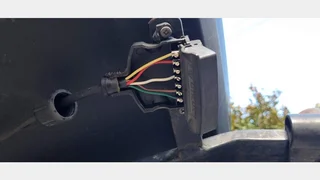
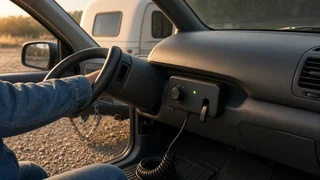
OBD2 Trailer Brake Controller
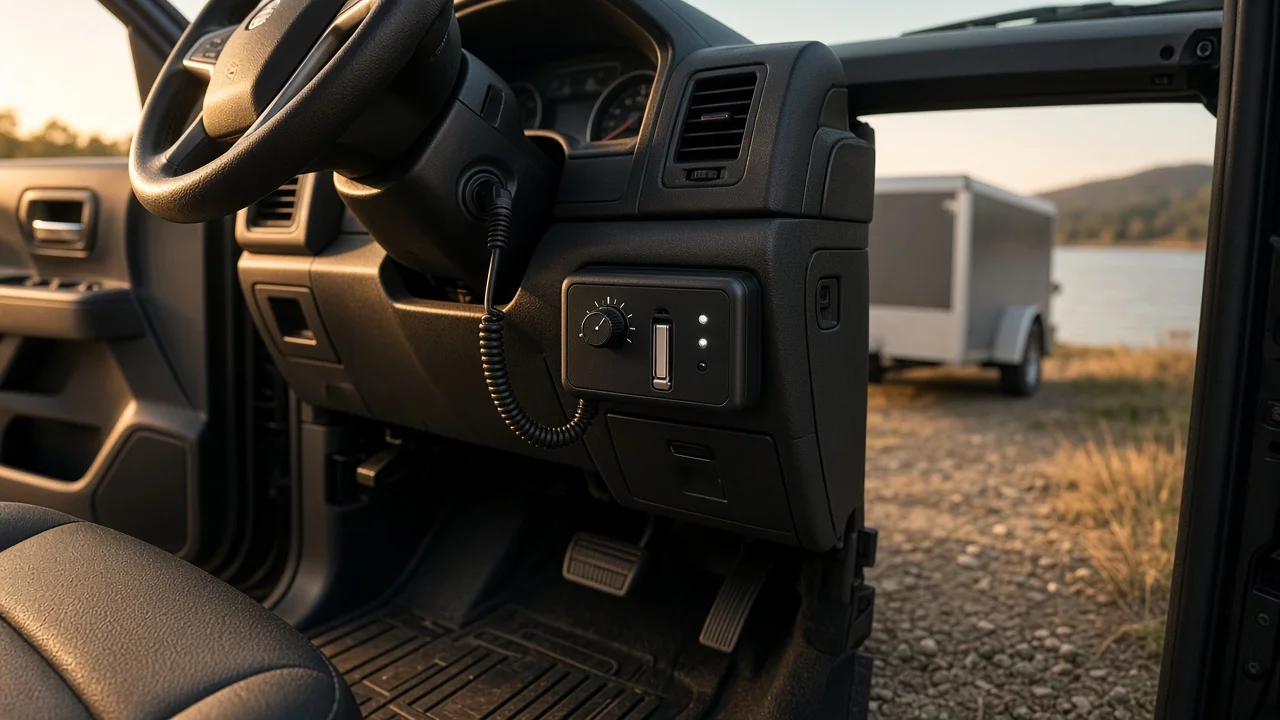
Choosing an OBD2 trailer brake controller starts with a simple question: will it plug into the vehicle’s diagnostic port and communicate with the existing braking system? This type of controller reads vehicle data through the onboard diagnostics connector instead of relying only on a manual lever and timed output. For many tow vehicles, that means braking response can follow the truck’s actual deceleration more closely. Before buying, it helps to understand what the OBD2 connection does, how trailer brakes are applied, and where fitment or wiring can change the result.
The direct answer
The direct answer is that an OBD2 trailer brake controller is designed to use the vehicle’s diagnostic network as an additional signal source for braking commands. Rather than guessing how hard the tow vehicle is stopping from an internal motion sensor alone, the unit may read speed, brake pedal activity, or other supported powertrain and chassis data through the OBD2 port. That can make brake output feel more proportional to actual stopping demand. The material change is compatibility: not every vehicle broadcasts the needed data through that connector, and a harness adapter or wiring check is often required.
When the controller receives a usable signal, the driver’s gain setting still matters. A higher gain can raise trailer brake force for a heavier load, while a lower gain reduces grab. If the unit cannot read the expected data, it may fall back to a basic time-based or manual output, which changes how the trailer behaves. For that reason, the immediate question is not only whether the product fits the bracket, but whether the vehicle exposes the correct messages and whether the trailer’s brake magnets, wiring, and brake pads are in serviceable condition.