Novak Transfer Case Linkage: Fitment and Kit Selection
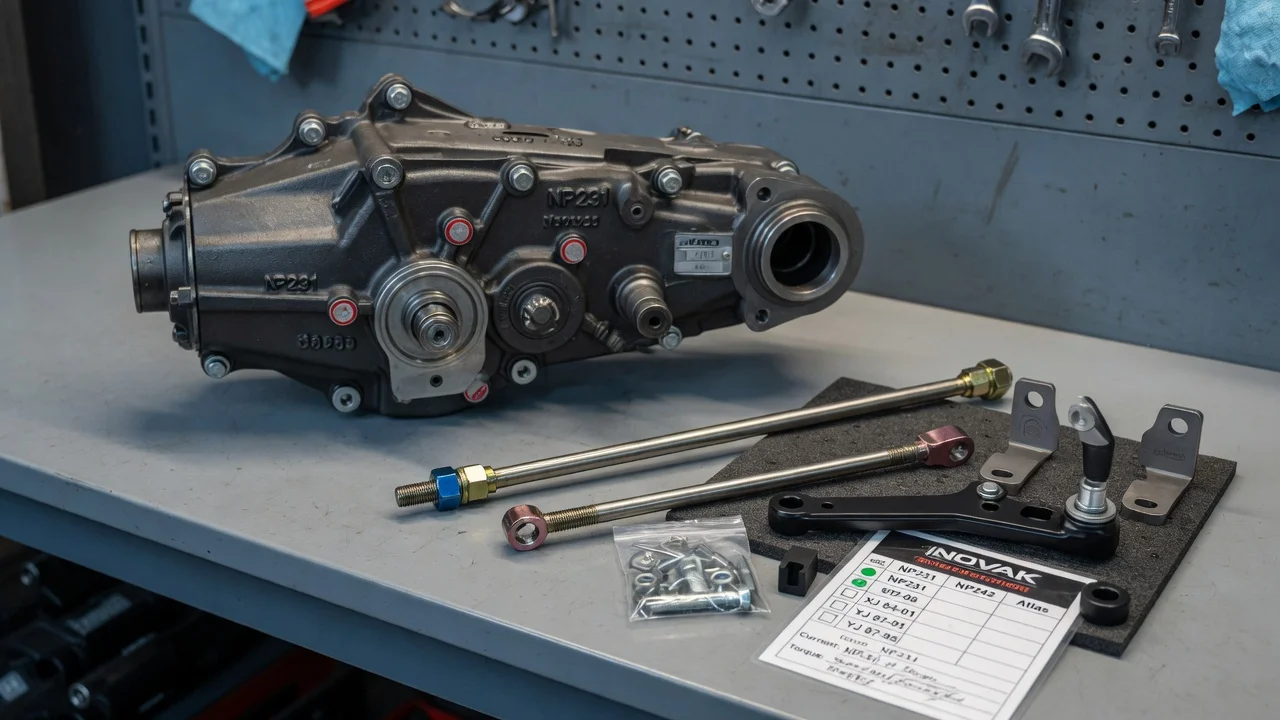
A transfer case linkage has one job: to move the transfer case reliably through its ranges from inside the cab. When a Jeep or other 4x4 gets an engine, transmission or transfer case swap, the factory linkage often stops lining up. Novak is known for drivetrain conversion components. Choosing a Novak transfer case linkage starts with your exact drivetrain combination, not the badge on the vehicle.
Define the job the product must do
Start by naming what changed in the drivetrain. Replacing a worn linkage on a stock vehicle is a different purchase from fitting one to a conversion where a new transmission moves the transfer case forward, rearward or to a different angle. Write down the vehicle model and year, the transmission, the transfer case model and the adapter or bellhousing in use. Also note whether you are keeping the original shifter, its floor opening and its boot. That list is your vehicle configuration, and every fitment question that follows refers back to it.
Next, define how the vehicle is used. A trail rig that goes into low range constantly needs crisp engagement and hardware that tolerates mud and flex. A mostly street-driven vehicle may only need the lever to engage four-wheel drive without binding. Note the practical constraints as well: available floor space, exhaust routing near the transfer case, any body or suspension lift that changes the distance between the tub and the drivetrain, and whether you can weld or drill if a bracket needs relocating. A kit that solves the wrong problem will feel vague or pop out of range no matter how well it is built.
Check compatibility
Linkage fitment depends on interfaces, not on the vehicle name. The key points are the transfer case shift lever or levers, the mounting point for the shifter pivot, the position of the floor opening, and the rod length and end fittings that connect them. The pivot is often mounted on the transmission, adapter or transfer case. Twin-stick and single-lever designs are not interchangeable unless the shifter itself is changed. Transfer cases that share a name across model years can also differ in lever orientation or shift pattern.
Check the kit against Novak's application information for your exact transmission and transfer case pairing, including the adapter. Do not assume that a part for the same Jeep generation will fit. If your combination is unusual or built partly from used parts, identify each component by its casting or tag before ordering. Also check how the transfer case is clocked. Rotating the case for ground clearance or driveshaft angle changes where the shift lever sits, and a standard linkage geometry may no longer suit it. If the manufacturer specifications do not list your combination, send the supplier photos and measurements before buying. That is better than modifying a kit afterward.
Features that affect the choice
The features that matter are the ones that control geometry and slack. Adjustable rod length, the type of rod ends and the way the pivot is supported determine whether the lever reaches full engagement in every range. Rod ends with less play give a firmer feel but carry more drivetrain vibration into the cab. Bushings soften that vibration at the cost of some precision. A pivot mounted to the drivetrain moves with the engine on its mounts, which helps keep the adjustment stable. A body-mounted pivot needs that movement absorbed somewhere else in the linkage.
Treat labels such as heavy-duty, precision or direct-fit as descriptions, not evidence. Useful evidence is concrete: an application listing that names your transmission and transfer case, clear installation instructions, a stated adjustment range, and replacement parts sold separately. Ask whether the kit includes the shifter handle, boot and hardware, or only the rod and brackets. That changes both the comparison and the real price.
Limitations and ownership costs
Installation is rarely just bolting parts in place. Expect to adjust rod length with the transfer case in each range. Confirm that the lever does not hit the edge of the shifter opening before the case fully engages. Check clearance to the exhaust, driveshafts and crossmember through suspension travel. Some conversions require trimming the floor opening or making a boot plate. Plan a careful inspection after the first trail run or the first stretch of driving, because new joints settle and fasteners can loosen.
Ongoing ownership costs are modest but real. Pivots and rod ends collect grit and need periodic cleaning and lubrication. How often depends on operating conditions, so follow the kit instructions and your own maintenance schedule rather than a universal interval. A linkage also cannot fix internal transfer case problems. Disconnect the linkage and move the case lever by hand. If the case still jumps out of range, grinds or refuses to engage, the fault is inside the case, and your service history will tell you more than new linkage parts will. Range indicator or four-wheel-drive switches may also need attention after a conversion.
Build a practical shortlist
Narrow the options with a short checklist and apply it the same way to each candidate. First, does the application listing name your transmission, adapter and transfer case together? Second, does the design match your shifter type and floor opening, or does it supply its own? Third, is there enough adjustment to reach every range with the case clocked the way you intend? Fourth, what exactly is in the box, and which items, such as boots, handles or brackets, must be bought separately? Fifth, are wear parts like rod ends and bushings available individually?
Drop any candidate that cannot answer the first question with certainty until the supplier confirms fitment. From the rest, choose the geometry that suits your use: firmer and more direct for frequent low-range work, more isolated for a street-driven vehicle. Keep the installation instructions and part identification with the vehicle records, so future repairs start from known parts instead of guesswork.