Nitrous for Turbo Lag: How It Works and What It Requires
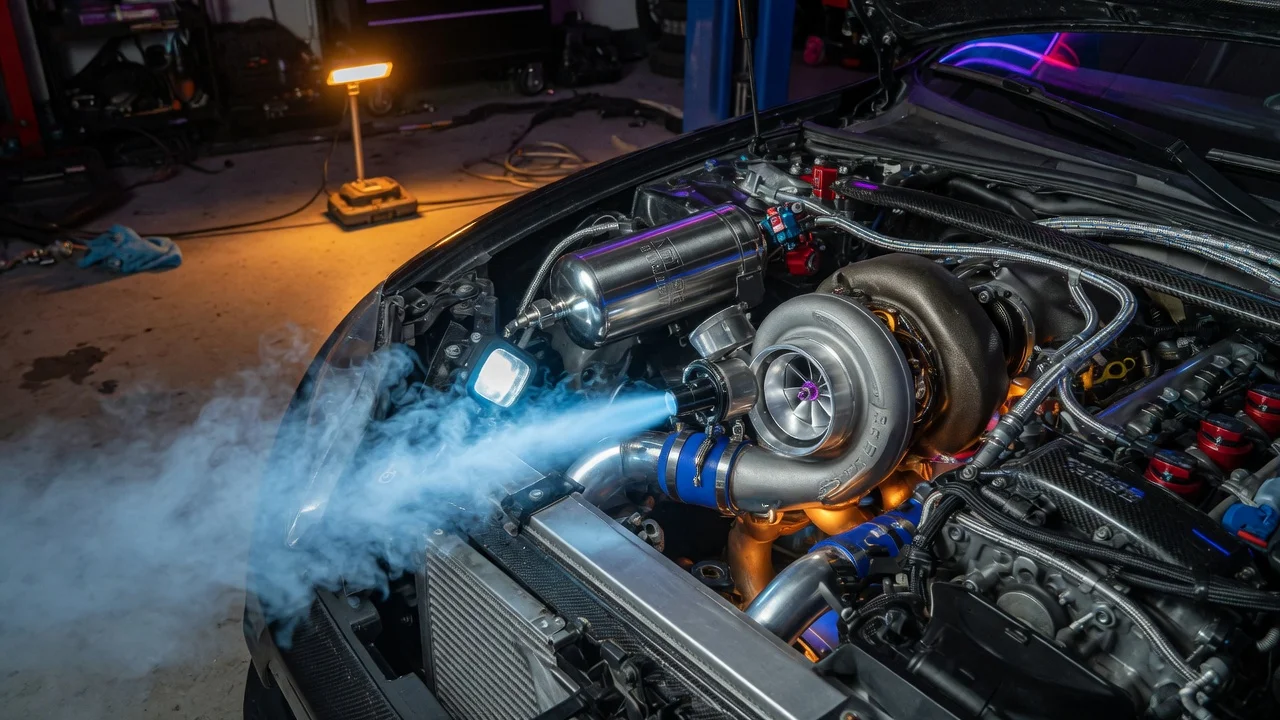
Turbo lag is the delay between pressing the throttle and the turbocharger producing useful boost. Some owners of turbocharged cars use a small nitrous oxide shot to bridge that gap, a technique often called spooling on nitrous. It can work, but it is not a bolt-on shortcut. This article explains what the nitrous actually does, which parts of your vehicle configuration decide whether it is safe, and what the system needs before it is ever switched on.
The Short Answer
Yes, nitrous can reduce turbo lag. A modest shot used briefly at low engine speed raises exhaust energy, so the turbocharger reaches boost sooner. In a typical spool setup, the nitrous switches off automatically once boost reaches a chosen level, leaving the turbo to carry the engine from there. It only works safely when the engine receives enough extra fuel, the ignition timing is adjusted for the faster burn, and activation is controlled by switches rather than left to chance. It also does nothing for lag caused by a fault, such as a boost leak or a sticking wastegate. Rules on nitrous use on public roads differ from place to place, so confirm what applies where you drive before buying a kit.
How Nitrous Helps a Turbo Spool
A turbocharger is driven by exhaust gas flowing through its turbine. At low rpm and light load, the engine simply does not produce enough exhaust flow and heat to spin the turbine fast enough for the compressor to make meaningful boost. That shortfall is the lag you feel. Nitrous oxide breaks apart under the heat of combustion and releases additional oxygen. When matching extra fuel is supplied, each cylinder burns a larger charge, which produces more exhaust heat and mass flow. That extra energy hits the turbine, speeds it up, and the compressor starts building pressure earlier than it would on its own.
Nitrous also cools the intake charge as it vaporizes, but for spooling purposes the main benefit is the added exhaust energy. Because a turbo that is already making boost plus a nitrous shot multiplies cylinder pressure, spool systems are usually wired so the nitrous only fires inside a defined window: throttle wide open, engine speed within a set range, and boost below a cut-off point. A pressure switch referenced to boost then closes the solenoids as the turbo takes over. Some setups use a progressive controller that ramps the shot in and out instead of switching it abruptly.
What Changes the Answer
The turbo and engine combination matters most. A large turbocharger on a smaller engine tends to have the most lag and the most to gain from a spool shot. A small, quick-spooling factory turbo may show little real improvement, making the added complexity hard to justify. Fuel delivery is the next deciding factor. Wet systems spray fuel together with the nitrous, while dry systems rely on the existing injectors to add fuel through the tune or by raising fuel pressure. A dry system needs injector and pump headroom, and direct-injection engines usually complicate dry setups, so the fuel system you already have largely decides which approach is practical.
Engine internals, compression ratio, fuel octane and how much control the engine computer allows over timing all affect how much nitrous the engine can tolerate. Operating conditions also shift the result: bottle temperature changes bottle pressure and therefore nitrous flow, and air temperature and altitude change how the engine and turbo behave. Intended use is a factor too. Controlled launches at a drag strip are very different from repeated bursts in traffic. Finally, a newer car still under warranty may lose powertrain coverage once a nitrous system or a modified tune is found, so check your coverage terms first.
What the Owner Can Do
Start by confirming the lag is normal for your setup and not a symptom of a problem. Boost leaks in intercooler piping, cracked vacuum lines, a sticking wastegate or actuator, exhaust restrictions, worn turbo bearings and faulty sensors all slow spool. A careful inspection, a smoke test of the intake tract and a look through the service history often reveal a cause that, once fixed, restores response without any nitrous at all.
If you still want to proceed, plan it with a tuner who knows your specific engine. A sensible spool setup includes a kit sized for the engine rather than the largest shot available, a fuel pressure safety switch that disables nitrous if fuel pressure drops, a throttle switch, an rpm window, a boost-referenced shut-off and spark plugs chosen for nitrous use as advised by the kit maker or tuner. The tune should account for the added fuel and the timing change. Mount the bottle securely and follow the kit instructions for venting. Begin with the smallest shot that gives the spool you want and log boost, air-fuel ratio and knock activity on every run.
Once the system is running, add it to your maintenance schedule. Check lines and fittings for leaks, read the spark plugs for signs of detonation, keep the bottle valve closed when the system is not in use, and refill only through a reputable supplier. If the goal is mainly faster launches, compare nitrous with alternatives such as launch control, a revised tune or a different turbo before committing to a system that needs ongoing attention.
Limitations and When to Get Help
There is no universal shot size, timing change or boost cut-off point that suits every car. The right values depend on the engine, the turbocharger, fuel quality and the existing tune, and manufacturer specifications for a factory engine rarely address nitrous at all. Treat the kit maker's instructions and a qualified tuner's data as the working reference, not general advice. Get professional help if you see signs of detonation, are unfamiliar with your engine computer, have a direct-injection engine, or need to stay within emissions and road-use rules. A practical next step is to write down your full vehicle configuration, including engine code, turbo model, injectors, fuel pump, current tune and the fuel you run, and take that to a tuner who can tell you whether a spool shot makes sense for your car.