Nissan VQ35DE Timing Chain Guide: Infiniti G35 Wear Signs and Kits
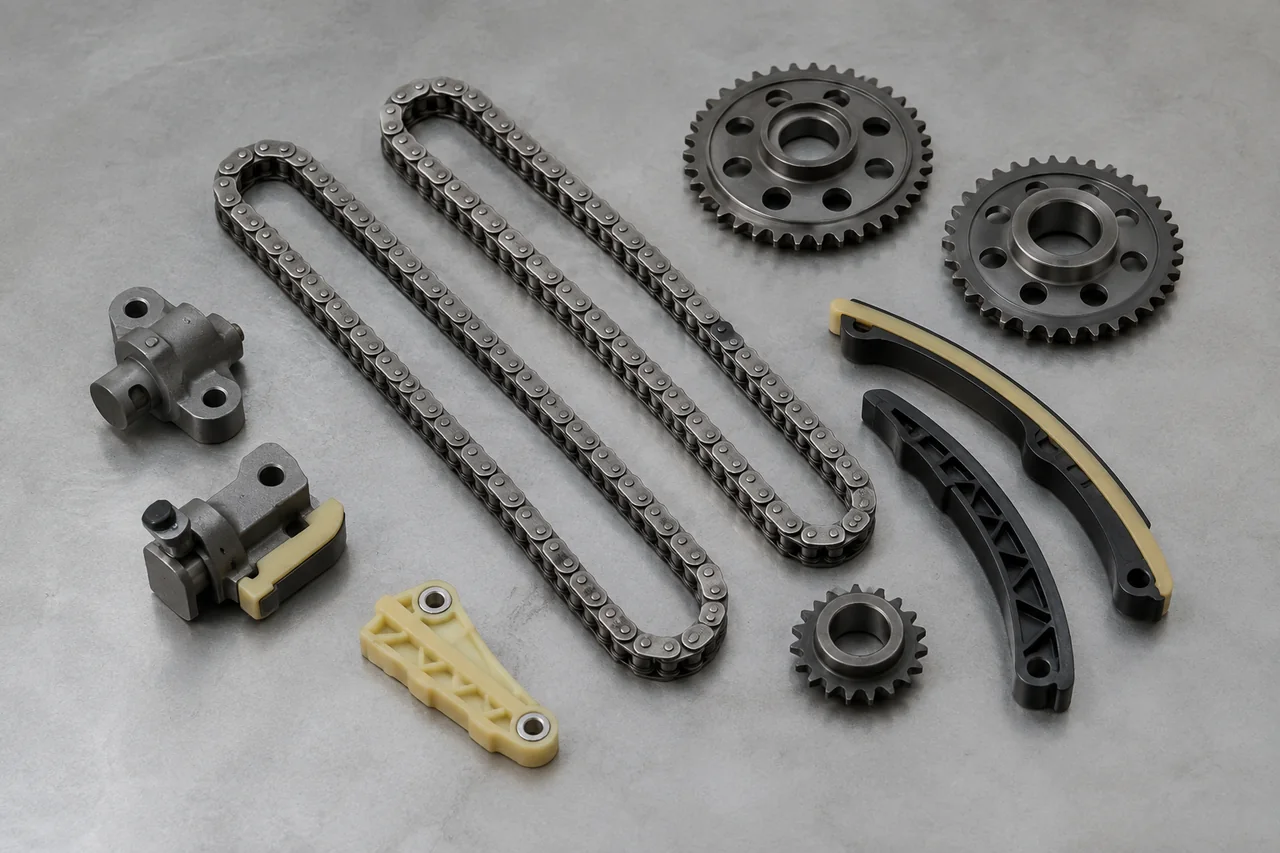
Timing chain issues in the Nissan VQ35DE engine, especially in the Infiniti G35, often appear as a rattle or rough running that can mimic other front-engine noise. The timing chain keeps the crankshaft and camshaft synchronized, and when its guides, tensioner, or sprockets wear, valve timing drifts. Owners looking for a vq35de timing chain kit need to know which symptoms point to the chain system, how to rule out simpler causes, and what to inspect before buying parts.
How the Timing Chain System Works on the G35's VQ35DE Engine
The timing chain in the VQ35DE is the mechanical link that coordinates crankshaft rotation with camshaft rotation. This synchronization ensures intake and exhaust valves open exactly when pistons reach the correct points in their strokes. A chain runs around the cam sprockets and crankshaft sprocket, while a hydraulic tensioner keeps the chain taut. Guides support the chain and prevent it from slapping against the timing cover or adjacent surfaces. When all these parts work together, the engine breathes properly and produces smooth power.
On the G35’s engine, engine oil lubricates the timing chain and fills the hydraulic tensioner. That means oil viscosity, oil level, and change intervals directly affect chain-systems health. The chain has no fixed replacement mileage, but stretched chains or cracked guides can develop over time. Recognizing how the parts depend on oil pressure helps explain why maintenance habits and symptom observation matter. A timing chain g35 owner hears may be the first warning that lubrication or component wear is reaching a critical stage.
Warning Signs of Timing Chain, Guide or Tensioner Wear on a G35
A common warning sign is a rattling or whining noise from the front timing cover area, most obvious on cold starts before oil pressure builds. The sound may fade as the engine warms but can return at idle or a specific rpm band. Owners sometimes describe a steady tick at hot idle or a brief rattle for one to two seconds after start-up. Noting when the noise occurs is valuable because the same symptom can point to a loose heat shield, a failing accessory pulley, or normal valvetrain clearances.
Beyond noise, a worn timing chain or its components may cause rough idle, hesitation, reduced power, or poor fuel economy. A check engine light may appear with camshaft position sensor or crankshaft position sensor codes. None of these alone proves chain wear; a weak tensioner can create slack that lets the chain whip against a worn guide without stretching the chain itself. Recording the conditions—cold start, hot idle, gear position, rpm—helps a technician listen for the same pattern and narrow the cause.
Ruling Out Other Causes and Knowing the Limits of a Home Check
Several front-engine noises can masquerade as timing chain rattle. A slipping accessory belt or worn idler pulley often makes a squeal that intensifies with steering load or a/c use. The water pump bearing can whine at a frequency that changes with coolant temperature. Heat shields around the exhaust manifold vibrate at certain rpm. Even valvetrain noise—lifters, rocker arms, or camshaft lobes—can sound like chain slap. A home check can only listen; it cannot eliminate those causes without removal or isolation tools.
If the car has a scan tool, the owner may find codes like camshaft/crankshaft correlation or cam timing over-advanced. These must be checked against the factory definitions for the exact engine and model year. A generic code reader may label them incorrectly. A low oil level can also produce chain system noise because the hydraulic tensioner loses pressure, so checking oil on a cool engine is safe. Persistent timing-related codes, worsening rattle, or a loss of power should lead to professional testing—and avoiding hard acceleration or engine lugging until the timing is confirmed correct.
What a VQ35DE Timing Chain Kit Includes and How to Evaluate One
A vq35de timing chain kit can range from a minimal set with just the primary chain and a tensioner to a complete kit with guides, cam sprockets, a crankshaft sprocket, gaskets, and front crankshaft seal. Comparing parts lists line by line is the only way to know what you are paying for. Full kits reduce the chance of reusing a worn guide that fails soon after the job. Missing parts like an oil pump drive spacer or a timing cover gasket add expense and delay, so the invoice should match the work scope.
OEM, OE-supplier, and aftermarket parts differ in materials and warranty. OEM components from Nissan or Infiniti carry the factory part number and often the longest warranty through the dealer. OE suppliers—the companies that made the original parts—can offer identical quality without the brand markup. Aftermarket options vary, so evaluation should focus on material description, such as steel‑backed guides with plastic wear faces, and stated warranty terms. Seller reputation matters as much as brand recognition. Check whether gaskets, seals, and sealant are included or must be ordered separately, since reassembly requires a clean, oil‑tight front timing cover joint.
Confirming Your Engine and Model Before Buying Parts
The VQ35DE appeared in several Nissan and Infiniti models, including the 350Z, Maxima, Altima, Murano, Quest, FX35, and multiple G35 years. Timing component revisions can differ by model year, emission calibration, and even VIN break. A 2003 G35 coupe may use a different tensioner design than a 2006 G35 sedan. Assuming interchangeability between years or related models risks ordering a guide that bolts to the block but rubs the chain at the wrong angle. Dealer and reputable parts supplier catalogs use VIN splits to separate production changes.
To confirm the correct parts, read the engine code label on the timing cover or valve cover, record the full VIN, and use it in the online parts lookup from a dealer or established supplier. Write down the exact production date from the door jamb label, since mid‑year changes occur. A written record of the VIN, model, trim, transmission, and engine code prevents a misordered part from turning a weekend job into a multi‑week wait. When calling a shop for a quote, recite that information and ask them to verify the catalog application before quoting labor and parts.
Replacement Considerations: Scope of the Job and Choosing a Shop
Replacing the timing chain on a G35 is major engine surgery. The technician must drain coolant, remove accessory drive components, the valve covers, oil pan or upper pan sections, and the front timing cover. The chain must be marked in relation to the cam sprockets and crankshaft sprocket before removal, and the new chain installed with the colored links aligned exactly as the manual shows. One tooth off on either camshaft can bend valves or damage pistons when the engine is rotated. This is not a step‑by‑step driveway project for most owners.
Because the job requires precise timing alignment and often camshaft locking tools, many owners choose an experienced independent shop or dealer. Ask which components will be replaced: not just the chain and tensioner, but all guides, sprockets if worn, front crankshaft seal, timing cover gaskets, and water pump if it is driven by the timing chain. Ask whether they will flush the oil system and what warranty covers parts and labor. Get an itemized written estimate that lists each part number and labor operation. Labor time can vary by more than three hours between shops, and parts choice from the vq35de timing chain kit selection changes the final price.
Maintenance Habits That Support Timing Chain Health
Regular oil changes with the viscosity listed in the owner’s manual keep the hydraulic tensioner responsive and the chain wear faces lubricated. VQ35DE engines rely on oil pressure to keep the tensioner plunger extended, so dirty or low oil lets the chain go slack. Using a heavier oil than specified can delay tensioner fill on cold starts, causing a brief rattle. Sticking to the manufacturer’s interval—not an extended aftermarket recommendation—protects the chain, guides, and sprockets from abrasive particles that accelerate wear.
Check the oil level every few fuel stops, especially on higher mileage G35s that may consume oil. A quart low at idle reduces oil pressure enough to starve the tensioner and allow chain slap. If a new rattling appears after an oil change or after switching oil brands, note that information and share it with a mechanic. Addressing the first cold‑start rattle early can save a guide, while ignoring it may let the chain chew through the plastic wear face and into the metal backing. Follow the factory maintenance schedule rather than relying on generic mileage rules for timing components.