Nissan TPMS Sensors: Problems, Replacement and Relearn for the Altima
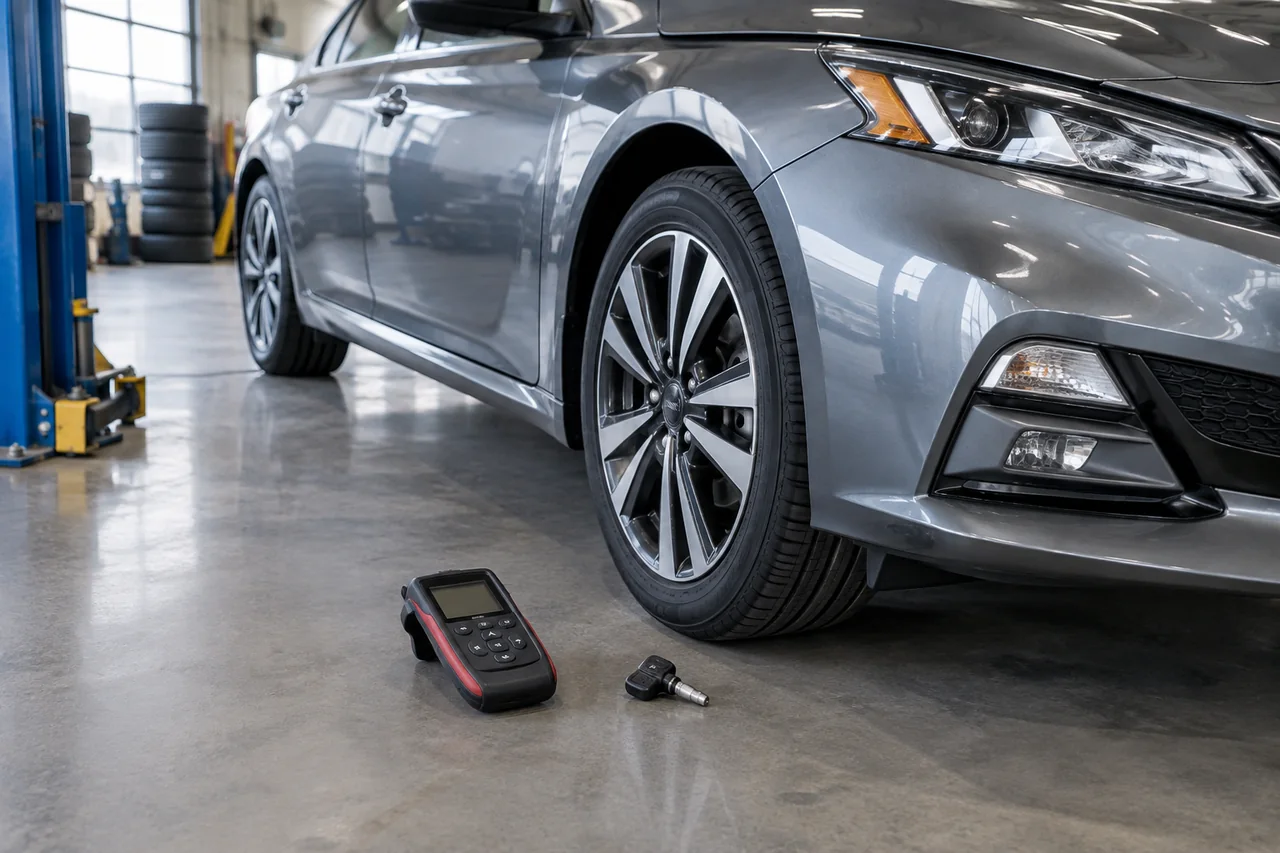
A Nissan Altima TPMS sensor is a wheel-mounted transmitter in the tire pressure monitoring system. When a TPMS warning light appears, the cause may be low cold tire pressure, a leak, sensor battery depletion, or a communication problem. Selecting a TPMS sensor for a Nissan Altima, replacing it, and completing the relearn procedure depend on the year, market, and equipped system, which VIN-based parts and service information can confirm.
What Nissan TPMS Sensors Monitor
Nissan TPMS sensors sit at the wheel, typically at the valve stem, and measure inflation while the vehicle is in use. Each Nissan TPMS sensor transmits a unique identity and pressure data to the receiver so the tire pressure monitoring system can compare readings against expected values. Communication method, operating frequency, and whether a direct wheel sensor is even fitted can vary by model year and market, so the system on that Nissan must be confirmed before assuming how a Nissan Altima TPMS warning is generated.
When pressure falls enough to trigger a warning, the TPMS warning light alerts the driver that a tire needs attention rather than naming a failed part. Some Altimas also show individual tire pressures, which helps distinguish a single low tire from a broader communication problem, but display availability is equipment-dependent. Before ordering a TPMS sensor for a Nissan Altima or looking up a procedure, gather model year, trim, market, and the VIN. Those details determine which sensors, programming path, and service information actually apply.
Warning Lights and Signs That Need a Sensor Check
A persistent TPMS warning light, a missing pressure reading, or an intermittent display is a reason to investigate Nissan TPMS sensors, not proof that a sensor has failed. The same light can appear after a genuine underinflation event, after wheel work, or when a transmitter is quiet. The owner's manual explains whether a steady or flashing TPMS warning, plus any cluster message, means low inflation, a system fault, or a condition that needs a scan. Use that description as the starting point rather than guessing from the lamp alone.
Low pressure, a slow leak, physical sensor damage, sensor battery depletion, and a communication issue each point toward different next steps. A leak is found at the tire, rim, or valve; a silent sensor is found with a scan or activation check; a wiring or receiver concern is found only after the wheels have been ruled out. Visible tire damage, substantial pressure loss, or a sudden change in handling still requires prompt tire inspection first, because those conditions affect safety even if the Nissan Altima TPMS sensor later proves healthy.
Safe First Checks for an Altima TPMS Warning
Start with cold tire pressure measured with a quality gauge, not with a visual look at the sidewall. Compare each tire, including the spare if it is part of the equipped system, to the pressures printed on the vehicle placard, usually on the driver's door jamb. Inflate to those specified values rather than to a sidewall maximum. Then note whether the TPMS warning light stayed on, flashed, went out after driving, and whether any displayed pressures matched the gauge. Record recent tire, wheel, or rotation work so a technician can reproduce the concern.
Ambient temperature changes move tire pressure, so a warning that appears on a cold morning after a warm day can be inflation-related rather than a failed transmitter. Recurring loss after correct inflation still needs a leak inspection at the tread, bead, rim, and valve stem. An illuminated warning by itself cannot identify a failed Nissan Altima TPMS sensor or establish which component needs replacement. Diagnosis has to separate a pressure problem from a transmitter, sensor battery, or registration issue before any part is ordered.
Choosing a TPMS Sensor for a Nissan Altima
A TPMS sensor for Nissan Altima applications is selected from vehicle-specific parts information, not from a generic Nissan listing. Model year, market, and VIN, where the catalog uses it, identify the correct Nissan TPMS sensor for that Altima rather than a look-alike unit from another application. Communication protocol, operating frequency, valve-stem configuration, and whether the unit must be programmed before mounting all have to match that vehicle. A sensor that physically threads into the wheel can still fail to talk to the receiver if those electronic details are wrong.
Sensor programming loads the replacement so it can transmit in the format the vehicle expects. Sensor ID registration then teaches the control unit which identifiers belong at which wheel positions. Not every replacement uses the same combination of those steps; some units are prepared before mounting, some need a TPMS activation tool afterward, and some require a full relearn procedure with a scan tool. Have the installer confirm application, valve hardware, and programming readiness before the tire is seated, because correcting a mismatch after mounting adds extra tire service.
What Altima TPMS Sensor Replacement Involves
Before authorizing replacement, a shop should test whether each Nissan Altima TPMS sensor responds, what pressure and identifier it transmits, and whether any battery-status indication is available from the tool. A weak or silent sensor is a candidate for replacement; a live sensor reporting a low reading points back to the tire. Replacement itself is tire service: the tire is demounted with proper equipment, the sensor is installed with the specified valve stem and service components, the assembly is leak-checked, and the wheel is balanced if the shop's procedure requires it.
Tire removal, bead handling, and valve installation belong in a shop with the right equipment and procedures; they are not a driveway sequence. A quote typically separates diagnosis, the sensor, service hardware such as grommets or a clamp-in valve, labor to mount and balance, plus sensor programming and sensor ID registration when those steps apply. Compare those line items rather than the sensor price alone, and confirm that programming and registration are included so they are not omitted after the mechanical work is finished.
Altima TPMS Relearn and Confirmation After Service
The relearn procedure for Nissan Altima TPMS work must come from service information for that model year and the system actually fitted. There is no single Nissan reset routine that covers every Altima. After the correct pressures are set to the vehicle placard, replacement sensors are prepared or programmed as that procedure requires, then sensor ID registration is completed through the specified method. Skipping registration, or registering identifiers from the old units, leaves the tire pressure monitoring system watching transmitters that are no longer on the vehicle.
Depending on the equipped system, a TPMS activation tool, a diagnostic scan tool, or specified driving conditions may be required to finish registration. Do not substitute invented button sequences, connector work, or intentional tire deflation as a shortcut. When the process is complete, the TPMS warning light should behave as the manual describes, and displayed pressures, where the vehicle supports them, should match a gauge within normal variation. If registration fails or the warning returns after a short drive, professional diagnosis is the next step rather than repeating an unverified reset.