Nissan Titan ABS Tone Ring: Fitment Guide
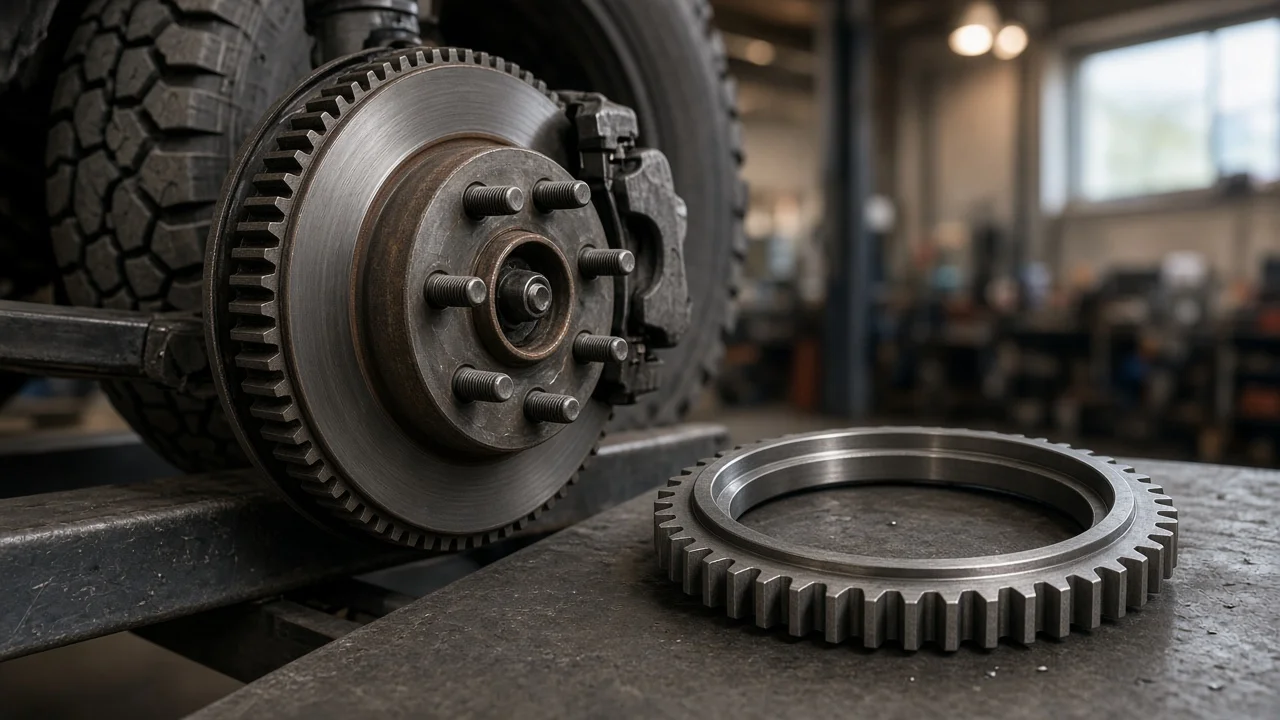
A damaged or mismatched ABS tone ring on a Nissan Titan can switch on the ABS and stability warnings and make the anti-lock system activate when it should not. Getting the right replacement depends on which generation you drive, which axle the ring is on, and whether the ring is a separate part at all. This guide explains how to identify the correct part and when the job should go to a shop.
The Short Answer on Titan Tone Ring Fitment
There is no single tone ring that fits every Nissan Titan. The correct part depends on model year, generation, drivetrain (2WD or 4WD), the axle position, and on the heavier-duty Titan XD versus the standard half-ton truck. On many trucks the front speed-sensor target is built into the hub and bearing assembly, so you replace the whole hub rather than a ring. At the rear solid axle, a ring may be fitted to the axle shaft and may be sold separately, either by itself or as part of an axle shaft.
The reliable way to confirm fitment is to look up the part by VIN in the factory parts catalog or vehicle-specific service information. Then check the replacement against the old ring: tooth count, inside diameter, outside diameter, width and the type of target (toothed or magnetic). A ring that only looks close is not good enough. If the tooth count is wrong, the ABS module will calculate the wrong wheel speed even when the part slides on cleanly.
How the Tone Ring Works With the ABS Sensor
Each wheel speed sensor sits a small, fixed distance from a rotating target. On older-style systems the target is a steel ring with evenly spaced teeth. As each tooth passes the sensor, the signal changes. Newer active sensors often read a magnetic encoder instead, which is a ring with alternating magnetic poles, often built into a bearing seal or hub. In both cases the ABS module counts these signal pulses to work out how fast each wheel is turning.
The module compares wheel speeds to detect lockup during braking and wheel slip for traction and stability control. That comparison only works if every target produces the pulse count the module is programmed to expect. A cracked ring, a missing tooth, rust buildup or a ring that has shifted on its seat creates an irregular or weak signal. The module may then set a fault code, turn off ABS and stability functions, or briefly pulse the brakes at low speed because it thinks a wheel is locking.
What Changes the Correct Part
Generation is the first split. First-generation Titans and the later redesigned trucks use different chassis and axle components. The changeover was not identical for every version, so a model year by itself can be ambiguous. Within a generation, 2WD and 4WD front ends use different hubs and knuckles. The Titan XD also has heavier-duty running gear than the standard Titan, so parts are not automatically interchangeable between them.
At the rear, axle supplier and axle configuration matter more than trim level. Two trucks from the same year can have different rear axle parts, and a ring that fits one axle shaft can be the wrong diameter for another. The type of target matters too. A toothed steel ring and a magnetic encoder are not interchangeable, because each works with a matching sensor type. Aftermarket listings sometimes group several applications together, so read the dimensions and notes, not just the year range.
Finally, decide whether you need a ring at all. If the front target is part of a sealed hub, a loose tone ring is not the fix. If the rear ring has damaged the axle shaft surface, or the shaft is worn where the bearing or seal rides, you may need the shaft or the full wheel-end parts rather than just a new ring.
Checks Before You Buy a Replacement
Start with data, not parts. A scan tool that reads ABS codes and shows live wheel speeds will show which wheel is reporting a dropout, an erratic signal or a value that does not match the others during a slow, straight drive. A code that points to one wheel's speed signal narrows the search. It does not prove the ring is at fault, though: the sensor, its wiring, its connector or the sensor gap can produce the same complaint.
With the truck safely supported, look at the suspect ring. Check for cracks, especially splits that run across the ring. Also look for flaking rust that lifts or swells the ring, chipped or flattened teeth, and metal debris packed between teeth or stuck to a magnetic encoder. Turn the wheel slowly by hand and watch for wobble or a ring that has moved along its seat. Once you know which part is bad, record the part number from the catalog and count the teeth on the old ring so you can compare it directly with the new one.
Replacing the Ring: Practical Points
Getting to a wheel-end tone ring usually means removing the caliper and brake rotor. Hang the caliper from the frame or suspension with wire so it does not pull on the brake hose. You should not need to open the hydraulic system, so the brake fluid stays sealed. Keep grease and cleaners off the brake pads, because contaminated friction material does not grip properly and should be replaced rather than cleaned. While everything is apart, it makes sense to measure pad thickness and rotor thickness against the wear limits in your service information.
Pressed-on rings must sit squarely and fully on a clean seat. Use a proper press or installer that pushes evenly on the ring. Hammering on the teeth can crack or bend the ring and ruin the signal. Follow the instructions supplied with the part, especially for rings designed to be installed with heat. Keep magnetic encoders away from magnetized tools and steel filings. Refit the sensor clean and fully seated, route its wire away from moving parts, and torque the hub, axle and brake fasteners to the factory specifications for your truck.
After the repair, clear the codes and confirm with live data that every wheel reports a matching speed. Drive at a low speed in a safe place before relying on the truck in traffic. If the code returns right away, check the sensor, wiring and installation before ordering another ring.
Limitations and When to Get Professional Help
This guide cannot confirm the part number, tooth count or dimensions for your specific truck. Those details come from the VIN, the factory parts catalog and the service manual. When an ABS fault is active, normal braking usually stays available but anti-lock and stability assistance may be disabled. Drive more carefully, especially on wet or loose surfaces, and get the fault diagnosed soon.
Stop driving and arrange professional service if the red brake warning light comes on, the pedal feels low or spongy, the truck pulls hard when you brake, you hear grinding, or you see any sign of a brake fluid leak. Hand the job to a qualified brake technician if you do not have the tools to press a ring correctly, safely remove an axle shaft, or confirm the repair with a scan tool. A poorly fitted ring can fail again and leave the truck without working anti-lock braking.