Nissan Steering Angle Sensor Guide (Frontier, Pathfinder, Xterra, Armada)
What the Nissan Steering Angle Sensor Does
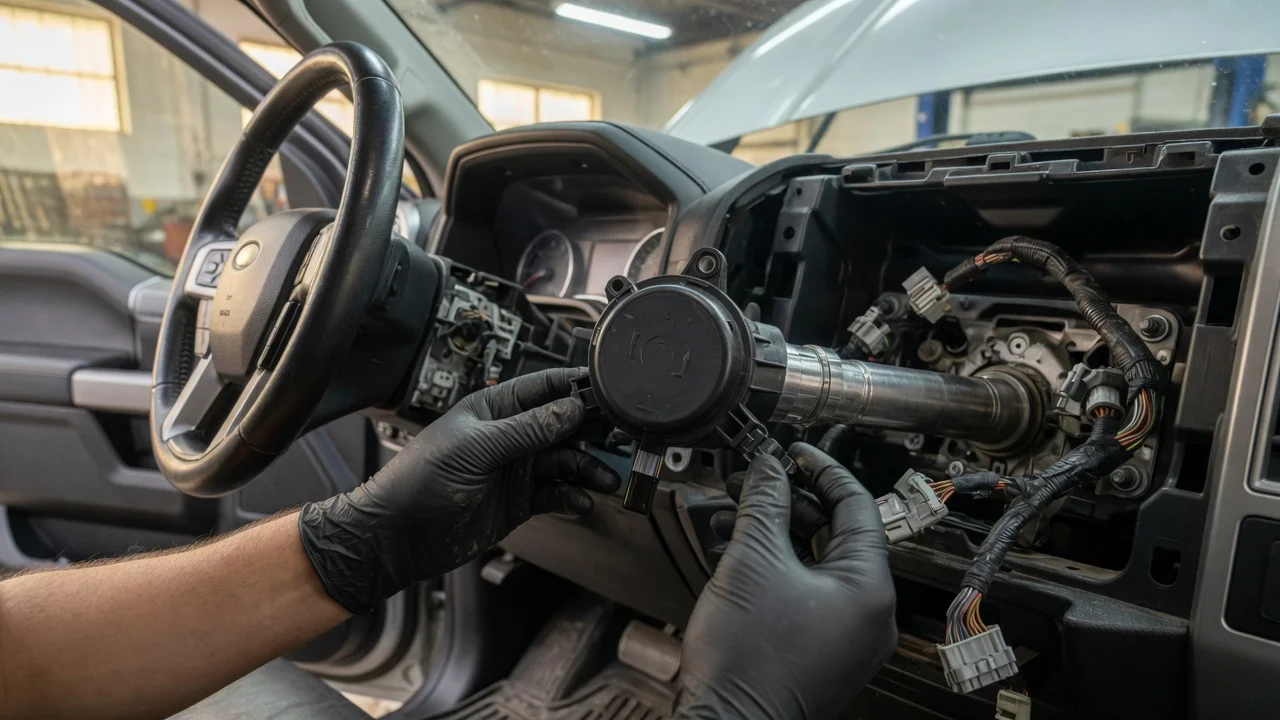
The steering angle sensor measures how far and in which direction the steering wheel is turned. It is usually mounted inside the steering column, often as part of a clock spring or spiral cable assembly. The signal it produces is used by the vehicle dynamics control system, electronic stability control and, on some models, active brake limited slip or adjustable headlights. When the sensor output is missing or implausible, the system cannot accurately compare the driver's intended direction with the actual yaw and wheel-speed behavior of the vehicle.
Core Answer and Model Coverage
The essential answer for most owners is that the steering angle sensor is a serviceable but often calibration-dependent electronic component. On Nissan Frontier, Pathfinder, Xterra and Armada vehicles, the sensor is typically integrated with the spiral cable or clock spring behind the steering wheel. The exact part design, connector style and calibration method vary by model year and generation. A replacement or disconnected battery frequently requires a steering angle sensor reset or neutral position relearn using a compatible scan tool.
Common Symptoms of a Faulty Sensor
Illuminated stability control, traction control, slip, or ABS warning lights; Diagnostic trouble codes such as C1143, C1145, C1155, or related steering angle sensor circuit codes; Stability control intervening unexpectedly during normal driving; Loss of vehicle dynamic control function without affecting basic power steering assist; Steering wheel position indicator reading incorrectly on a scan tool
A failed or miscalibrated sensor does not usually prevent the vehicle from being driven, but it disables important stability aids. This changes the safety behavior of the vehicle and should be corrected before driving in slippery or emergency conditions.
Model-Specific Notes
Nissan Frontier and Xterra: On mid-2000s through later body-on-frame trucks and SUVs, the steering angle sensor is commonly part of the combination switch or spiral cable assembly. Some generations use a separate sensor module that clips to the column. Diagnosis usually begins with reading the ABS and vehicle dynamics control data stream to confirm that the steering angle value changes smoothly from lock to lock.
Nissan Pathfinder: Unibody Pathfinder generations from the mid-2000s onward use a steering angle sensor tied to the electronic stability control. After a battery disconnect, alignment, steering rack work, or clock spring replacement, the neutral position may need to be relearned. A scan tool with Nissan steering angle sensor reset capability is normally required.
Nissan Armada: Full-size Armada SUVs use the steering angle signal for stability control integration. Trucks equipped with adjustable suspension or tow-related stability features may show additional warning behavior when the sensor is faulty. The part is still located in the steering column area, but trim and airbag removal procedures differ from smaller Nissan models.
Calibration and Relearn Procedure
There is no universal manual reset that works on every Frontier, Pathfinder, Xterra and Armada. Some older Nissan vehicles may complete a basic relearn by starting the engine, turning the steering wheel fully left, fully right, and returning to center, then driving briefly in a straight line. Newer models and vehicles with integrated stability control often require a bidirectional scan tool to perform the neutral position memory clear and relearn.
Typical generic reset sequence varies by model year: 1) Connect a compatible OBD-II or Nissan Consult scan tool. 2) Clear all steering angle sensor related diagnostic trouble codes. 3) Enter steering angle sensor work support or calibration menu. 4) Confirm the steering wheel is centered and wheels are straight. 5) Perform neutral position memory clear, then run the relearn routine. 6) Turn the wheel lock to lock and recheck the live data reading.
Do not attempt to rotate the sensor housing by hand during installation unless the service information instructs it. Many replacement clock springs or sensors ship with a locking tab or centering device that must remain in place until the steering wheel is installed.
Replacement Considerations
Before replacing the sensor, confirm that the underlying cause is not a weak battery, damaged clock spring ribbon, poor column connector, or a wheel alignment issue. A sensor can be blamed when the real problem is a steering angle offset caused by suspension or steering linkage work. Always record the pre-repair live steering angle value and compare it after installation.
Task Typical Requirement; Remove airbag and steering wheel Required on most column-integrated sensors; Replace clock spring with integrated sensor Use model- and trim-specific part; Neutral position relearn Scan tool recommended on most modern Nissan models; Post-repair test drive Confirm stability and traction warning lights stay off
What Evidence Does Not Cover
Supplied coverage does not list exact Nissan part numbers, torque specifications for the steering wheel nut, airbag removal steps, or pinout data for each model year. Those details vary by generation and trim, and they must be verified against the service information for the specific vehicle identification number. Without a documented measurement for a particular year, do not assume an older manual reset procedure will work on a newer truck or SUV.