Nissan Shift Lock Release: Finding the Procedure for Your Model
When a Nissan automatic will not leave Park, the shift lock release lets you move the selector by hand so the vehicle can be pushed, towed or diagnosed. The steps depend on the model year, the transmission type and whether the car has a conventional lever or an electronic selector. This guide explains how the override works, how to find the procedure for your vehicle, and what a stuck shifter can and cannot tell you.
The Short Answer
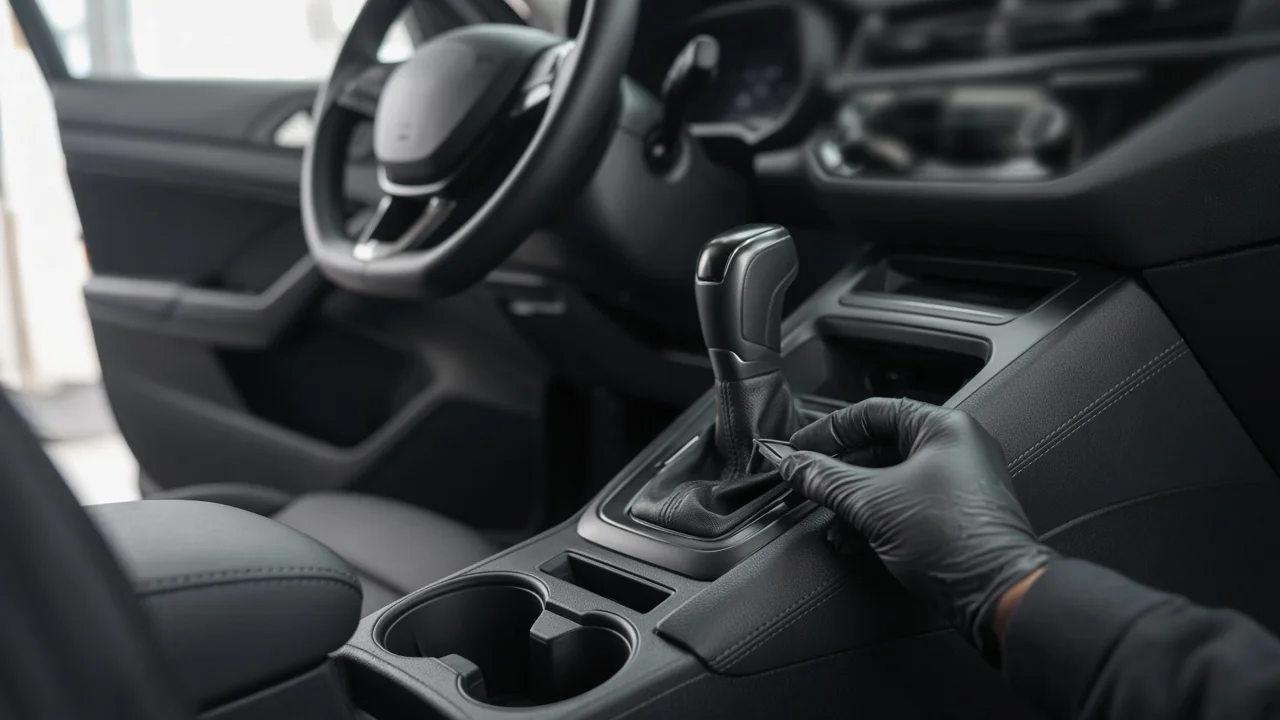
Most Nissan models with a traditional mechanical shift lever have a small shift lock release slot on the console next to the lever, usually hidden under a removable cap. The general sequence is to set the parking brake, switch the ignition off, and remove the cover. Then press down inside the slot with a key or a small flat-blade tool, and while holding it down, press the selector button and move the lever to Neutral. This is the typical pattern, but not every model follows it. The owner's manual for your vehicle lists the required ignition position and the exact order of steps, and it is the only reliable reference for your model. Vehicles with an electronic shifter may have no mechanical slot at all and use a different method.
The release is an emergency override. It is meant for moving a vehicle that has a dead battery or a shift interlock fault. It is not a way to keep driving with the problem. If you need it more than once, the underlying cause still has to be found.
How the Shift Interlock Works
Nissan automatics, like most modern automatics, use a brake-transmission shift interlock. An electrically controlled lock, typically a solenoid in the shifter assembly, holds the selector in Park until the system detects two conditions: the ignition is in the correct position and the brake pedal is pressed. The brake signal usually comes from the same switch circuit that operates the brake lights. When both conditions are met, the lock retracts and the lever can move.
The manual release pushes that lock out of the way mechanically, bypassing the electrical side. That is why it works with a flat battery. On a mechanical selector, the lever then moves the transmission out of Park through its normal linkage. Shifting to Neutral disengages the parking pawl inside the transmission, so the vehicle can roll freely once the parking brake is released.
What Changes the Procedure on Your Nissan
The first variable is the transmission type and selector design. Conventional automatics and CVTs with a mechanical floor or column lever generally share the slot-style release described above. The cover location and ignition requirements can still differ between models and years. Nissan models with a shift-by-wire or button-style selector do not move the transmission through a cable. On those vehicles a release slot may not exist, and leaving Park may require electrical power, a specific procedure or a service tool. Manual-transmission vehicles have no shift lock of this kind.
Ignition type also matters. Vehicles with a traditional key and those with push-button start describe the off and accessory positions differently. Some procedures require the ignition off, while others call for a specific mode. Column-shift and console-shift layouts put the release in different places. Trim, market and model year can all change the details, which is why a generic video or diagram may not match your car. The year, model and VIN together identify the configuration you actually have.
Finding and Using the Release on Your Model
Start with the owner's manual. The procedure is normally in the section on the automatic transmission or in the starting and driving chapter, under a heading such as shift lock release. If the manual is missing, a dealer service department can confirm the procedure from your VIN. On a mechanical selector, look on the console next to the lever for a small cap or trim piece. Pry it off carefully with a thin plastic tool to avoid scratching the console.
Before using the release, make the vehicle safe. Park on level ground if possible, chock the wheels, apply the parking brake firmly and keep your foot on the service brake. Once the lever is in Neutral, only the brakes hold the vehicle. Do not force the lever or the release. If it does not move with moderate pressure, stop rather than risk breaking the shifter housing or the lock mechanism. When you are finished, return the lever to Park and refit the cover.
Clues That Point Toward the Cause
A stuck shifter is a symptom, not a diagnosis, but a few quick observations help narrow it down. Check whether the brake lights come on when the pedal is pressed. If they do not, the brake light switch, its fuse or its wiring may be involved, though each still needs testing before anything is replaced. A weak or dead battery often shows up as dim interior lights, slow cranking or no dash display at all. Spilled drinks or debris in the console can also interfere with the shifter assembly.
Once the vehicle is running, note the shift behavior. A lever that releases only sometimes, or only after pumping the brake, suggests an intermittent electrical fault, though a misadjusted switch can produce the same symptom. On some models a scan tool can retrieve diagnostic codes from the relevant modules. Many interlock faults leave no code, however, so a clean scan does not clear the circuit. Transmission fluid level and fluid specification are generally unrelated to a shifter locked in Park, so a fluid service will not fix this problem.
Your service history can help as well. Recent battery work, console repairs or brake light replacement can point to a connector or adjustment problem introduced during that work.
Repair Options and Parts Fitment
Repair options range from replacing a fuse or bulb to adjusting or replacing the brake light switch, repairing wiring, or replacing the shift lock solenoid or the complete shifter assembly. Fitment varies by model year, transmission and selector type, so match replacement parts by VIN rather than by appearance. On shift-by-wire vehicles, repairs may also involve programming or setup steps that require dealer-level equipment.
Limitations and Next Step
This guide describes a pattern common to many Nissan vehicles, not a verified procedure for any specific model. Your owner's manual or a Nissan dealer is the authority for your exact configuration. This matters most on vehicles with electronic selectors, where the wrong approach can leave the vehicle stuck or cause damage. Get a qualified technician or the dealer to diagnose the problem if the release does not work, or if the lever still will not move with the brake applied and a charged battery. The same applies if your electronic shifter has no obvious manual method. If the vehicle cannot be put in Neutral, tell the tow operator so they can use a flatbed or suitable dollies instead of dragging the vehicle in Park.