Choosing a Nissan Sentra Shift Interlock Solenoid by Model Year
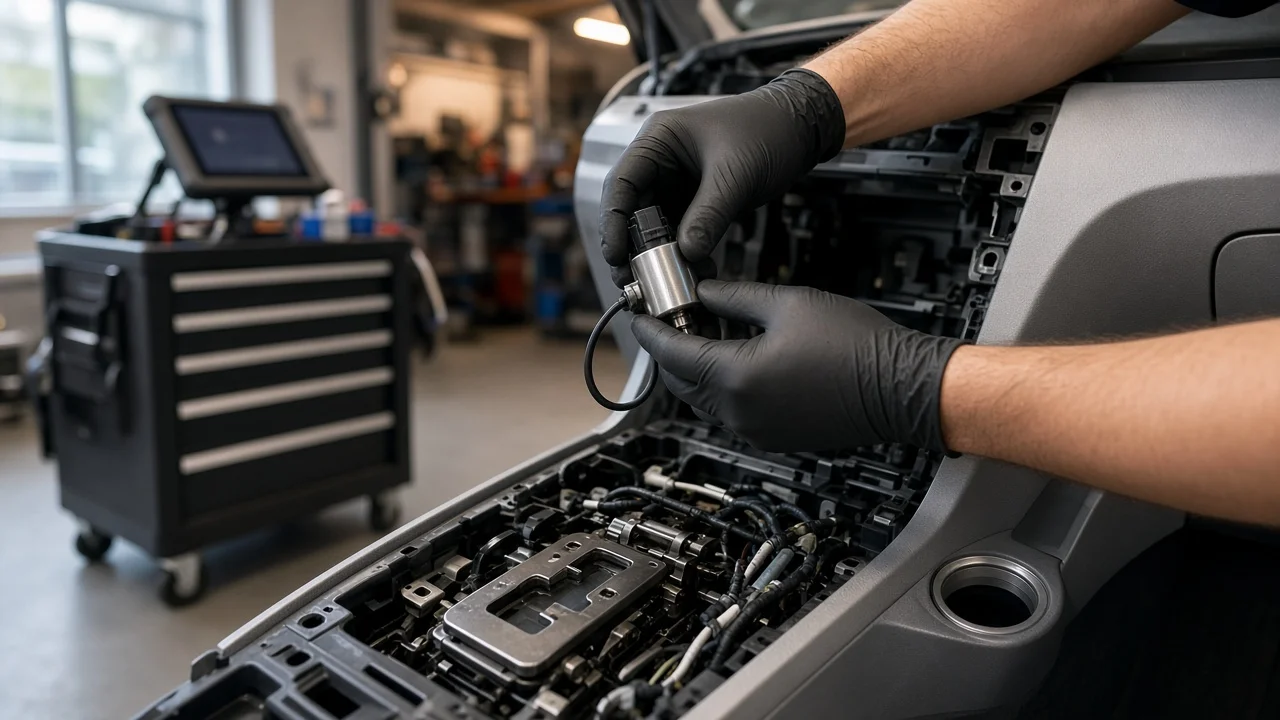
A Sentra that won't leave Park often sends owners shopping for a shift interlock solenoid. So does a shifter that moves without the brake pedal pressed. Before ordering one, find out what the part does on your model year, whether it is sold separately, and whether the real fault is somewhere else. This guide covers matching a replacement to your car and transmission, judging listings, and weighing repair options without assuming the solenoid has failed.
Define the job the product must do
Automatic and CVT Sentras use a shift interlock as a safety system. It holds the selector lever in Park until the ignition is on and the brake pedal is pressed, then lets it move. The solenoid is the electrical actuator that locks or frees the lever. It usually depends on a signal from the stop lamp switch or a related brake input. That makes the solenoid one link in a chain that also includes fuses, wiring and connectors, and on newer cars, control modules.
Start by writing down the exact symptom and when it happens. A lever stuck in Park while the brake lights still work points somewhere different from a stuck lever with dead brake lights. A lever that moves out of Park without the brake pressed is a separate concern. Also note: • whether the problem is constant or intermittent; • whether it appeared after other work on the car; • whether anything has been spilled on the console; These details tell you whether you need a part at all, which part, and how urgently. Until the circuit is tested, a symptom is a lead, not a confirmed failed component.
Check compatibility
Confirm the transmission type first. Sentras with a manual gearbox have no shift interlock solenoid in the shifter. The clutch pedal start interlock is a different switch. Automatic and CVT cars do use an interlock, but the hardware changed between generations. The 2007 to 2012 cars, the 2013 to 2019 generation and the 2020-and-later models each have their own shifter designs. Trim or engine variants within one generation can also differ.
For a 2013 Nissan Sentra, as for any other year, look up the shifter or control device assembly part number by VIN. Use a parts catalog or a dealer parts counter, then compare that number with any listing. On many Nissan shifters the interlock solenoid is built into the selector assembly. It may not be available as a separate dealer part, in which case fitment really means fitment of the whole assembly. Check that the connector shape, pin count and mounting points match. If you are buying a complete shifter, also match the cable attachment and the gear indicator display.
Be wary of listings that claim universal fit across many years without a part number or a clear interchange reference. A part that bolts in but has a different connector or plunger travel can leave the lever stuck, or leave it unlocked when it should be held.
Features that affect the choice
The main options are: • A new genuine assembly: matches the original design and usually arrives complete, but tends to cost the most. • A used assembly from a salvage vehicle: can be an exact match when the part numbers agree, but its solenoid and switches have unknown wear. • An aftermarket standalone solenoid: can cost less and replaces only the actuator, but quality and documentation vary, and fitting one may mean taking the shifter housing apart.
Treat labels such as heavy-duty, OEM quality or direct fit as marketing unless the listing backs them up. Useful evidence includes: • the exact model years and transmission listed, with a matching OEM part number or interchange reference; • clear photos of the connector; • whether the shift lock release, park position switch or lighting is included; • warranty and return terms; Seller reviews from owners with the same model year and symptom tell you more than an overall star rating.
Limitations and ownership costs
A new solenoid won't fix a failed stop lamp switch, a blown fuse, damaged wiring, a broken shift cable or a control module fault, and any of these can cause the same stuck-in-Park behavior. Problems while driving, such as delayed engagement, slipping or harsh changes, are transmission issues rather than interlock issues. Checking the fluid level and confirming the correct fluid specification in the owner's manual belongs to that separate diagnosis. Depending on how the circuit is monitored on your model year, an interlock fault may or may not store a diagnostic code. A clean scan neither clears the solenoid nor condemns it.
Replacement usually means removing console trim, disconnecting the battery and unplugging the shifter. A full assembly also requires transferring or adjusting the shift cable. If the cable is adjusted incorrectly, the indicated gear may not match the actual gear, which is a safety risk. Budget for replacement trim clips, your time, and a professional cable adjustment if you aren't comfortable doing it yourself. The solenoid needs no consumables or scheduled maintenance. Keeping drinks away from the console and recording the repair in your service history will help with any later troubleshooting. The shift lock release lets you move the car in an emergency, but it is a workaround, not a repair.
Build a practical shortlist
Before comparing prices, confirm the basics: • model year and generation; • automatic or CVT transmission; • the VIN-based part number for the shifter or interlock component; • the symptom, whether the brake lights work, and any stored codes; • whether the stop lamp switch, related fuse and shifter connector have been tested
For each candidate part, record: • the listed part number and interchange; • whether it is a standalone solenoid or a complete assembly, and what is included; • whether the connector matches; • condition, for used parts; • warranty length and return terms; Compare the total cost, including labor and cable adjustment, not just the part price. If two options both match the part number, the deciding factors are usually return policy, completeness and the condition of any switches bundled with the assembly. If the diagnosis is still uncertain, a shop inspection may cost less than buying the wrong part, and it gives you a clear basis for choosing among repair options.