Nissan Rogue Wheel Bearing Symptoms and Replacement
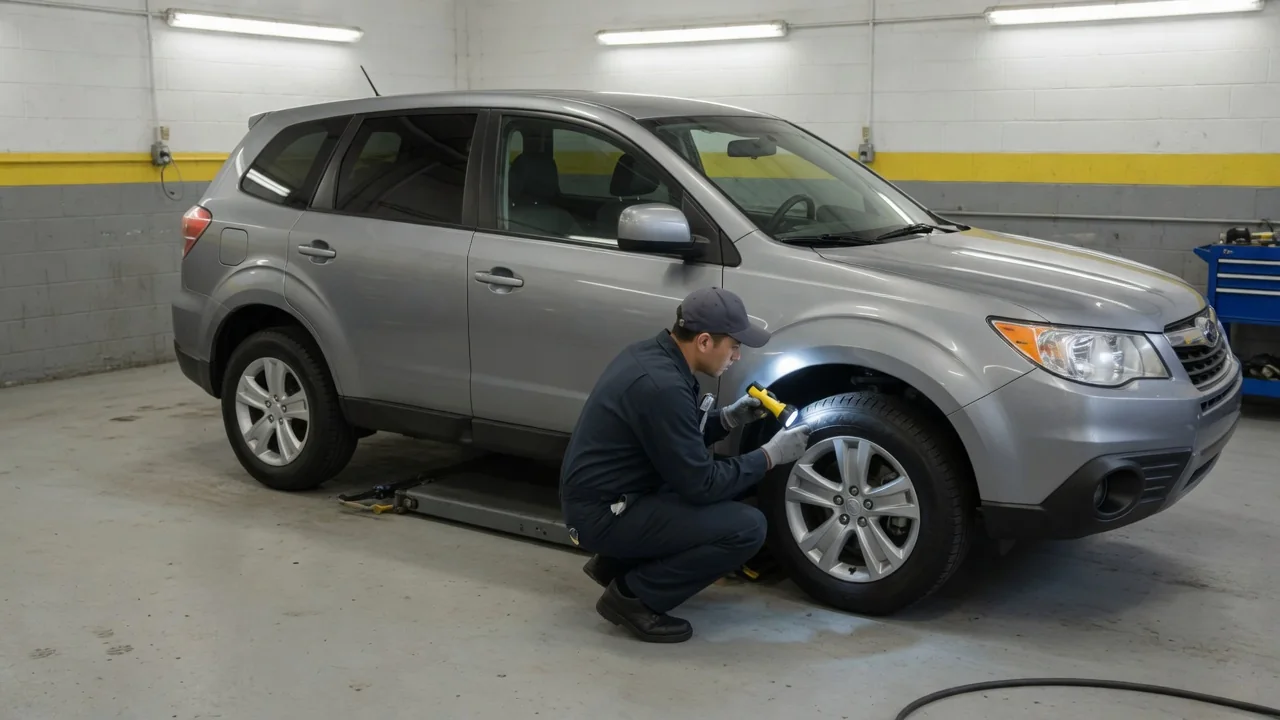
A Nissan Rogue wheel bearing supports the wheel, carries load, and helps each corner rotate smoothly. A road-speed hum, growl, vibration, or looseness is a reason for a wheel-end inspection, not proof a part has failed. Understanding how those clues appear, what to record before a shop visit, how technicians inspect the hub, when to stop driving, and what replacement and a bearing replacement estimate typically involve helps owners decide the next step.
How Wheel Bearing Problems Can Show Up on a Rogue
At each wheel, the bearing lets the hub turn while supporting vehicle weight, cornering load, and braking force. On a Nissan Rogue, that function is bundled at the wheel hub assembly or in a separately serviced bearing, depending on the vehicle. When the rolling surfaces wear, lose lubrication, or take impact damage, rotation is no longer as quiet or as tightly controlled. The result can be a road-speed hum, a growl that rises with speed, vibration through the steering or floor, or wheel play that a technician later measures.
None of those clues proves a bearing has failed, because tires, brakes, and driveline parts can make similar sounds. Bearing noise also travels through the body and suspension, so the ear's first guess about which corner is involved is often wrong. No particular Rogue generation, axle, or side is treated here as especially failure-prone. A shop still has to confirm the affected wheel with a road test and a controlled wheel-end inspection rather than relying on where the sound seems loudest from the cabin.
Useful Observations to Record Before an Inspection
Before an inspection, write down when the sound starts during ordinary driving and whether it changes with road speed or pavement type. A hum that tracks speed is more useful to a technician than a vague complaint that something is noisy. Also note any vibration, an ABS or traction warning light, a recent pothole strike, or recent wheel and tire work. Those details help the shop decide whether to look first at the bearing, the tire, the hub mounting surface, or an ABS wheel speed sensor circuit.
A parked visual check can still add information without reaching under the vehicle. Look at the tires for obvious cuts, bulges, or uneven tread wear that could explain a hum or vibration on its own. Do not try to diagnose the noise by swerving, running high-speed tests, or lifting and spinning wheels at home. Those steps can hide the original clue, create a new hazard, or leave a wheel-end fastener in an unknown state. Leave load, play, and rotation checks to a shop set up for a controlled wheel-end inspection.
What a Shop Should Check at the Wheel End
A technician should confirm the affected corner with an appropriate road test and then inspect that wheel end under control, rather than guessing from cabin noise. At the hub, evidence of bearing wear, seal damage, contamination, impact damage, or a prior installation issue can all contribute, but each still needs physical findings. Heat staining, roughness when the hub is rotated off the ground, damaged seals, or corrosion at the hub mounting surface are examples of clues a shop can document. None of those findings is assumed in advance.
The inspection should include the hub, the mounting area, related fasteners, and nearby components without assuming all of them need replacement. Tires, brakes, and driveline conditions can produce wheel-area noise and must stay in the diagnostic picture. A cupping tire, a dragging pad, or a worn CV joint can mimic bearing noise. A bearing can also make noise without obvious wheel play, so a single looseness check cannot settle the diagnosis. The shop should combine road-test behavior with what the wheel-end inspection actually shows.
Signs That Call for Prompt Service or Towing
A persistent or worsening wheel-area hum or growl is a reason to schedule an inspection, even if the Rogue still feels controllable. Noise volume alone does not tell remaining mileage or how severe the wear is. If there is wheel wobble, severe grinding, major vibration, or a change in vehicle control, stop as soon as it is safe and arrange towing. Continuing to drive in that condition can let a damaged wheel end deteriorate further and can affect steering or braking feel at that corner.
An ABS warning light by itself does not identify a failed bearing. The ABS wheel speed sensor often reads through or near the hub, so a stored fault can point to the sensor, its wiring, the tone ring, or a related circuit rather than a destroyed bearing. Professional fault-code reading and sensor testing may be needed, and a manufacturer-dependent code still requires vehicle-specific confirmation. Treat the light as evidence to interpret, not as proof that the Nissan Rogue wheel bearing has failed or that the vehicle is still safe to drive a set distance.
What Nissan Rogue Wheel Bearing Replacement Involves
Replacement should not start until the shop confirms model year, VIN, drivetrain, and the affected axle. Those details determine which hub or bearing the Rogue uses and how the wheel end is assembled. On some vehicles the service is a complete wheel hub assembly; on others a bearing is serviced separately. That choice must be verified for the specific Rogue rather than assumed from a similar year or from another axle. Using the wrong unit can leave the ABS wheel speed sensor, flange, or mounting pattern mismatched even if the part looks similar.
Professional work includes removing the unit being replaced, inspecting the hub mounting surface and related hardware, installing the replacement to vehicle-specific specifications, and checking any required sensors. Those steps require shop equipment and vehicle-specific data rather than a generic home procedure. Replacing additional bearings should follow inspection findings at the other corners, not an automatic assumption that they will fail together. After the repair, a road test should confirm that the original road-speed hum, growl, vibration, or wheel play is gone and that related warning lights have been addressed.
What to Look for in a Replacement Estimate
Ask for an itemized bearing replacement estimate that names the diagnosed wheel position, the parts, the labor, and any required hardware. Vehicle configuration, local labor rates, corrosion, and documented extra damage all affect the total, so a single nationwide price is not meaningful here. Front versus rear work, all-wheel-drive hardware, seized fasteners, or a damaged hub mounting surface can change both time and parts. The estimate should make those variables visible instead of bundling them into one unexplained line.
Request the part manufacturer, the warranty coverage, and the diagnostic evidence supporting replacement. A road-test note, measured play, roughness, or documented seal damage is more useful than a general statement that the bearing is noisy. If the estimate adds alignment or extra sensor work, it should state a reason tied to the repair and the inspection findings, such as a disturbed suspension fastener or a stored ABS fault that still needs confirmation. Unexplained add-ons are a reason to pause before authorizing the job.