Nissan Navara D40 Turbo Boost Control Solenoid Problems
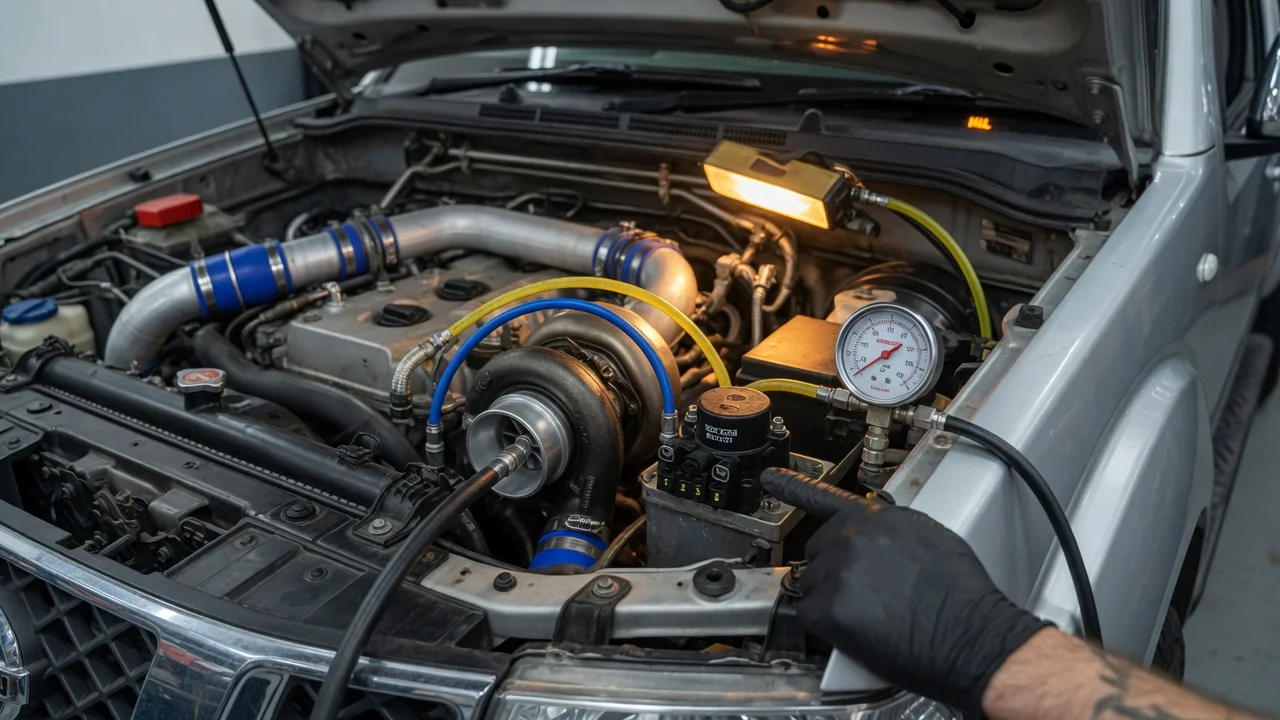
On a Nissan Navara D40 diesel, the turbo boost control solenoid regulates the vacuum that moves the turbocharger's actuator, which sets how much boost the engine gets. When the solenoid or its circuit misbehaves, the truck can feel flat, surge, or drop into a reduced-power mode. Because several other faults produce the same symptoms, the useful approach is to record what happens, separate the likely causes, and confirm before buying a new boost control valve.
Establish the symptoms
Start by writing down exactly when the problem appears. Note whether power loss happens under hard acceleration, while towing, on hills, at a particular engine speed, or only once the engine is fully warm. Record whether turning the engine off and restarting temporarily restores normal power, because that pattern often means the engine control module detected a fault and limited output to protect the engine.
Associated signs matter just as much. Look for a check engine light, any stored fault codes, a hissing sound under the hood, black smoke under load, a surging feel where boost comes and goes, or a sudden rush of power followed by a cut. Also list recent changes: hose or intercooler work, a new air filter, a battery disconnection, a tune or remap, engine cleaning with water, or a long period of short trips. Confirm the exact vehicle configuration, including engine, model year and market, because Navara D40 variants differ and the correct parts and test values depend on it.
Distinguish plausible causes
The solenoid itself can fail electrically or mechanically. An electrical fault usually sets a code related to the boost control circuit, such as the generic P0045 code for the turbocharger boost control solenoid circuit, and the symptom tends to be consistent rather than load-dependent. A mechanically sticking or internally leaking solenoid may set no circuit code but instead produce underboost or overboost complaints.
Vacuum supply problems are a strong competitor. A cracked, softened or disconnected vacuum line between the vacuum source, the solenoid and the turbo actuator will stop the actuator moving correctly, and these lines age with heat. A weak vacuum supply can also affect the brake booster, so a firm brake pedal with the engine running weakens that explanation. A leaking actuator diaphragm behaves similarly; if the actuator will not hold vacuum when tested on its own, the solenoid is probably not the main fault.
Turbo-side causes include carbon-stuck variable vanes or a seized actuator linkage, which are more likely on trucks that see mostly short, light-load trips. Boost leaks from a split intercooler hose or loose clamp, a faulty boost pressure sensor, or air metering problems can also trigger underboost codes such as P0299 or overboost codes such as P0234. A circuit code points toward wiring or the solenoid; a pressure code without a circuit code points more toward hoses, the actuator or the turbo itself.
Checks in a useful order
Begin with safe observations that need no special equipment. With the engine off and cool, inspect the vacuum lines around the solenoid and turbo actuator for cracks, splits, oil saturation or loose ends, and check the solenoid's electrical connector for corrosion, a broken lock or chafed wiring. Inspect the intercooler hoses and clamps for oil residue, which often marks a leak. Read stored and pending fault codes with a scan tool and save them before clearing anything.
The next stage needs tools and published data. A hand vacuum pump can show whether the turbo actuator moves its rod and holds vacuum. A multimeter can check solenoid resistance and circuit continuity, but the result is only meaningful against the manufacturer specifications for your exact engine; do not rely on figures quoted for other vehicles. A capable scan tool can compare actual boost pressure against the engine control module's target in live data during a controlled road test, which is the clearest way to tell underboost from overboost.
Work that involves road testing under load, checking vane movement inside the turbo, or diagnosing the control module's output signal is best left to a qualified technician with the correct service information. They can also review the service history and maintenance schedule to see whether hoses, filters or the turbo have been neglected.
Interpret the findings
A cracked or disconnected vacuum line that matches the symptoms is a likely cause, but after repairing it, clear the codes and confirm the fault does not return under the same operating conditions. If the actuator moves freely and holds vacuum when tested directly, the actuator and linkage are probably sound, which shifts suspicion toward the solenoid, its vacuum supply or its signal.
A circuit code combined with out-of-specification resistance or a damaged connector supports replacing the solenoid or repairing the wiring. However, a circuit code with good resistance and clean wiring means the harness and control signal still need checking before the part is condemned. If live data shows actual boost failing to follow the target while the solenoid tests correctly, look harder at boost leaks, sticking vanes and pressure sensor accuracy.
One clean test does not prove the system healthy if the fault is intermittent. Repeat the conditions that originally triggered the problem after any repair, and treat a returning code as a sign that the root cause has not been found yet.
Urgency and next action
Reduce load and stop driving as soon as practical if you notice a sudden surge of power followed by a cut, a loud whistle or grinding from the turbo, heavy blue or black smoke, oil leaking around the turbo, rising engine temperature, or a flashing warning light. Overboost and turbo damage can lead to serious engine harm, and there is no reliable way to say how far the truck can safely be driven with an unresolved boost fault. A truck stuck in reduced-power mode may also lack the acceleration needed for safe merging or towing.
When booking a repair, bring the exact model year and engine, the fault codes with their saved data, a short description of when the problem occurs, recent work or changes, and any inspection results you already have. That information helps a technician confirm whether the turbo boost control solenoid is really at fault instead of replacing it by guesswork.