Nissan Leaf Parking Brake Actuator: Fitment Guide
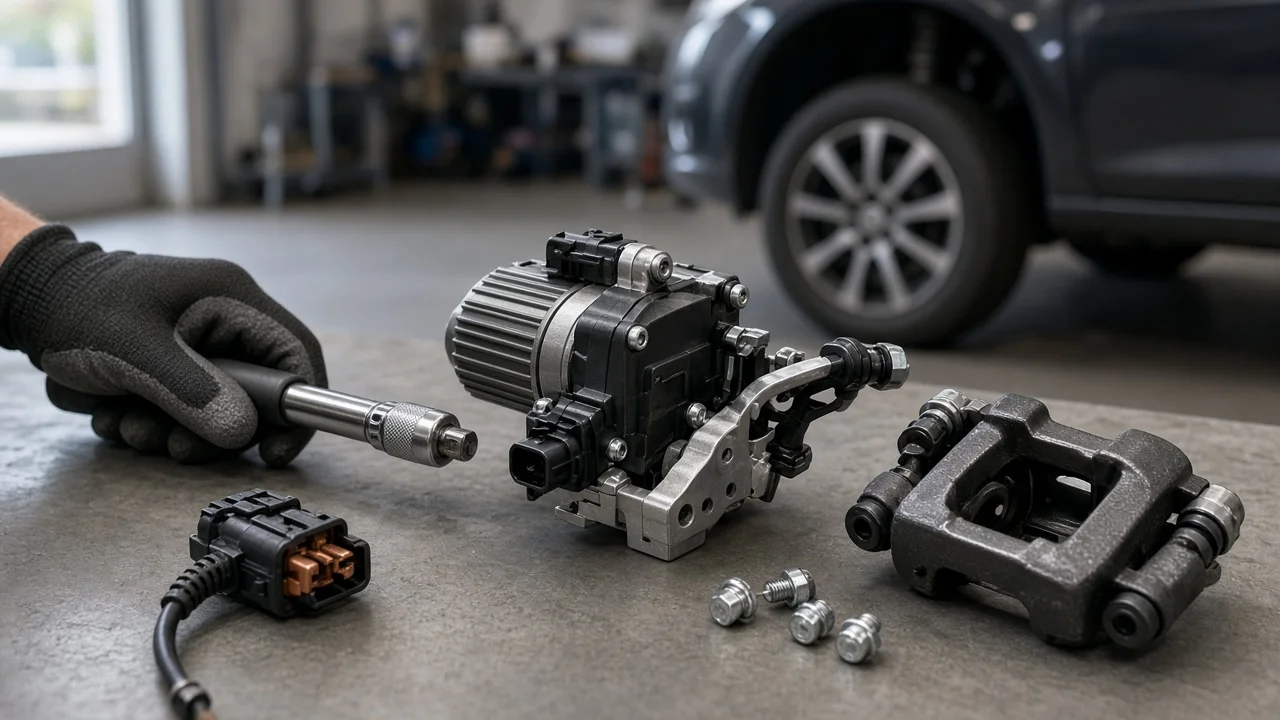
If you are shopping for a parking brake actuator for a Nissan Leaf, first confirm that your car actually uses one. The Leaf generations sold in the US hold the car in very different ways, and an actuator meant for one will not suit the other. This guide explains which models need the part, how the system works, what affects vehicle fitment, and when a brake fault means the car should not be driven.
Does your Leaf use a parking brake actuator?
First-generation Leafs, sold in the US from the 2011 through 2017 model years, generally use a foot-operated parking brake pedal. Cables connect the pedal to small drum-style shoes inside the rear brake rotors. These cars have no electric parking brake actuator. Their related service parts are the cables, the pedal assembly and the parking brake shoes. Second-generation Leafs, starting with the 2018 model year and including the longer-range Plus versions, use an electronic parking brake controlled by a switch on the center console. On those cars, the actuator is a motor-and-gear unit mounted on the back of each rear caliper.
An electric actuator therefore belongs on second-generation cars, and only in the version that matches the side, caliper and build of the specific vehicle. Treat model years as a starting point, not proof. Confirm the system on your own car by checking for the console switch, looking at the rear calipers and running a parts catalog lookup by VIN. Verify newer Leaf generations separately rather than assuming they share parts.
How the electric parking brake works
When you pull the console switch, the brake control module sends current to the motor on each rear caliper. The motor drives a reduction gear set that turns a spindle inside the caliper piston. The spindle pushes the piston and brake pads against the rotor and locks them mechanically. Because the spindle threads hold the clamping force instead of hydraulic pressure, the car stays held with the system switched off. Releasing the brake reverses the motor and backs the spindle off.
The module also monitors motor current and position. That is how it detects a stuck caliper, an open circuit or a motor that is not reaching full clamp. As a result, a failed actuator usually announces itself with a warning light and stored fault codes, unlike worn friction material, which degrades gradually. It also means the rear pistons cannot simply be pushed back with a tool: the spindle must be retracted electrically before pad or rotor service. The parking pawl in the Leaf's reduction gear, which engages when you select P, is a separate mechanism. A warning about the Park position is not necessarily a parking brake problem.
What affects actuator fitment
Ordering the wrong side is the most common mistake. Left and right actuators typically differ in shape or connector orientation, so the listing must match the corner you are repairing. The caliper matters next. Some replacement actuators are sold as standalone motors that bolt to the existing caliper. Others come only as part of a complete rear caliper assembly. A standalone motor must match the caliper's mounting pattern, drive spline and electrical connector exactly. A similar-looking unit from another vehicle may seat poorly or fail to drive the spindle correctly.
Production changes within a generation, market differences and trim level can also change caliper suppliers or part numbers. A car that has had previous rear brake work may already carry an aftermarket or remanufactured caliper, so the hardware on the vehicle may not match the original catalog listing. The actuator also works with the brake control module and its software, and depending on the repair, the service procedure may call for a calibration or reset with a capable scan tool afterward.
Steps before buying or replacing
Start with the symptoms and fault codes. Typical complaints include a parking brake warning lamp, a switch that does nothing, a grinding or whirring noise at one rear wheel, or a brake that will not release. A scan tool that reads the brake module will usually identify the affected side and show whether the fault is in the motor, the wiring or the caliper. Check the 12-volt battery as well, because low voltage can cause parking brake faults that look like a failed actuator.
Before ordering, record your VIN, the model year, the affected side, and whether you need the motor alone or a complete caliper. Look for a part number on the existing unit and compare its connector and mounting. Inspect the rear brake pads, rotors and caliper at the same time. A seized piston, corroded slide pins or pads below the manufacturer's wear limits will keep the parking brake from working properly even with a new motor. If brake fluid is leaking at the caliper, the caliper itself needs repair, not just the actuator.
If you do the work yourself, follow the service procedure for your car to put the system in maintenance mode or retract it electrically before removing the motor or caliper. Then apply the specified torque values and any post-repair calibration steps. Disconnecting a motor while the brake is applied, or forcing the piston back by hand, can damage the spindle and the new part.
Limitations and when to get professional help
This guide explains general fitment logic. It is not a parts list. Exact compatibility depends on the VIN and the manufacturer's service information, which should override general advice here or in a product listing. Stop driving and have the car inspected if any of these occur: the parking brake will not hold the car, it will not release, it drags while driving, or the brake warning light comes on along with a soft pedal or fluid loss. A dragging rear brake can overheat the rotor and pads, and a parking brake that fails to hold creates a rollaway risk on any slope.
Repairs that require live data, a module reset or caliper replacement are reasonable to hand to a brake technician with Nissan-capable diagnostic equipment. Bring your VIN and any fault codes so the shop can confirm the correct actuator or caliper before you spend money on the wrong part.