Nissan Leaf Battery Replacement: Options for an Aging Pack
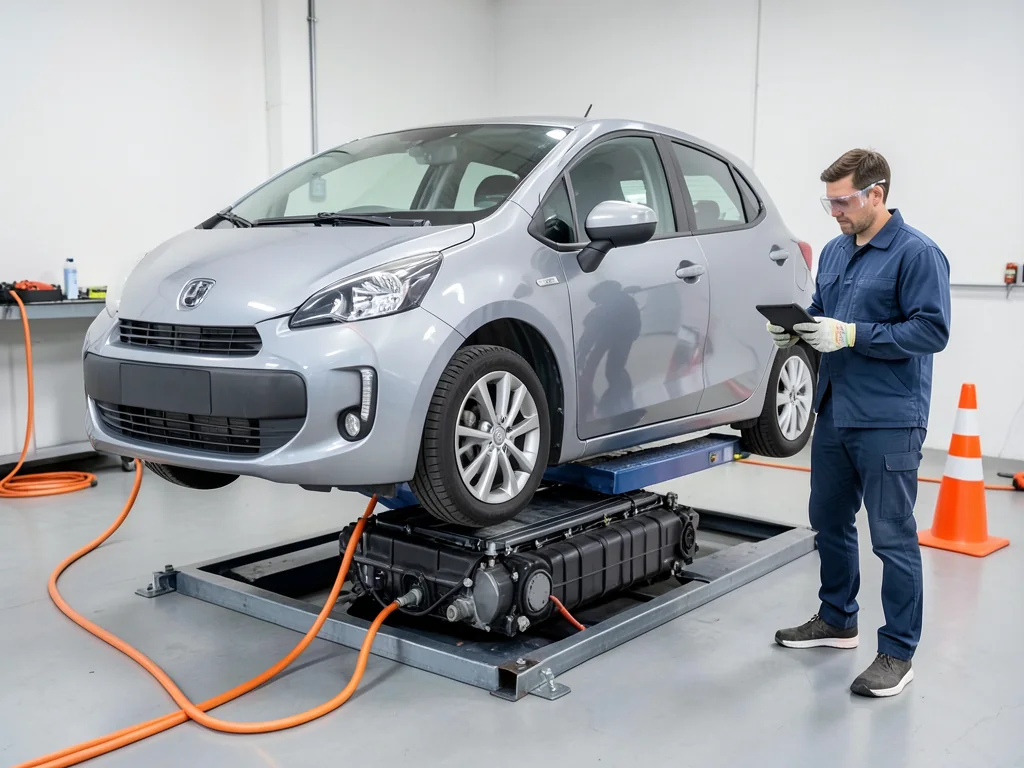
A Nissan Leaf’s traction battery is the high-voltage pack that moves the car and directly determines real-world driving range; the 12-volt battery under the hood only runs accessories and computers. Over years of use, every lithium-ion pack loses some ability to hold energy, but the rate varies widely. Owners notice shrinking range, disappearing capacity bars, or a dashboard that seems less predictable. Before deciding on a Nissan Leaf EV battery replacement, it helps to understand how the pack ages, how to read its warnings, and which repair or upgrade options actually make sense for your specific Leaf.
How the Nissan Leaf EV Battery Ages Over Time
The Leaf’s traction battery is a large lithium-ion pack usually located under the floor. Unlike the 12-volt accessory battery that starts the electronics, the high-voltage pack stores the energy for the electric motor. As the pack cycles through charge and discharge, chemical changes gradually reduce its ability to hold energy, and that shows up as lower driving range. Factors such as high ambient heat, frequent fast charging, and long periods parked at very high or very low state of charge can accelerate this loss, though exact degradation rates depend on many variables.
Two Leafs of the same age and mileage can have very different battery health because usage patterns matter enormously. One owner may charge gently at home and park in a cool garage, while another regularly uses DC fast charging in a hot climate and leaves the car at 100 percent for days. In addition, pack design and thermal management differ between model years and generations; later Leafs use a different battery chemistry and cooling approach than early ones. Owners should confirm their car’s specific pack type and history rather than assuming all Leaf batteries behave the same.
Signs of an Aging Pack: Range, Capacity Bars and Warnings
An aging pack often shows itself through shorter real-world range and fewer capacity bars on the right side of the instrument cluster. The car may still charge to full, but the usable energy is lower, so the guess-o-meter drops faster than it used to. Some owners also notice the range estimate is less stable, especially under load. These signs develop slowly, so a single short trip on a cold day is not proof of failure. Temperature, speed, heater or air conditioner use, and tire pressure all affect range, and a healthy battery can show temporary drops.
To get a clearer picture, track your actual miles per charge over several weeks in similar weather and driving conditions. Note the state of charge at the start and end, and avoid unusual high-speed trips or heavy climate control use during the test period. Warning lights, turtle mode, or reduced-power messages are different: they indicate the car’s high-voltage system has detected a fault and has deliberately limited output. Such events should be checked by a professional. A diagnostic trouble code is only a starting point for the specific model and software, not a universal answer.
Getting a Professional Battery Health Check Before You Decide
Before deciding on any Nissan Leaf EV battery replacement, a professional state-of-health assessment is essential. A dealer or independent EV specialist can measure the pack’s capacity, internal resistance, and cell voltages under controlled conditions. This gives a baseline that no dashboard display can match. Ask for a written capacity or health report, and request a check of individual cell or module balance. Balance problems sometimes cause range loss that looks like degradation but may be correctable without a full pack replacement.
Smartphone apps and OBD-II dongles can read some Leaf battery data, and they offer useful clues about state of health and cell voltages. However, consumer tools have limits: they may not use the latest algorithms, and their numbers need professional interpretation. A low reading from an app does not prove the pack is unsafe or worthless. Also confirm whether any battery warranty coverage still applies to your car. Warranty terms vary by model year, region, and original sale date, and some require documented capacity loss or specific service history. The dealer can check your VIN against the relevant coverage.
Nissan Leaf EV Battery Replacement Paths
Replacement paths generally fall into three groups. A new pack from the manufacturer is the most expensive but comes with a factory warranty and known specifications. Remanufactured or refurbished packs are rebuilt by specialists who replace weak cells or modules and test the whole pack; quality varies, so ask about the rebuild process and the warranty. Used packs are removed from other vehicles and sold as-is or with limited testing. They can be a low-cost option, but the state of health and remaining life are uncertain unless a detailed report is provided.
For any replacement path, ask where the pack came from, what tested capacity or state of health it showed, what warranty is included, and who will do the installation. Availability and pricing change by region and over time, so written quotes from at least two reputable shops are wiser than relying on forum prices. In some cases, a pack problem may be fixable by repairing individual modules rather than replacing the whole assembly. A qualified shop can diagnose whether a module swap is safe and cost-effective, but this choice must be based on detailed cell data.
Upgrading to a Higher-Capacity Pack: What Must Be Verified
Some owners consider upgrading to a higher-capacity pack, such as fitting a 40 kWh or 62 kWh battery into an earlier Leaf. Whether this works depends on the model year, the car’s software, and how the vehicle integrates the pack’s battery management system. Not all packs are physically or electronically compatible. Do not assume any pack fits your car, even if an online forum shows a successful example. Every compatibility claim should be confirmed by the installer in writing before any money changes hands.
Practical questions include: will the dashboard capacity bars and range estimator work correctly, will DC fast charging function at expected rates, and could the upgrade affect warranty coverage or insurance classification? Ask for documentation of the donor pack’s source, test results, and the installer’s own warranty on labor and parts. A higher-capacity pack may require updated vehicle software, additional wiring, or mounting changes. An installer who cannot provide clear written answers is not one you should trust with high-voltage work.
Why High-Voltage Battery Work Belongs With Qualified Technicians
Removing, opening, or installing a traction battery is high-voltage work that carries serious risk of electric shock, arc flash, and fire. The pack can hold hundreds of volts even when the car is off. This is not a DIY job. A properly equipped shop brings high-voltage safety training, insulated tools, and lifting equipment for a heavy underfloor pack. They also know how to safely disconnect the service plug, verify zero voltage, and handle the old battery for recycling or legal disposal.
Owners can safely handle observation, record-keeping, and choosing a reputable installer. Keep notes on range, charging behavior, and warning lights. Research shops that specialize in EVs and ask about their high-voltage certification and experience with Leaf packs. But all hands-on battery work must stay with professionals. If you notice swelling under the car, unusual smells, smoke, or fluid leaking from the battery area, stop driving immediately, park away from structures, and call for professional help. Such signs indicate a serious safety issue that requires immediate attention.