Nissan Juke Turbo Issues and Altima Turbocharger Options
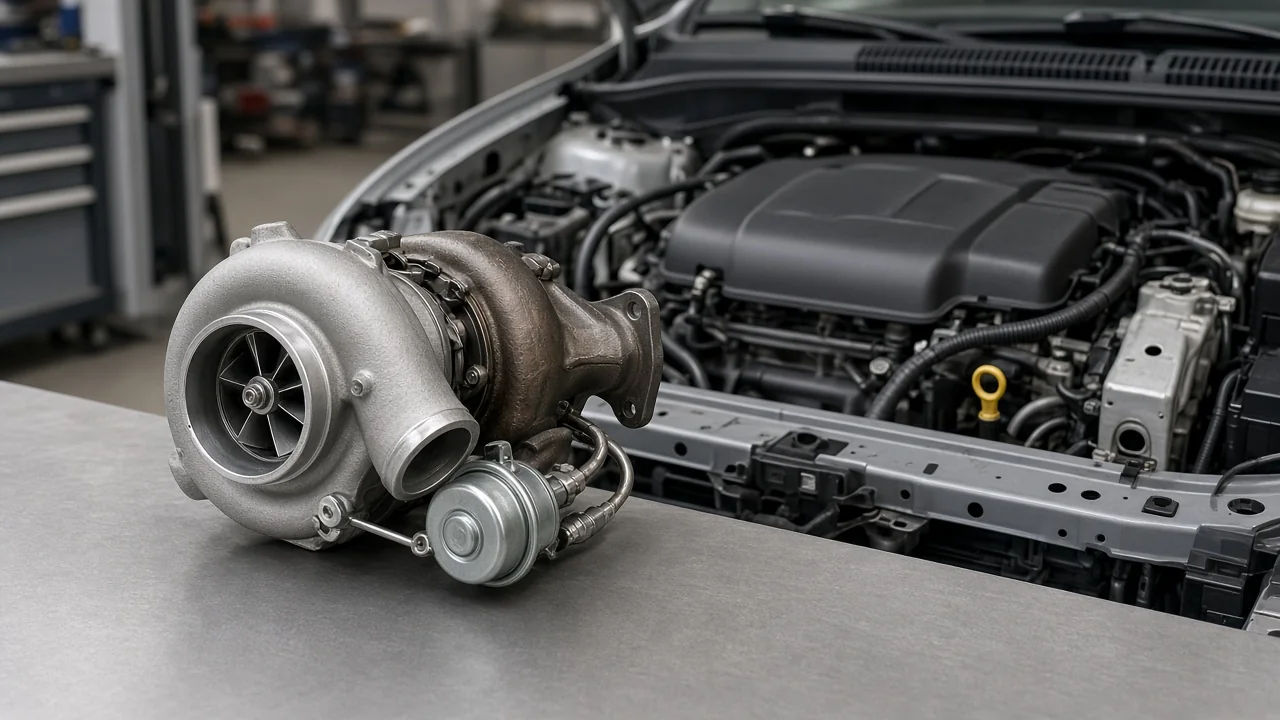
Nissan owners often search for a turbocharger for Nissan Altima applications and for 2013 Nissan Juke turbocharger concerns in the same research pass. Those two jobs are not interchangeable. A factory turbo engine, a replacement assembly, and an aftermarket conversion each demand different confirmation of year, market, and engine identity. Treating Juke diagnosis and Altima turbocharger options as separate decisions keeps fitment, symptoms, and conversion limits from being mixed.
Identify the Engine and Factory Turbo Configuration
Model year, sales market, engine identification, and VIN-linked parts information come first because Nissan used more than one powertrain under the same nameplate. The Altima badge does not tell you whether the car has a factory turbo. Some later Altimas were sold with a 2.0-liter VC-Turbo, while many others remain naturally aspirated. A turbocharger Nissan Altima listing is only useful after the catalog matches that VIN. Without those identifiers, charge-air plumbing, wastegate actuator hardware, and turbo oil supply parts cannot be assumed interchangeable.
The same caution applies to a 2013 Nissan Juke turbocharger discussion. Confirm the engine code and original equipment before treating any turbo-related advice as applicable. Readers usually face one of three tasks: diagnosing an existing turbo system, sourcing a turbocharger replacement for a factory turbo engine, or considering an aftermarket conversion on a car that never had boost. Mixing those jobs leads to the wrong parts and the wrong tests. Identify the vehicle first, then choose the path that matches the hardware actually installed.
2013 Nissan Juke Turbo Symptoms and Their Limits
Reduced power, unusual whistling, exhaust smoke, or rising oil consumption can justify inspection of a 2013 Nissan Juke turbocharger system without proving the turbo itself has failed. Charge-air leaks, a sticking wastegate actuator, low boost pressure from a control fault, or a lubrication problem can imitate turbocharger damage. Useful inspection areas include charge-air plumbing, boost control, turbo oil supply, and the turbo assembly. None of those observations, by themselves, establish a documented failure rate or a mandatory replacement.
Record when symptoms appear, whether a warning light is present, and what maintenance or repairs were done recently. That timeline helps a technician separate a boost-control issue from oil starvation or a leak in the charge-air plumbing. Do not use repeated hard-acceleration runs as a diagnostic method. Heavy smoke, a low-oil-pressure warning, severe mechanical noise, or sudden power loss is a reason to stop safely and arrange professional assistance rather than continue driving to confirm a theory about the turbo.
Confirm the Cause Before Replacing a Juke Turbocharger
With the engine off and cool, look for disconnected hoses, crushed charge-air plumbing, or external oil or coolant traces around the turbocharger. Do not touch hot housings, spinning wheels, or pressurized lines. Those visual clues only flag where a professional should continue. Leak testing, wastegate actuator and boost-control checks, lubrication assessment, and scan-data review belong in the shop. A stored fault code is evidence to interpret, not proof that the 2013 Nissan Juke turbocharger has failed.
Manufacturer-dependent codes need vehicle-specific service information before anyone assigns a meaning or authorizes turbocharger replacement. Boost pressure readings, oil-supply restrictions, and engine calibration responses can point to the turbo, or they can point to sensors, actuators, and leaks elsewhere. A repair assessment should identify the underlying cause and check for related damage such as contaminated oil, ingested debris, or a compromised catalytic converter. Replacing the assembly without that work can return the same symptoms after the new turbo is installed.
Find a Replacement Turbocharger for a Factory-Turbo Altima
A turbocharger for Nissan Altima use only applies when the individual car actually has a factory turbo engine. Certain later model years offered a 2.0-liter VC-Turbo Altima, but the nameplate alone does not confirm that configuration. Ask a supplier or repair shop to match the assembly through VIN-linked catalog data and any part-number supersessions. The correct compressor, turbine housing, wastegate actuator, and oil-feed geometry depend on that match. Ordering from a generic turbocharger Nissan Altima search without those checks risks a unit that will not bolt up or control boost correctly.
A replacement quote should name the assembly supplied, name included gaskets and hardware, state required supporting work such as oil-supply cleaning or charge-air plumbing inspection, and spell out warranty terms. Diagnose the original fault before ordering parts. Low power or a boost-related code does not, by itself, establish turbocharger failure. Engine calibration, a leaking intercooler hose, or a wastegate control problem can produce the same complaint. Confirming the cause first protects both the new turbo and the rest of the VC-Turbo engine.
Assess Turbocharging an Altima That Lacks a Factory Turbo
Adding a turbocharger for Nissan Altima models that left the factory naturally aspirated is not a parts-catalog exercise. A listing that shows a turbocharger Nissan Altima does not establish conversion feasibility. A qualified specialist must assess engine management and engine calibration, fueling capacity, turbo oil supply, cooling, exhaust routing, charge-air plumbing, and transmission operating limits for that specific vehicle. Those systems were designed around unboosted operation. Changing boost pressure without that engineering review can overload pistons, bearings, clutches, and emissions equipment.
Factory VC-Turbo components cannot be assumed to form a compatible conversion package for another Altima engine. Housing flanges, oil drain geometry, wastegate actuator control, and calibration maps belong to the original VC-Turbo application. Before committing, obtain a documented project scope covering emissions compliance, calibration, validation, downtime, insurance implications, and ongoing support. Do not rely on unsupported power claims, and do not treat a 2013 Nissan Juke turbocharger or any other Nissan turbo as a drop-in solution. Conversion is a custom engineering job, not a bolt-on catalog swap.