Nissan CVT Shift Solenoid Queries: Identifying the Correct Solenoid
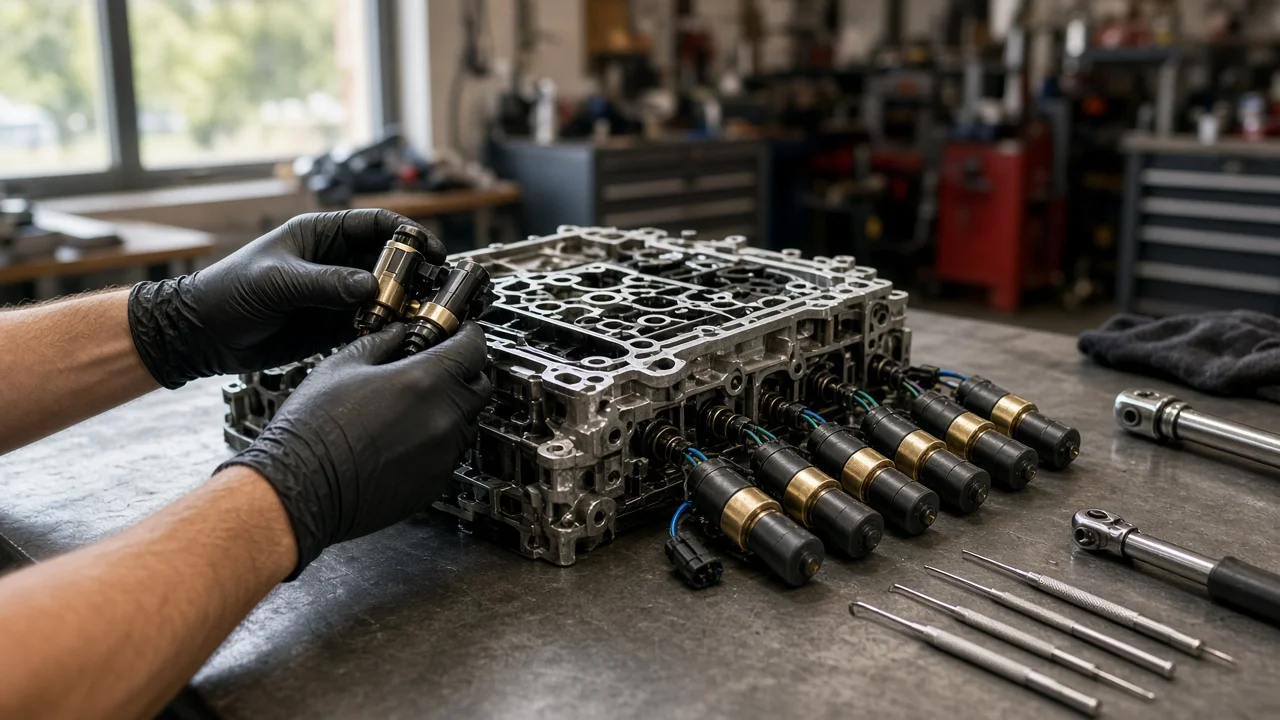
Owners looking for a Nissan CVT shift solenoid often expect one part that fixes a slipping, jerky or sluggish transmission. A Nissan continuously variable transmission works differently from a conventional automatic, and the correct solenoid depends on the exact unit in your vehicle, the fault the control module reports and how the part is supplied. This guide explains what these solenoids do, what changes the answer for your vehicle and how to narrow the problem before you spend money on parts.
The Short Answer
Most Nissan CVTs do not have shift solenoids in the traditional sense, because the main pulley system has no fixed gears to shift between. Instead they use several pressure control and engagement solenoids, all mounted on the control valve assembly, often called the valve body, inside the transmission. Which one is relevant depends on the transmission model code, the specific diagnostic trouble code and whether that solenoid is sold separately for your unit. On many Nissan CVTs the factory part is the complete control valve assembly rather than a single solenoid, and fitting it usually requires loading calibration data into the transmission control module.
The practical qualification is that a symptom alone does not tell you which solenoid, if any, has failed. Wiring faults, low or degraded fluid, outdated software and internal mechanical wear can all produce similar driving complaints and even similar codes. Identify the transmission first, read the codes with a tool that can access the transmission module, and confirm the fault before choosing a part.
How Solenoids Work Inside a Nissan CVT
Nissan CVTs use a steel belt running between two variable-width pulleys, a primary pulley on the input side and a secondary pulley on the output side. Hydraulic pressure squeezes or relaxes each pulley, changing the diameter at which the belt runs and therefore the ratio. The transmission control module reads vehicle speed, engine load, pulley speeds, fluid temperature and pressure signals, then commands electronic solenoids to regulate oil pressure. Typical functions include line pressure control, primary pulley pressure, secondary pulley pressure that holds belt clamping force, torque converter lock-up control and engagement of the forward clutch or reverse brake when you select Drive or Reverse.
Some compact Nissan CVTs add a small two-speed planetary gearset behind the pulleys to widen the overall ratio range. Those units have additional solenoids that apply the clutch and brake for this auxiliary gearset, which is the closest thing a Nissan CVT has to a true shift solenoid. Certain earlier units also used a step motor to set the ratio rather than relying only on solenoid-controlled pulley pressure. Because the components differ this much between designs, a part description that simply says CVT shift solenoid is rarely precise enough to order from.
What Changes the Answer
The transmission type matters more than the vehicle name. Nissan has used several CVT families across its cars, crossovers and SUVs, and the same nameplate can switch units between generations, engine options and front-wheel or all-wheel drive versions. The transmission model code is usually printed on a label or plate on the case, and a VIN-based parts lookup at a dealer or reputable parts supplier will tie the vehicle to the correct unit. Model year and engine are useful checks, but they should not replace the VIN when confirming fitment.
Serviceability also varies. For some units, individual solenoids or solenoid kits are available from aftermarket suppliers, while the factory part is the complete control valve. Replacing the valve body on many Nissan CVTs requires writing matching calibration data to the control module with suitable diagnostic equipment, and skipping that step can leave shift behavior harsh, delayed or flagged with new codes. Fluid specification is another variable: Nissan specifies its own CVT fluid grades, such as NS-2 or NS-3 depending on the unit, and the wrong fluid can alter the friction and pressure behavior the solenoids are calibrated for.
Operating conditions change the picture too. A solenoid or its wiring may fail only when hot, under heavy load or at a particular speed, so a quick test drive may not reproduce the fault. Debris from belt or pulley wear can make valves stick, which looks like a solenoid problem but points to deeper internal damage that a new solenoid would not cure.
What the Owner Can Do
Start by recording the shift behavior in detail: when it happens, engine temperature, vehicle speed, whether the engine flares, the car shudders, engagement into Drive or Reverse is delayed, or the transmission drops into a reduced-power fail-safe mode. Note any warning lights. Then read the diagnostic codes with a scan tool that can access the transmission control module. Basic code readers may show only generic powertrain codes and miss manufacturer-specific transmission data. Save the freeze-frame information, because it shows the conditions at the moment the fault was stored and helps separate an electrical circuit fault from a pressure or performance fault.
Review the service history. Fluid age, previous fluid changes, the fluid type used and any earlier transmission work all affect the diagnosis. Fluid level checks on many Nissan CVTs need a specific procedure and fluid temperature, and some units have no conventional dipstick, so this is often a shop task. Inspect visible wiring and connectors for damage or oil intrusion if you can reach them safely. Ask a Nissan dealer whether any software update, service campaign or warranty extension applies to your VIN, since updated control software can address some drivability complaints without replacing hardware.
Once the fault is confirmed, repair options usually fall into a few categories: repairing wiring or connectors, replacing an individual solenoid where the unit and parts supply allow it, replacing the control valve assembly with calibration data loaded, or replacing the transmission with a new, remanufactured or used unit when there is internal mechanical damage. If metallic debris or belt wear is found, a new solenoid or valve body may fail again quickly, so the condition of the fluid and pan contents should guide the decision.
Limitations and Next Step
This guide cannot identify the failed part on your vehicle. Code definitions, solenoid layouts and repair procedures differ between Nissan CVT families, and the same code can result from an open circuit, a sticking valve, low fluid or a control module issue. Confirming the cause often requires live data, commanded pressure versus actual pressure readings and the ability to write calibration data, which typically means a Nissan dealer or a transmission specialist with factory-level diagnostic capability.
Before booking a repair, gather your VIN, the transmission model code, the stored codes with freeze-frame data, a description of the symptoms and your service records. When you receive a quote, ask which exact part is being replaced, whether it is an individual solenoid or a complete valve body, whether calibration or programming is included, and what fluid will be used. Those answers make it much easier to compare repair options and avoid paying for a part that does not match your transmission.