Nissan Altima Transmission Speed Sensor Identification
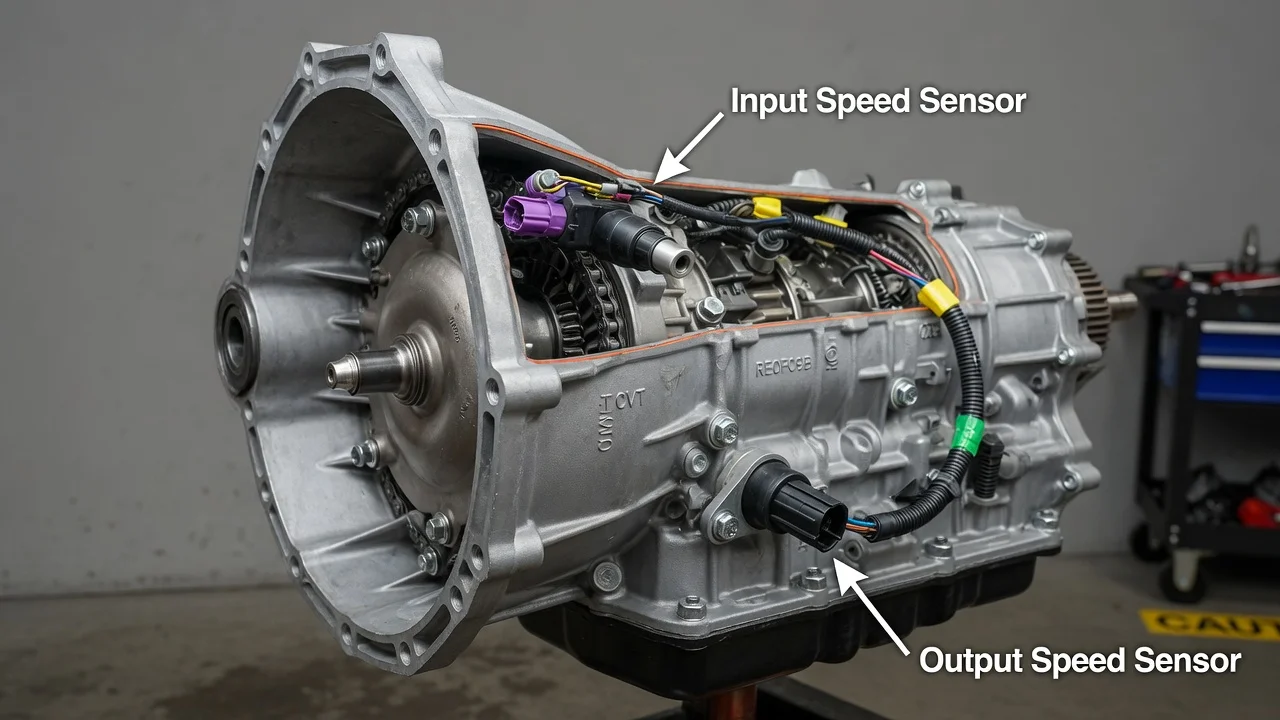
Finding the right transmission speed sensor for a Nissan Altima starts with knowing which transmission the car actually has. Most Altimas built from the 2007 model year on use a continuously variable transmission (CVT), while earlier cars and manual-equipped versions use different designs. Each layout has its own sensors, connectors and mounting locations, so the correct part and the correct test depend on the exact vehicle, not just the model name.
The short answer: it depends on the transmission
There is no single Altima transmission speed sensor. A typical automatic Altima uses at least two: one that reads input speed coming from the engine side of the transmission, and one that reads output speed, which is closely tied to road speed. Nissan CVTs commonly add sensors that track the primary and secondary pulleys, and service information may label them as primary, secondary, input or output speed sensors depending on the unit. Older conventional automatics use input (turbine) and output (revolution) sensors instead. Manual-transmission versions are wired differently again and should be looked up separately.
To identify the correct sensor, you need the model year, engine, transmission type and, ideally, the VIN. The diagnostic trouble code stored by the transmission control module usually indicates which sensor circuit failed a self-test, which narrows the search before any part is ordered.
How transmission speed sensors work
A speed sensor sits next to a rotating toothed ring, gear or pulley on or inside the transmission. As the teeth pass, the sensor produces a pulse signal, and the control module counts those pulses to calculate rotational speed. Depending on the design, the sensor may be a magnetic pickup that generates its own signal or a powered Hall-effect type that needs a supply voltage and ground from the module.
The transmission control module compares these speeds constantly. Input against output tells it the effective ratio, which it uses to time shifts on a stepped automatic or to command pulley position on a CVT. Speed data also feeds torque converter lockup decisions, line pressure control and, in some setups, the speedometer and cruise control. When a signal drops out, reads implausibly or disagrees with other speeds, the module typically sets a code and may switch to a protective fail-safe mode with reduced performance.
What changes the answer for your Altima
The biggest variable is transmission type. Altimas from roughly the 2002 to 2006 model years were offered with conventional automatics of four or five speeds, depending on engine and year, as well as manuals. From the 2007 model year onward, Nissan moved the Altima to Jatco-built CVTs, with several CVT generations used across later years and engines. Some 2007 to 2012 cars were also available with a six-speed manual. Each design places its speed sensors differently, uses different connectors and may use different part numbers even within one generation.
Location and access vary as well. On some units, a speed sensor is mounted externally on the transmission case and held by a single bolt, which makes replacement relatively simple. On others, the sensor sits inside the case, is part of an internal harness, or is integrated with the valve body or control module assembly, so replacing it means draining fluid and opening the transmission, or replacing a larger assembly. Engine size, model year range and mid-year production changes can all shift which version applies, which is why guessing from photos is unreliable.
Vehicle speed can also come from more than one place. On many newer vehicles, ABS wheel speed sensors supply road speed to other modules, so a speedometer problem is not automatically a transmission sensor problem. Service history matters too: recent fluid service, a replaced transmission or control module, or earlier wiring repairs can all change what you are dealing with.
How to identify the correct sensor and fitment
Start with documents rather than parts. The owner's manual, the vehicle information label and the VIN establish model year, engine and trim, and the VIN is the most reliable way to check fitment in a dealer or parts catalog. The transmission itself usually carries an identification tag or stamping with its model code, which helps confirm what is installed, especially if the unit has been replaced. When ordering, match the part number to the specific sensor position named in the code or service information, since input, output, primary and secondary sensors on the same transmission are often not interchangeable.
Note the fluid specification at the same time. Nissan specifies particular fluids for its automatics and CVTs, and CVT fluid grades such as NS-2 and NS-3 are matched to specific units. If replacing a sensor means opening the transmission or losing fluid, plan to refill with the correct fluid and check the level using the procedure for that unit, which may require the fluid to be at a set temperature.
Checks to make before replacing a sensor
Read the stored diagnostic codes with a scan tool that can access the transmission module, not just generic engine codes. Codes such as P0715 or P0720 describe a problem in an input or output speed sensor circuit, but a circuit fault can come from the sensor, its connector, damaged wiring, a supply or ground issue, or the module itself. Record the codes and freeze-frame data before clearing anything.
Pay attention to shift behavior and the conditions when the fault appears. Harsh or erratic shifting on a stepped automatic, unusual engine speed on a CVT, a speedometer that drops out, cruise control that will not engage, or a sudden loss of power in fail-safe mode can all accompany a speed signal fault, but the same symptoms can come from low or degraded fluid, internal wear or other control faults. A scan tool that shows live sensor speeds is especially useful: one reading that drops to zero or jumps while the others stay steady is stronger evidence than a symptom alone. Inspect the connector and harness near the transmission for corrosion, broken locks, oil contamination or chafing, and check fluid level and condition using the correct procedure.
Once the evidence points to the sensor itself, compare repair options. An externally mounted sensor is often a reasonable job for an experienced owner with basic tools. Internally mounted or integrated sensors usually involve draining fluid, replacing gaskets and sometimes programming or data transfer for the control module, which is better left to a shop with Nissan-specific service information and equipment.
Limitations and when to get professional help
General information cannot tell you which sensor your particular Altima needs or confirm that a sensor has failed. Exact locations, electrical test values, torque specifications and fluid fill procedures come from the factory service information for your VIN and transmission code. A stored code identifies a circuit that failed a test, not a confirmed bad part.
If codes return after the sensor and wiring have been checked, if several speed-related codes appear together, or if the transmission slips, overheats or makes new noises, have a transmission specialist or dealer perform a full diagnosis. Replacing sensors repeatedly without testing adds cost while an internal fault may get worse. Bring your code list, freeze-frame data and service history so the technician starts from the same evidence.