Nissan Altima Mass Air Flow Sensor: Location, Symptoms and Replacement by Year
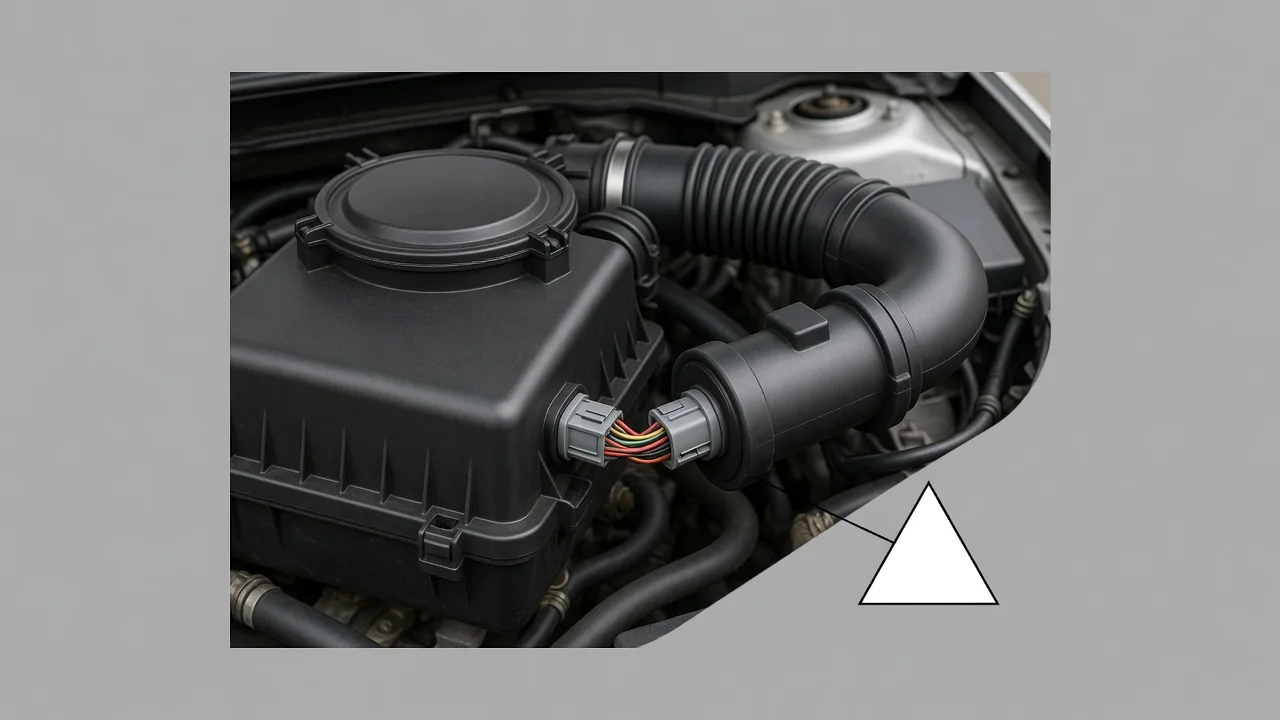
A mass air flow sensor for Nissan Altima models from 2005 through 2020 measures incoming air so the engine computer can calculate fuel. Owners searching for a Nissan Altima mass air flow sensor typically want location, symptoms, and replacement by year. Those answers depend on engine identification and part number verification, and a stored code is not proof the sensor has failed.
Altima MAF Sensor Function and Possible Failure Symptoms
The mass air flow sensor on a Nissan Altima reports how much air is entering so the computer can set injector pulse width. When that signal is inaccurate, fueling can run rich or lean and may appear as rough idle, hesitation, stalling, reduced power, or a check engine light. Those complaints are possible clues, not proof that the MAF sensor has failed.
Unmetered air from a split intake duct, a loose clamp at the air filter housing, a damaged electrical connector, or an unrelated misfire can produce the same complaints. A trouble code is evidence to interpret with freeze-frame data and fuel trims, not a verdict to replace the sensor. Manufacturer-dependent codes need vehicle-specific confirmation. If the Altima stalls repeatedly, loses substantial power, or shows a flashing check engine light, stop safely and arrange professional assistance.
Finding the Sensor on 2005 and 2008 Altimas
A 2005 Nissan Altima mass air flow sensor is not automatically the same hardware a 2008 Nissan Altima mass air flow sensor uses, even though both sit in the intake tract. Confirm model year, engine identification, and the applicable diagram before treating any mounting point as exact. With the engine off and cool, follow the air filter housing through the intake duct to a sensor body with an electrical connector, then match that candidate to the diagram.
Visible cues on a mass air flow sensor Nissan Altima 2005 or mass air flow sensor Nissan Altima 2008 application often include a multi-pin electrical connector and screws or clips at the duct. Engine family still changes layout, so housings are not interchangeable by appearance. A seller's model-year label and the look of the existing sensor cannot establish compatibility. Read the installed part number when visible and verify it against VIN-based catalog data.
2011–2012 Altima Sensor Location and Initial Checks
For a 2011 Nissan Altima mass air flow sensor and a 2012 Nissan Altima mass air flow sensor, location depends on the engine, not the year alone. After engine identification, the 2012 Nissan Altima mass air flow sensor location is typically along the intake duct between the air filter housing and the throttle body. A mass air flow sensor for 2011 Nissan Altima engines often sits in the same general tract, though flange and connector clocking can differ. Confirm that point on the intake diagram.
With the engine off and cool, inspect a mass air flow sensor Nissan Altima 2011 or mass air flow sensor 2012 Nissan Altima installation for loose intake connections, cracked ducting, an improperly seated filter, and connector damage. Record codes and freeze-frame data before clearing anything, and interpret manufacturer-dependent codes only with vehicle-specific information. Visual checks cannot establish sensor accuracy. Live-data, wiring, or intake-leak testing may require a technician.
2013 Altima Sensor Identification and Fitment
A 2013 Nissan Altima mass air flow sensor must be identified from the exact engine and body configuration before describing location or ordering a part. The mass air flow sensor for 2013 Nissan Altima applications is not interchangeable by calendar year. Use the VIN, parts information, and the installed part number when readable. A mass air flow sensor Nissan Altima 2013 listing that matches only the year can still be the wrong insert, so verify the Nissan Altima 2013 mass air flow sensor against that vehicle.
When reviewing a listing for a mass air flow sensor 2013 Nissan Altima, confirm whether it supplies a sensor insert or a housing assembly and which seals or hardware are included. Missing O-rings can admit unmetered air after installation. Persistent symptoms still require evaluation of the intake system and electrical circuit before authorizing replacement. Sensor contamination or a poor ground can mimic a failed MAF, so inspect the circuit and intake first.
2014–2018 Altima Location and Parts Verification
Once the engine is confirmed, a 2014 Nissan Altima mass air flow sensor sits in the intake duct downstream of the air filter housing. The same rule applies to a mass air flow sensor 2015 Nissan Altima, a mass air flow sensor 2016 Nissan Altima, a 2017 Nissan Altima mass air flow sensor, and a 2018 Nissan Altima mass air flow sensor. Year ranges do not establish a shared layout. Confirm each year, including a mass air flow sensor Nissan Altima 2014 application, on the vehicle-specific intake diagram.
A mass air flow sensor for 2014 Nissan Altima engines still needs catalog confirmation of the part, connector, mounting arrangement, and supplied components. A mass air flow sensor 2014 Nissan Altima listing can look correct and still omit seals. Sensor contamination can justify inspecting the filter and duct, but dirt does not prove failure. Cleaning is appropriate only when applicable service guidance permits it; do not apply solvents or touch the sensing element unless that procedure allows the method.
2019–2020 Altima Sensor Location and Diagnostic Confirmation
Identify the engine before treating a 2019 Nissan Altima mass air flow sensor or a 2020 Nissan Altima mass air flow sensor location as known. Confirm the component on the applicable intake diagram before handling any nearby sensor or connector. A mass air flow sensor 2019 Nissan Altima or mass air flow sensor Nissan Altima 2020 listing can still be the wrong family. Match the Nissan Altima 2019 mass air flow sensor and mass air flow sensor 2020 Nissan Altima to VIN-based parts data first.
A technician evaluating a mass air flow sensor Nissan Altima 2019 or 2020 concern compares MAF readings with operating conditions, fuel trims, intake integrity, and circuit checks using that engine's specifications. Freeze-frame data shows load and temperature when a code was set, helping separate a true airflow-signal problem from unmetered air or a wiring fault. Any software, initialization, or learning procedure must be verified in vehicle-specific service information rather than assumed for every Altima.
Replacement Planning and Checks After Installation
Nissan Altima mass air flow sensor replacement starts with a confirmed diagnosis, exact part fitment, and the applicable service procedure. Replacing the mass air flow sensor Nissan Altima engines use still requires a VIN match, including a 2012 Nissan Altima mass air flow sensor replacement, because a mass air flow sensor for 2012 Nissan Altima applications can differ by engine identification. Obtain that car's procedure before work begins so connector release and seal orientation are known rather than inferred from another year.
At a high level, replacement involves access at the intake duct, careful connector release, seal protection, and seating the new MAF in the original orientation. Electrical isolation, fastener specifications, and any learning procedure belong in verified service guidance. Professional installation is appropriate when wiring is damaged, connectors are brittle, access is uncertain, or diagnostic findings remain unresolved. After installation, confirm secure intake connections, normal engine operation, and an appropriate diagnostic recheck; clearing a code alone does not demonstrate a successful repair.