Nissan Altima Hybrid Battery (2007-2011): Failure Signs, Lifespan and Replacement
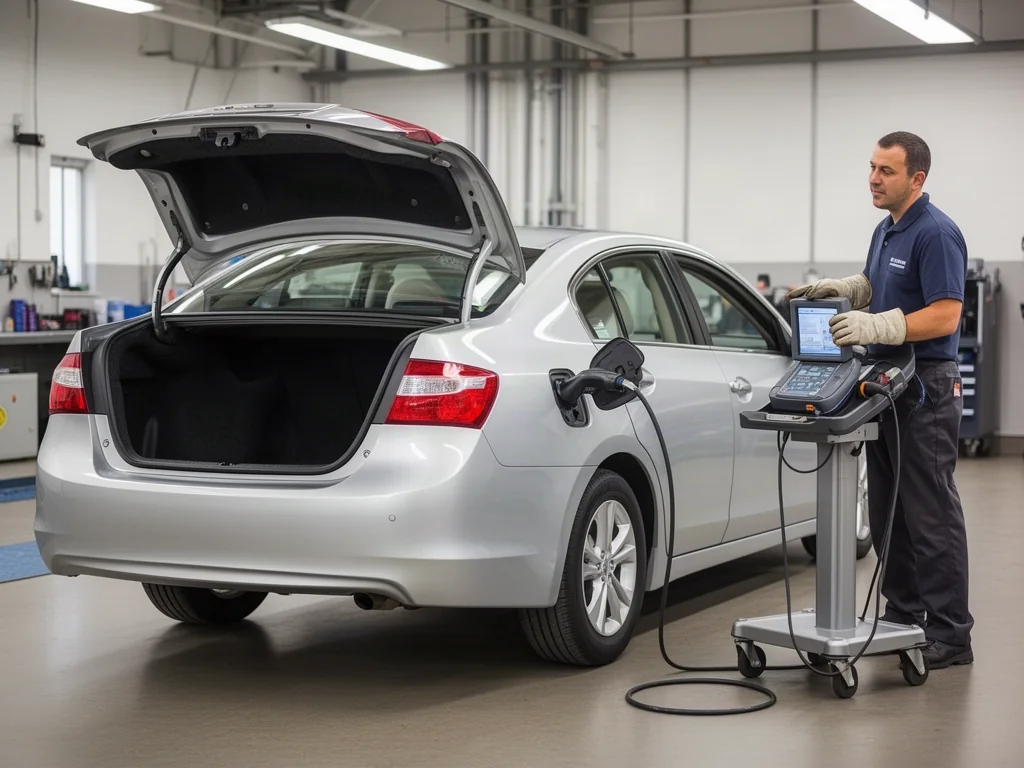
If you own a 2008 Nissan Altima Hybrid, battery problems can feel like uncharted territory. This discontinued model pairs a gasoline engine with a high-voltage traction battery, and after years of use, that pack may show signs of decline. Owners often search for answers about the hybrid battery for Nissan Altima—what it does, how long it lasts, warning signs, and replacement paths. Understanding the system is key to avoiding a rushed, costly decision.
Understanding the High-Voltage Battery in the 2007-2011 Altima Hybrid
Your Altima has two batteries with very different jobs. The conventional 12-volt auxiliary battery powers lights, the radio, and the computers, but it does not move the car. The high-voltage traction battery, a nickel-metal hydride battery, stores energy for the electric motor. It supplies electrical assist during acceleration and captures energy through regenerative braking, recharging the pack as you slow down. A weak 12-volt battery can trigger dash warnings and confuse diagnostics, so never assume a hybrid-system fault is in the big pack.
The traction battery enables the engine to shut off at stops and restart smoothly, which saves fuel in city driving. It works constantly, accepting charge from regenerative braking and the engine-driven generator, then discharging during electric assist. The Altima Hybrid was sold only for a limited run and is now discontinued, so independent shops may have less hands-on experience. Always confirm your exact model year and pack specifications with the VIN or a dealer, because other Nissan hybrids from the same era used different hardware and controls.
How Age and Use Affect Pack Lifespan on These Older Hybrids
Pack life depends on age, mileage, climate, driving patterns, and how long the car sat unused, so there is no fixed lifespan. Heat is the biggest enemy of nickel-metal hydride chemistry; sustained high temperatures accelerate internal resistance and capacity loss. Frequent short trips that never allow the pack to cycle fully can also stress certain modules. Because these are 2007-2011 cars, a pack may be original or already replaced, making service history critical when judging remaining life. The battery module imbalance develops as individual cells age at different rates.
Cell modules, or blocks, are wired in series, and the pack is only as strong as its weakest module. Over time, slight differences in self-discharge and temperature exposure cause one block to hit its lower voltage limit before the others, reducing total usable capacity even if most modules are healthy. When state of charge swings quickly on the display—fully charged one moment, nearly empty the next—it often points to imbalance rather than uniform wear. A hybrid battery diagnostic test that reads block voltages under load can quantify this condition before replacement is considered.
Warning Signs of a Weakening 2008 Altima Hybrid Battery
Common symptoms of a weakening pack include the hybrid system warning light, reduced electric assist under light throttle, the engine running more often, and a drop in fuel economy. Drivers may notice the charge display moving unusually fast, falling from full to two bars in a short drive, or staying pinned near empty. Any new warning that appears consistently, especially with noticeable change in how the car accelerates, deserves attention. From the driver's seat, note when the light comes on—cold start, hard acceleration, after a long climb—and how the charge gauge behaves.
These symptoms are not proof of pack failure. A clogged battery cooling fan can let the pack overheat and trigger the same warning. A weak 12-volt auxiliary battery can cause false hybrid codes and odd behavior. Sensor faults, inverter issues, or poor electrical connections can mimic a dying traction battery. Before you conclude the pack is bad, record any stored codes with a scan tool capable of reading the hybrid control module. Manufacturer-dependent codes require vehicle-specific confirmation rather than a generic OBD-II lookup, so interpret them carefully.
Professional Diagnosis Before Replacing the Pack
A proper diagnosis before replacement saves thousands of dollars and prevents replacing the wrong part. A hybrid-capable scan tool reads live data from the battery control unit, including individual block voltages, temperature readings, and charge/discharge current. A specialist looks for block voltage differences under load, which indicate weak cells, and checks battery temperature data to catch cooling problems. Because the pack carries dangerous high voltage, never open the enclosure or disconnect high-voltage cables yourself—even a discharged hybrid battery retains enough energy to injure.
A hybrid specialist or dealer has the equipment to safely assess the pack and distinguish battery faults from control-system faults. Ask for a written explanation of test results: which codes were stored, what block voltages were measured, and how the technician concluded the pack or a module is failing. If codes point to a cooling fan or sensor, those repairs are far cheaper than a new battery. Never accept a generic code reading as proof the pack is dead; this vehicle has specific diagnostic procedures that a qualified shop will follow.
Replacement Options for a Discontinued Hybrid Model
Replacement options for the Altima Hybrid include a new pack through a dealer if still available, remanufactured or reconditioned packs, used salvage packs, and module-level repair. New dealer packs are rare and typically the most expensive, but they offer full OEM warranty. Remanufactured packs replace only the weakest modules and rebalance the rest, often at lower cost, but longevity depends on the condition of the remaining modules. Used salvage packs are the cheapest upfront but carry no history, and you may be buying someone else's failing battery.
Module-level repair is attractive because it targets only the bad blocks, but how it spreads risk matters. Some shops replace just one failed module, which may work for a while but often leads to another module failing soon after because the rest are equally old. A better approach is to replace all modules below a certain capacity threshold and then balance the entire pack. Ask about warranty length, what it covers, core return requirements, and whether installation is included. Always confirm with the supplier that any pack or module matches your exact vehicle, because part compatibility should not be assumed.
Helping a Replacement or Aging Battery Last Longer
Keeping the battery cooling air intake and fan clear of debris is the cheapest way to protect the pack. The intake is usually near the rear seat or trunk area, and pet hair, dust, or cargo can block it, causing the fan to work harder and pack temperatures to rise. Heat accelerates chemical aging, so a clean cooling path helps every nickel-metal hydride module. Driving the car regularly also helps; long periods of storage let the pack self-discharge and can cause deep cycling when you finally start it, which stresses cells.
Address hybrid warning lights promptly instead of continuing to drive with an unknown fault. A battery cooling fan that is not running can let temperatures climb to the point of permanent capacity loss. A failing module that is ignored can cause the pack to cut assist abruptly, which may feel like a loss of power in traffic. Keep records of battery tests, repair invoices, and any module replacement work; this documentation helps if the car is sold later and shows the next owner that the aging pack has been maintained rather than neglected.