Nissan Altima Catalytic Converter: Location, Symptoms and Replacement
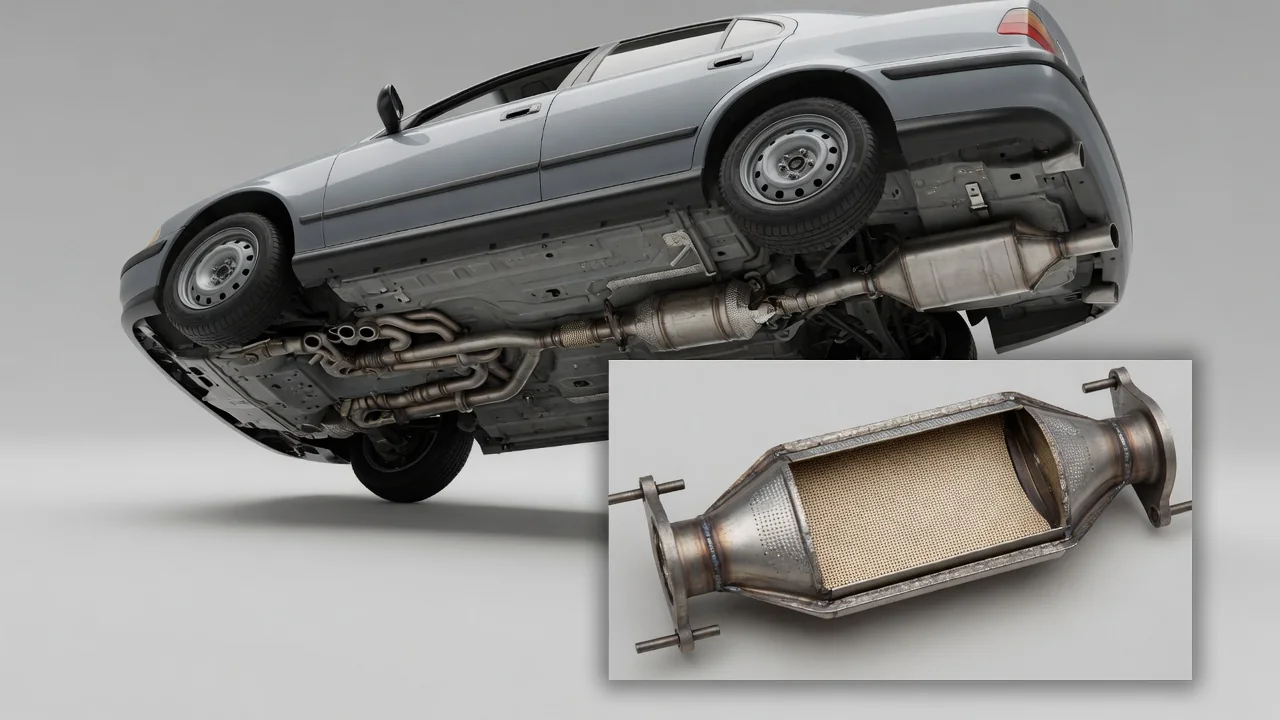
When a Nissan Altima needs a catalytic converter, owners often start with the model year and a parts listing. That is not enough. Converter count, mounting, and emissions approval depend on engine, body style, and certification details. This guide explains how to identify the exhaust layout, recognize warning signs that still need diagnosis, confirm the fault before authorizing work, and check fitment for 2012 and 2013 Altimas.
Identify the Altima's Engine and Emissions Configuration
A catalytic converter for a Nissan Altima is not a one-size listing. Two cars from the same year can use different engines, different underbody routing, and different catalyst packages. A sedan and a coupe, or a four-cylinder and a V6, may not share the same converter count or the same pipe flanges. Searching for a Nissan Altima catalytic converter by year only can return a direct-fit converter that still will not bolt up, because year is only one of several application fields.
Owners should gather model year, engine family, body style, VIN, and the emissions certification label, usually found in the door jamb or underhood area. That label identifies the emissions group the vehicle was certified under, which can change converter requirements even among similar Altimas. Vehicle-specific service information or a verified parts diagram then shows how many converters are present, whether one is integrated with the exhaust manifold, and which oxygen sensor bosses belong to which assembly. Without those details, replacement selection remains a guess.
Locate the Converter in the Verified Exhaust Layout
The catalytic converter on a Nissan Altima treats exhaust after combustion, using a catalyst substrate to reduce regulated emissions before the gases leave the tailpipe. In the exhaust flow it sits after the engine and typically after, or as part of, the exhaust manifold, with oxygen sensors monitoring gases entering and leaving the catalyst. Those sensors feed the engine control system so it can judge catalyst efficiency. The converter is not an accessory bolted on for noise; it is part of the emissions path, so leaks or restriction around it affect both driveability and monitor results.
Verified configuration information, not a generic Altima photo, should describe whether a converter is welded into a manifold assembly, mounted close to the engine, or located farther downstream in the underbody pipe. Some layouts use more than one converter; others combine functions in a single housing. Parts diagrams distinguish the converter from heat shields, exhaust pipes, gaskets, and oxygen sensors so the wrong piece is not ordered. Owners may look at accessible engine-bay areas only with the engine off and the exhaust cool. Underbody inspection belongs to a shop with a lift and proper support.
Warning Signs That Need Diagnosis
A check-engine light, reduced power, unusual exhaust noise, or a sulfur-like odor can justify investigating a Nissan Altima catalytic converter, but none of those signs proves the converter has failed. Exhaust leaks ahead of a sensor can mimic catalyst-efficiency problems. An engine misfire can dump unburned fuel into the converter and create heat or odor that starts in combustion, not in a failed substrate. Rattling is often a loose heat shield or hanger rather than a collapsing catalyst, so the noise source should be identified before the converter is condemned.
A flashing check-engine light, severe power loss, or signs of overheating are not wait-and-see conditions. Stop safely and arrange professional assistance, because continued driving with a misfire or a badly restricted exhaust can damage the catalyst and other components. Useful notes for the shop include when the light appeared, whether it flashes or stays on, whether the engine runs roughly at idle or under load, and whether noise or odor changes with temperature. Those observations help a technician decide which tests come first rather than defaulting to converter replacement.
Confirm the Fault Before Authorizing Replacement
Stored diagnostic codes should be recorded and interpreted for the exact Altima before anyone treats them as a parts list. Manufacturer-dependent codes in particular need vehicle-specific confirmation; a generic catalyst-efficiency description does not identify which converter, which sensor, or which upstream fault is involved. Catalyst-efficiency codes alone do not establish that the converter must be replaced. The control module compares oxygen sensor behavior across the catalyst, and that comparison can fail because of an exhaust leak, a slow sensor, fueling imbalance, or a misfire that never let the catalyst operate as designed.
A thorough diagnosis looks for exhaust leaks at flanges and flex joints, oxygen sensor operation, engine misfire, fueling problems, and oil or coolant consumption that can contaminate the catalyst. Those conditions can produce the same monitor results as a worn substrate. When those causes are ruled out or repaired, professional catalyst-performance or exhaust-restriction testing is appropriate to decide whether the converter itself is contributing to the complaint. Those tests belong in a shop with the right equipment; they are not driveway experiments. Only after the fault is confirmed should a replacement catalytic converter for a Nissan Altima be authorized.
Fitment Checks for 2012 and 2013 Altimas
Fitment for a 2013 Nissan Altima catalytic converter and for a catalytic converter on a 2012 Nissan Altima must be checked as two separate applications, even though the names are consecutive. Each vehicle's engine, body style, VIN, and emissions configuration decide which assembly is correct. Adjacent years and a broad Altima listing are not proof of interchangeability. A part listed as a catalytic converter 2013 Nissan Altima can still differ from a 2012 unit in sensor location, pipe length, or certification. Confirm the affected converter and its position in that car's verified layout before selecting a part.
After the position is confirmed, check mounting connections, oxygen sensor provisions, and applicable emissions approval against reliable application information for that VIN. A direct-fit converter should match flange pattern, pipe diameter, hanger locations, and sensor boss count for the assembly being replaced. Federal and California-style certifications are not interchangeable just because the housing looks similar. Heat-shield attachment and manifold-to-pipe joints also need to match the original layout. If the catalog description is incomplete, use the parts diagram and the emissions certification label rather than assuming a listing titled for the Altima will fit.
Replacement Estimates and Follow-Up Checks
An itemized estimate should name the converter assembly being replaced, labor, required seals or hardware, and any separately diagnosed repairs such as sensors, pipes, or engine faults. Assembly location changes the job: a manifold-integrated converter is a different access problem than a downstream underbody unit, and corrosion at flanges or fasteners can expand the work. Emissions requirements can also change which replacement is legal for that vehicle. Those factors affect the scope of work without implying a single price for every Nissan Altima catalytic converter replacement.
Underlying engine or exhaust faults should be repaired so the new catalyst is not damaged by the same misfire, leak, or contamination that harmed the original. After installation, professional follow-up should check for exhaust leaks at new joints, confirm that stored faults do not return after a proper drive cycle, and verify that emissions monitors can complete. Clearing codes alone does not prove a successful repair; the system still has to run its catalyst-efficiency and related monitors. If a monitor fails again, diagnosis restarts at the recorded codes rather than at another converter.