Nissan Altima Brake Warning Light: Causes and Checks
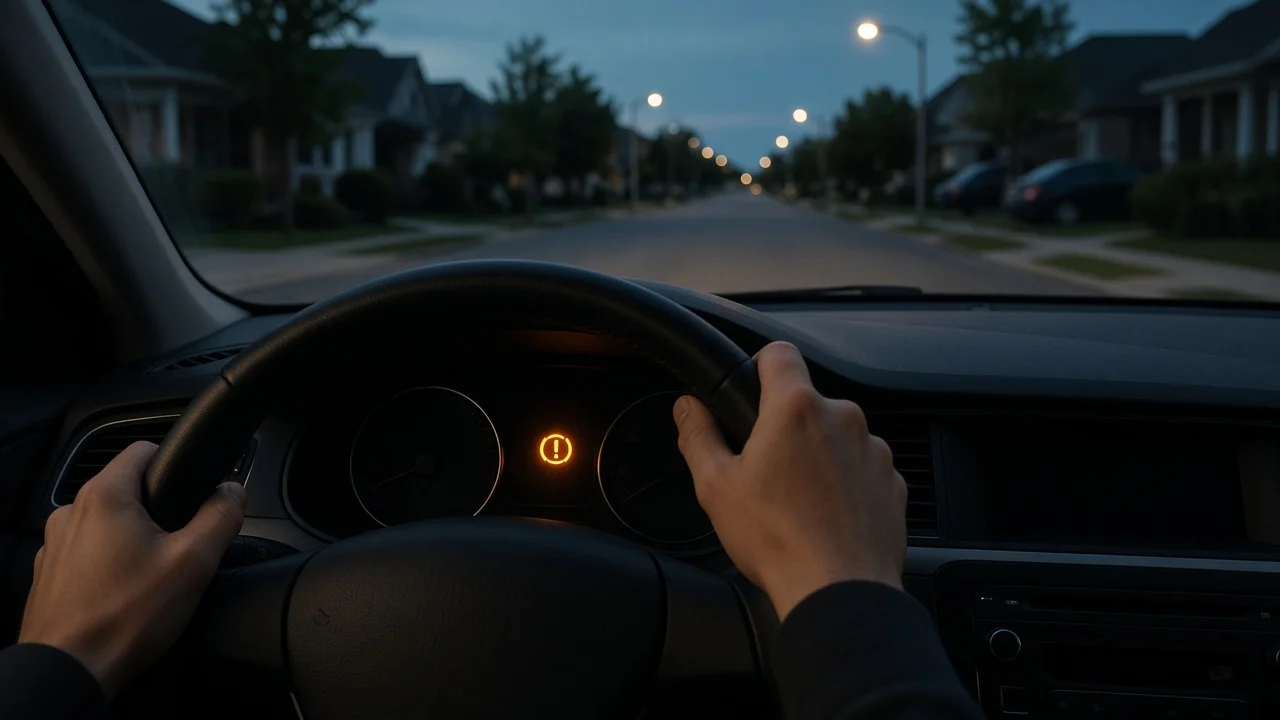
A red brake warning light on a Nissan Altima dashboard is a message about the hydraulic braking system or the parking brake, and it deserves attention before the next drive. The cause can be as simple as a parking brake that is not fully released, or as serious as low brake fluid from a leak. This guide explains how to record what you see, narrow down the likely causes and decide when the car should not be driven.
Establish the symptoms
Start by noting exactly when the light comes on. A brief glow at ignition that goes out after the self-check is normal. A light that stays on from start-up points toward a different cause than one that flickers on turns, during hard stops or only after the car has been parked on a slope. Note whether you see the red BRAKE or exclamation-mark symbol, the amber ABS light, or both together, because the combination matters. The owner's manual for your model year shows which symbols your instrument cluster uses and what each one means.
Record anything that changed alongside the warning. A pedal that feels soft, sinks slowly under steady pressure or travels farther than usual suggests a hydraulic problem. Grinding, squealing, pulling to one side, a burning smell near a wheel or wet streaks on the inside of a tire are also worth noting. Recent work matters too: new brake pads, a fluid flush, a battery replacement, tire service or a parking brake adjustment can each explain or mask the light. Writing these details down saves diagnostic time later.
Distinguish plausible causes
The most common and least serious cause is the parking brake. Depending on the model year, an Altima uses either a foot-operated parking brake or an electronic switch, and both send a signal to the same warning. A pedal that has not returned fully, a sticking switch or an electronic parking brake fault can keep the light on. This explanation is supported if the light goes out when the brake is firmly applied and released again, and weakened if the light stays on with the brake clearly off and the pedal or switch operating normally.
The next candidate is a low brake fluid level, detected by a float switch in the reservoir under the hood. The level drops gradually as pads and their friction material wear, because the caliper pistons move outward and hold more fluid. A level that has slipped slightly over many miles, together with worn pads, fits that pattern. A sudden drop, a level well below the minimum mark, damp residue near a wheel, caliper or brake line, or a soft pedal points instead to a leak, which is a far more serious finding. A light that flickers during cornering or braking often means the level sits right at the switch threshold.
A third group of causes is electrical or electronic. A faulty level sensor, damaged wiring or a poor connector can trigger the light while the reservoir is full. On many vehicles, when the red brake light and the ABS light appear together, the ABS system may have disabled electronic brake force distribution, which balances front and rear braking. Low system voltage from a weak battery or charging fault can also bring on several warnings at once. Stored diagnostic trouble codes support these explanations; a clean scan weakens them.
Checks in a useful order
Begin with checks that need no tools. With the car parked on level ground, confirm the parking brake is fully released, then apply and release it again while watching the light. Open the hood and find the translucent brake fluid reservoir with its minimum and maximum marks, and read the level without opening the cap. Look around each wheel and along the inner tire sidewalls for wet streaks, and check the ground where the car was parked for drips. With the engine running, press the brake pedal firmly and hold it; it should stay high and firm rather than slowly sinking.
If the fluid is low, topping it up is only a temporary step and is not appropriate if you see leak signs or the pedal feels soft. Use only the fluid type specified on the reservoir cap or in the owner's manual, wipe the cap area clean before opening it and do not overfill. Adding fluid may turn the light off, but it leaves open the question of where the fluid went, so note the level afterward and compare it over the following days.
Further checks need tools, specifications or a technician. Measuring brake pads and brake rotors against the wear limits for your exact vehicle fitment requires removing the wheels and using the published minimum thickness figures, not visual guesswork. Inspecting calipers, hoses and lines for seepage, reading codes with a scan tool that can access the ABS and brake systems, and testing the fluid level switch or parking brake switch circuit with a meter are jobs for a qualified technician or an owner working from the factory service information.
Interpret the findings
Each result answers a narrow question. A light that clears when the parking brake is reset confirms a parking brake signal, though a repeat occurrence suggests a worn switch or mechanism that still needs repair. A full reservoir with the light on rules out low fluid as the trigger and shifts attention to the sensor, wiring or electronic faults. A slightly low level with no visible leaks and pads approaching their limits is consistent with normal wear, but the pads still need to be measured to confirm it.
Some findings do not justify replacing parts on their own. A stored code identifies a circuit or system, not necessarily a failed component, so wiring and connectors should be checked before a sensor or module is replaced. Seeing the light go off after adding fluid proves only that the switch responds; it does not prove there is no leak. Replacing pads without checking the rotors, or replacing a level sensor without confirming the fluid level and wiring, risks paying for parts that do not address the cause.
Urgency and next action
Stop driving and arrange towing or mobile service if the pedal feels soft or sinks toward the floor, stopping distances have increased, fluid is visibly leaking, the reservoir is near empty, or the red light appears together with grinding, pulling or a burning smell. These signs mean braking capacity may already be reduced, and no safe remaining mileage can be promised. A warning clearly explained by the parking brake, with a firm pedal and a correct fluid level, is less urgent but still deserves a prompt inspection.
When you book the repair, give the shop the model year, engine and trim so parts and specifications match, along with the mileage, when the light appears, which other warnings show, the fluid level you observed and any recent brake or electrical work. That record lets a technician confirm the cause with targeted tests instead of replacing parts by elimination.