Nissan 350Z Oil Pressure Sensor and 370Z Gauge Troubleshooting
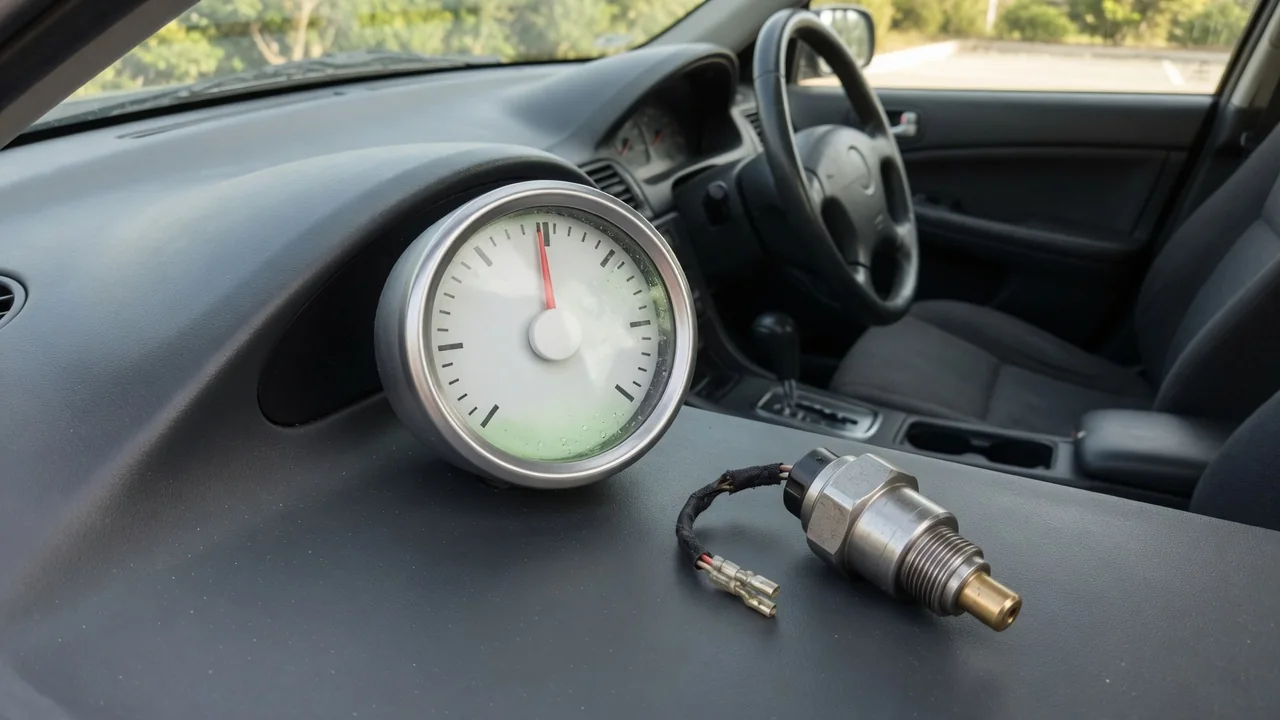
Nissan 350Z oil pressure sensor problems and 370Z oil pressure gauge behavior often appear as a dead needle, a flickering display, or an oil pressure warning light that does not match engine sound. On these Z-cars the reading can reflect lubrication trouble, a failing oil pressure sender, a loose sensor connector, or an instrument issue. Confirm the model and how the gauge is set up before discussing replacement.
What a Zero or Erratic Oil Pressure Reading Means
A zero oil pressure reading, an erratic gauge reading, or a needle that jumps high can come from several places. Actual engine oil pressure may have fallen, the oil pressure sender may be sending a false signal, the sensor connector or wiring may be intermittent, or the gauge circuit itself may be at fault. The same cluster can also show an oil pressure warning light while the analog display still moves, which is another reason not to treat one symptom as a complete diagnosis.
Gauge behavior alone cannot prove that the 350Z oil pressure sensor has failed, and it cannot prove that the engine still has adequate lubrication. If pressure suddenly drops to zero, an oil pressure warning appears, or unusual engine noise accompanies the reading, stop safely and shut the engine off. When low pressure is suspected, arrange towing rather than driving on or restarting repeatedly to see whether the needle recovers. Those restarts can add wear if oil is not reaching bearings and cam surfaces.
350Z Oil Pressure Sensor Symptoms and Diagnostic Clues
Document how the display actually behaves. A 350Z oil pressure sensor complaint may appear as a needle stuck at one position, intermittent movement that comes and goes with vibration, or an abrupt change from the vehicle's usual warm-idle or highway reading. Note whether the oil pressure warning light follows the same pattern. Those details help a technician decide whether the next step is a mechanical oil pressure test, a connector inspection, or cluster diagnosis rather than replacing parts on guesswork.
Sensor faults can look identical to damaged wiring, a corroded sensor connector, or an instrument-cluster problem, so the symptom does not identify the failed component. Record whether the issue began suddenly or appeared after an oil service or work near the sender. Engine temperature and operating conditions also change oil pressure, so a cold start reading is not the same as a hot idle reading. Expected values still require model-year service information; do not treat a generic Z-car range as proof for every 350Z.
Locating the 350Z Sensor and Planning Replacement
The 350Z oil pressure sensor layout is not something to guess from a single photo. Confirm the model year and engine configuration first, then use the applicable service diagram to identify the sender and separate it from nearby temperature sensors, switches, and fittings. One generation's access path does not cover every 350Z. Misidentifying the part can lead to opening the wrong connector or disturbing a fitting that was never part of the oil pressure circuit.
Replacement is only reasonable after diagnosis confirms the sender, not because the gauge looked wrong. Match the electrical connector, thread specification, and prescribed sealing method for that vehicle, and follow vehicle-specific tightening requirements rather than a generic snug-fit guess. Restricted access, hot exhaust and engine parts, fragile fittings, and the chance of an oil leak after installation often make professional replacement the safer choice. A poor seal at the sensor boss can empty the sump quickly, which is why this job is often left to a shop with the correct service information.
Confirming the 370Z Oil Pressure Gauge Setup
Before treating a 370Z oil pressure gauge as evidence of engine condition, establish the model year and what is actually installed. Some cars use a factory cluster display, others have an aftermarket oil pressure gauge, and some owners add a second monitoring device. Confirm that the instrument measures oil pressure. An oil temperature display answers a different question and will not explain a zero oil pressure reading or an oil pressure warning light.
For an aftermarket installation, gauge configuration, sender specifications, wiring, and the original installation notes have to be checked together. A mismatched sender can drive a factory-looking needle into an erratic gauge reading even when mechanical pressure is normal. Gauge range and display behavior also do not establish the engine's required pressure. Use vehicle-specific service specifications, not the highest number printed on an aftermarket dial, when deciding whether lubrication is adequate. A poorly grounded sender wire can also flatten a 370Z oil pressure gauge to zero without any change in the lubrication system.
Safe Observations Before a Service Appointment
Check engine oil level with the engine off, on level ground, using the owner's manual procedure and the waiting period it specifies. A correct level does not prove adequate oil pressure, and adding oil does not diagnose a 350Z oil pressure sensor fault. Low oil can still contribute to a genuine pressure drop, so the dipstick result belongs in the notes you take to a shop, alongside whether the warning light came on with a low, zero, or swinging gauge.
After the engine has cooled, look for fresh oil beneath the parked vehicle and for visible damage only in accessible areas. Do not reach near moving parts or crawl underneath to inspect the sender. Record warning messages, existing gauge behavior, and recent service details without running the engine solely to reproduce a suspected pressure problem. That log is more useful than a second zero oil pressure reading obtained by restarting a car that may already be short of lubrication.
How Professional Testing Confirms the Cause
A technician can measure actual oil pressure with suitable test equipment and compare it with the correct service specifications for that 350Z or 370Z. That mechanical oil pressure test separates a false cluster reading from a lubrication problem. Electrical checks of the sensor circuit, connectors, wiring, and gauge then follow as needed for the vehicle's configuration, including whether a factory sender or an aftermarket unit is feeding the 370Z oil pressure gauge.
If mechanical pressure is confirmed low, the lubrication system needs investigation before anyone treats the display issue as a sensor repair. Pump condition, pickup path, oil condition, and related engine wear are in a different category from a failed sender. After any repair, check for leaks, verify circuit operation, and confirm that pressure readings are credible under the conditions the service information describes. Only then is the 350Z oil pressure sensor or gauge complaint reasonably considered resolved.