NGK Diesel Glow Plug Selection: Matching Plugs to Your Engine
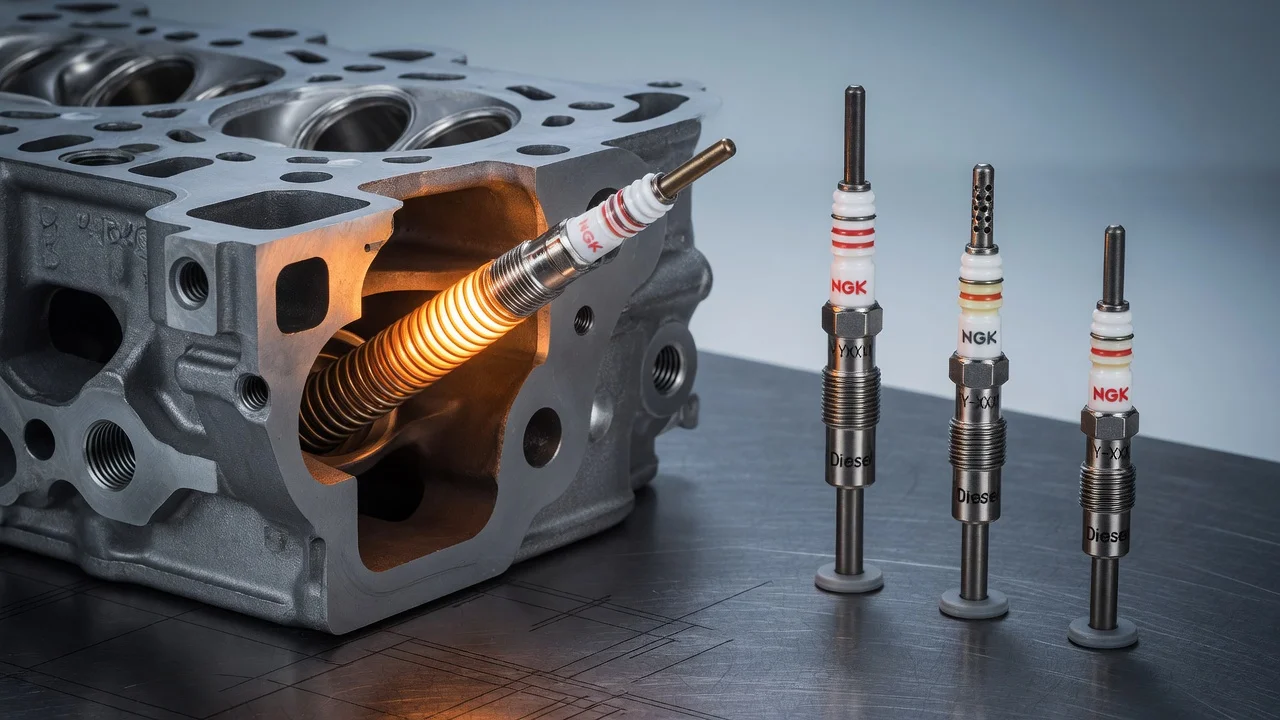
Choosing NGK diesel glow plugs starts with the engine, not the box. A plug that threads in but has the wrong voltage, tip length or heating behavior can leave a diesel cranking on cold mornings, puffing white smoke after start, or setting fault codes within weeks. This guide explains how to define what your engine needs, match a plug to its configuration and glow system, judge which features actually matter, and budget for the parts of the job that cost more than the plugs themselves.
Define the job the product must do
Glow plugs belong only to compression-ignition engines running diesel fuel or the diesel blends your manufacturer approves. Gasoline engines use spark plugs, and the two are not interchangeable. A glow plug heats the combustion chamber so compressed air gets hot enough to ignite injected fuel during a cold start. Many modern diesels also keep the plugs energized for a period after the engine fires, often called afterglow, to steady the idle and reduce smoke, noise and emissions while the engine warms. That means the right choice depends on how you use the vehicle. A pickup that sees freezing mornings and short trips cycles its glow system far more than a highway commuter in a mild climate, and a work truck that idles for long periods puts its own demands on the system. Note the year, engine code, climate and typical driving before you shop.
Next, confirm the plugs are really the problem. Typical glow plug symptoms include long cranking when cold, rough running and white smoke for the first minute, a flashing glow indicator and stored glow plug circuit codes. Similar symptoms can come from a clogged fuel filter, air leaking into the supply side, a weak lift fuel pump, low rail fuel pressure, a worn or leaking injector, or slow cranking from a tired battery. A scan tool that reads glow circuit codes, injector correction values and actual versus desired fuel pressure narrows the field quickly. With the harness disconnected, each plug can be checked with an ohmmeter or a current-draw test, and the relay or controller can be checked for supply voltage. Never crack high-pressure injection lines on a running common-rail engine to bleed air or perform a leak check; those circuits operate at pressures that can inject fuel through skin. Follow the service procedure for your engine instead. A fuel additive will not restore a burned-out heating element.
Check compatibility
Fitment begins with the exact engine, not just the model name, because the same nameplate can carry different diesel engines across model years and markets. Look the plug up in the NGK application catalog by year, make, model and engine code, or cross-reference the original equipment part number from the old plug or service information. The physical interfaces that must match are thread diameter and pitch, overall length, the length and diameter of the heating tip, the sealing seat, hex size and terminal style, which is usually either a threaded stud with a nut or a push-on connector.
Tip protrusion deserves special attention. A tip that reaches too far into the chamber can sit in the injector spray pattern or come too close to the piston, while one that is too short heats the air poorly. Electrical specification matters just as much. Older systems feed battery voltage through a relay, while many newer engines use an electronic controller that pulses power to plugs rated for lower voltage so they heat very quickly. A plug designed for full battery voltage will underperform on a pulsed low-voltage system, and a low-voltage plug placed on a relay system can burn out early. Some engines also use plugs with a built-in combustion pressure sensor that feeds the engine computer; these must be replaced with the exact listed part. If your engine left the factory with ceramic plugs, substitute a metal-sheathed plug only when the catalog lists it for that engine.
Features that affect the choice
The main construction trade-off is metal-sheathed versus ceramic. Metal-sheathed plugs are the most common type, tolerate handling well and usually cost less. Ceramic plugs can reach higher temperatures, heat up quickly and handle long afterglow periods, which is why they appear on many controller-driven engines. They typically cost more and can crack if dropped or overtightened. The correct choice is the type your engine and glow controller were designed around, not the most expensive option on the shelf.
Treat product labels with measured skepticism. Terms such as fast start, quick glow or extended life tell you little unless they come with specifications you can compare: rated voltage, resistance range and the manufacturer's stated heat-up characteristics. Self-regulating designs are a genuine engineering feature, using a second control coil whose resistance rises as it heats to limit current, but they still need to match the system they are wired into. Packaging that promises premium performance without data is not useful evidence. Counterfeit automotive parts also circulate through some online marketplaces, so buy branded plugs from a seller you trust and check that the part number, packaging and markings are consistent.
Limitations and ownership costs
On many diesels, the plugs are the cheap part and removal is the expensive one. Carbon and corrosion can seize the threads, and a swollen tip can jam in the bore. A plug that snaps off may require a dedicated extraction kit or cylinder head removal. Reduce the risk by working on an engine that is warm rather than hot, applying penetrating oil to the threads ahead of time, using a proper glow plug socket, and applying steady force while stopping if resistance keeps climbing. Clean the bore before installation, start each plug by hand, use thread compound only as the plug or vehicle instructions direct, and torque to the specified value, which is usually low. Disconnect the battery before working, and never power a plug outside the engine near fuel or other flammable material, since the tip gets extremely hot.
New plugs cannot fix a weak battery, slow cranking, a failed relay or controller, corroded harness connectors, low compression, or fuel delivery faults upstream of the injectors. Budget for those possibilities if testing has not ruled them out. Replacing a full set is often sensible when one plug fails on a high-mileage engine, since the others share the same age and duty cycle, but quantity and cost scale with cylinder count: four, six or eight plugs depending on engine configuration. Factor in labor time if the plugs sit under intake components or require extra disassembly.
Build a practical shortlist
Before comparing prices, run each candidate through the same checklist. Does the catalog listing name your exact engine code, or does the part number cross-reference to your original equipment number? Do thread size, overall length, tip length, seat and terminal style match the old plug? Does the rated voltage suit your glow system, whether relay-fed or controller-driven? Is the construction, metal-sheathed or ceramic, the type your engine specifies, and does your engine need a pressure-sensing plug? Is the seller reputable enough that you can trust the part is genuine?
Once candidates pass, compare what remains: price per plug and per full set, warranty terms, availability of the full quantity you need, and whether you also need a removal tool, new connectors or a replacement controller. Avoid ranking products by marketing claims or unrelated reviews. The best NGK glow plug for your diesel is the one the application data lists for your engine and glow system, installed with patience and correct torque after testing has confirmed that the glow circuit, not fuel pressure, filtration or injection, was causing the cold-start trouble.