Next-Generation EV Battery Technology: Evolution and What's Coming
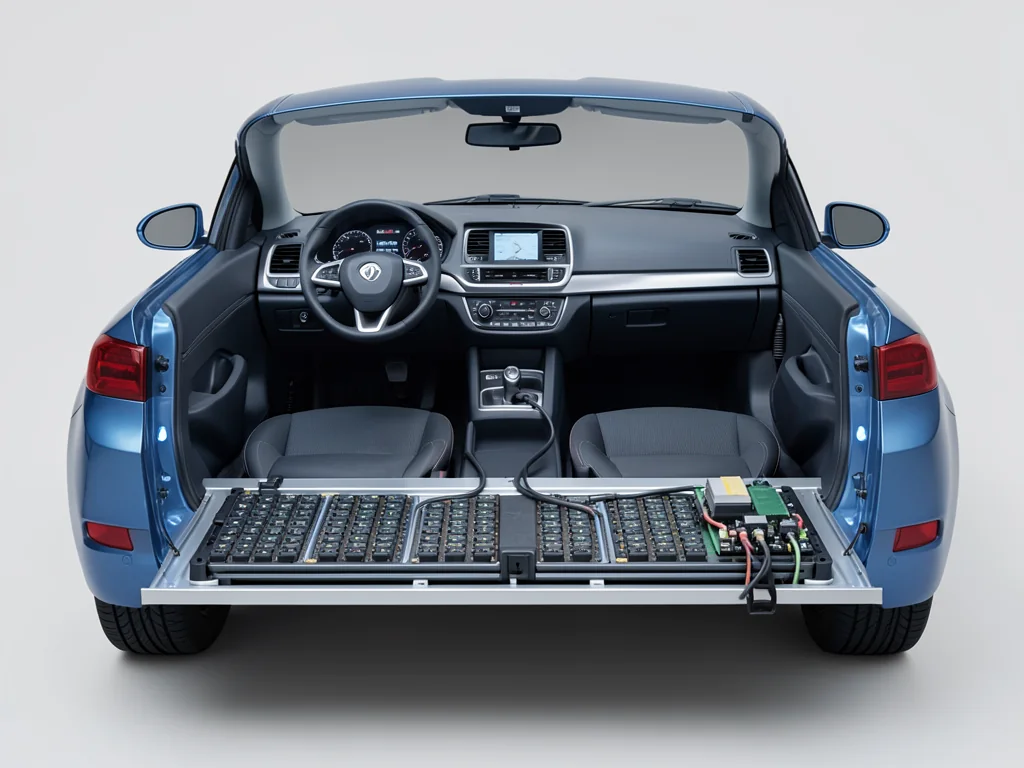
Battery tech for EV road cars has moved from early traction packs to lithium-ion chemistry that now defines most production vehicles. EV battery technology is still changing, as automakers and suppliers pursue next-generation EV battery designs, pack architecture updates, and durability claims that reach toward a million kilometers. Understanding EV battery history, cell chemistry, and pack engineering helps separate laboratory results from what drivers can actually buy.
How EV Battery Technology Reached Today's Road Cars
EV battery history did not follow one factory line. Early electric vehicles often used lead-acid traction batteries that were heavy for the energy they stored. Nickel-based designs later raised energy density for some programs, yet still constrained range and packaging. Lithium-ion chemistry then became the practical foundation for modern EV battery technologies by storing more energy in a lighter pack. Automakers adopted that shift at different times, so battery technology for EV cars reflects parallel paths.
A finished pack is more than stacked cells. Cells convert chemical energy; some designs group them into modules, then an enclosure, cooling hardware, and a battery management system create a vehicle energy store. Cathodes, anodes, and electrolytes set the chemistry. Thermal management protects cells during charge and drive. Manufacturing quality, electronic controls, and pack engineering made lithium-ion packs usable on public roads by coordinating voltage, temperature, and isolation rather than relying on chemistry alone.
The Improvements Behind New EV Battery Announcements
EV battery improvements usually aim at usable energy, charging capability, durability, thermal control, and manufacturing efficiency rather than one headline number. A cell-level result does not establish the range, charging time, or durability of a finished vehicle, because packaging, cooling, software, and crash structure change what the driver experiences. New EV battery announcements often isolate energy density or cycle life; those figures still must survive pack integration, vehicle controls, and production variation before they become battery technology EV buyers can use.
Charging performance depends on temperature, state of charge, the equipment at the plug, and the vehicle's current limits. A laboratory curve can look faster than a cold or nearly full pack will accept on the road. Any claim described as the latest EV battery technology or new EV battery tech should name its date and development stage. Laboratory results, pilot production, and customer availability are different milestones, and next gen EV battery wording does not prove that pack is on sale.
Emerging Chemistries and the Path to Production
Solid-state typically describes a battery that replaces a liquid or gel electrolyte with a solid-state electrolyte. The label alone does not establish energy density, charging speed, or durability, because solid electrolytes differ in materials and operating windows. Silicon-rich anodes aim to store more lithium than conventional graphite, while lithium-metal designs try to raise capacity by using lithium as the anode. Sodium-ion development targets more abundant materials. None of those paths automatically becomes future EV battery technology in every model.
Material stability, manufacturing consistency, operating temperature, and automotive validation remain the usual hurdles between a promising cell and a production pack. Interfaces can degrade, yields can fall outside the lab, and vehicles demand crash, thermal, and life testing a bench cell never sees. Production dates for next-generation EV battery chemistries should be treated as attributed targets unless customer availability is established. EV battery innovation can proceed on several chemistries at once; one approach is unlikely to define every next-gen EV battery.
What Million-Kilometer and Forever Battery Claims Mean
An EV battery technology one million kilometers claim concerns projected or demonstrated lifetime distance under stated conditions, not distance available on one charge. The useful questions are the capacity-retention threshold after that distance, the temperatures, charge rates, and cycle assumptions used, and whether any real-world fleet data supports the figure. Without those details, a million-kilometer headline is a lifetime projection, not a range specification and not a guarantee that every pack will last that far.
Cycle life describes wear from charge and discharge, while calendar aging describes loss that continues with time, temperature, and state of charge even when the car sits. A mileage projection therefore cannot establish a universal service life, because duty cycle, climate, and charging habits change both aging modes. Forever EV battery language is promotional. Durability claims do not establish warranty coverage, do not eliminate degradation, and do not mean original usable energy is retained for the vehicle's life.
Pack Architecture and the Stellantis IBIS Project
Cell-to-pack architecture reduces or skips the module layer so cells sit more directly in the enclosure, while structural integration uses the pack as part of the vehicle's load path. Neither approach is present in every EV, and both still depend on enclosure design, cooling, electrical connections, and controls. EV battery pack technology is as much about packaging and thermal management as about cell chemistry. How those pieces are arranged affects volume, stiffness, service access, and how heat leaves the cells.
The Stellantis EV battery tech IBIS project, the Intelligent Battery Integrated System, has been presented as a development concept that folds inverter and charger functions into the pack, not as a confirmed production specification. Public descriptions frame it as an integrated battery and power-electronics architecture intended to reduce separate power-electronics volume. Its demonstrated stage is development and prototype work, not an established customer pack. Service access and repairability remain design choices; high-voltage pack inspection and repair require qualified professionals.
Understanding Toyota's Battery Development Plans
Toyota EV battery technology should be read as several programs, not one new Toyota EV battery. In a 2023 technical briefing, Toyota described liquid-electrolyte lithium-ion packs aimed at higher energy and faster charging, a lower-cost popularized chemistry path, and a separate solid-state effort. Those are different chemistries and architectures. Merging liquid and solid-state work into one Toyota new EV battery misstates the announcement. Range, charging, and durability figures from that briefing were development targets, not production specifications for a named model.
What remains unconfirmed is which vehicles will receive which pack, when each market will see them, and what customer specifications will ship. Launch windows attributed to Toyota are targets until a production vehicle is sold with that battery. Solid-state electrolyte work is a distinct stream from the liquid-electrolyte lithium-ion plans; neither is already available because a next generation EV battery slide exists. Until Toyota confirms model fitment, treat compatibility, range, and charge times as unconfirmed rather than catalog data.
Reading GM and Samsung Battery Announcements
GM EV battery technology is a set of chemistry, pack, manufacturing, and supplier initiatives rather than one cell. Ultium-related pack architecture, nickel-rich and lithium-iron-phosphate chemistries, cell formats, and joint-venture production have been discussed as separate workstreams. A plant, cathode, or supplier announcement does not automatically update every GM electric vehicle. Read the specific claim, then ask whether it is a laboratory result, a pilot line, or a pack already installed in a vehicle customers can buy.
Samsung new EV battery headlines often omit which Samsung entity is speaking. Samsung SDI is the battery supplier whose production announcements matter for automotive supply; research findings from other Samsung laboratories are not the same as a cell leaving a factory. A promising cell still needs repeatable manufacturing, pack integration, vehicle validation, and production readiness. Practical questions follow any new EV battery technology story: what was demonstrated, under what conditions, at what scale, and whether it is available in a purchasable vehicle.