New Tire Tread Depth: Understanding the Starting Measurement
Check the measurement
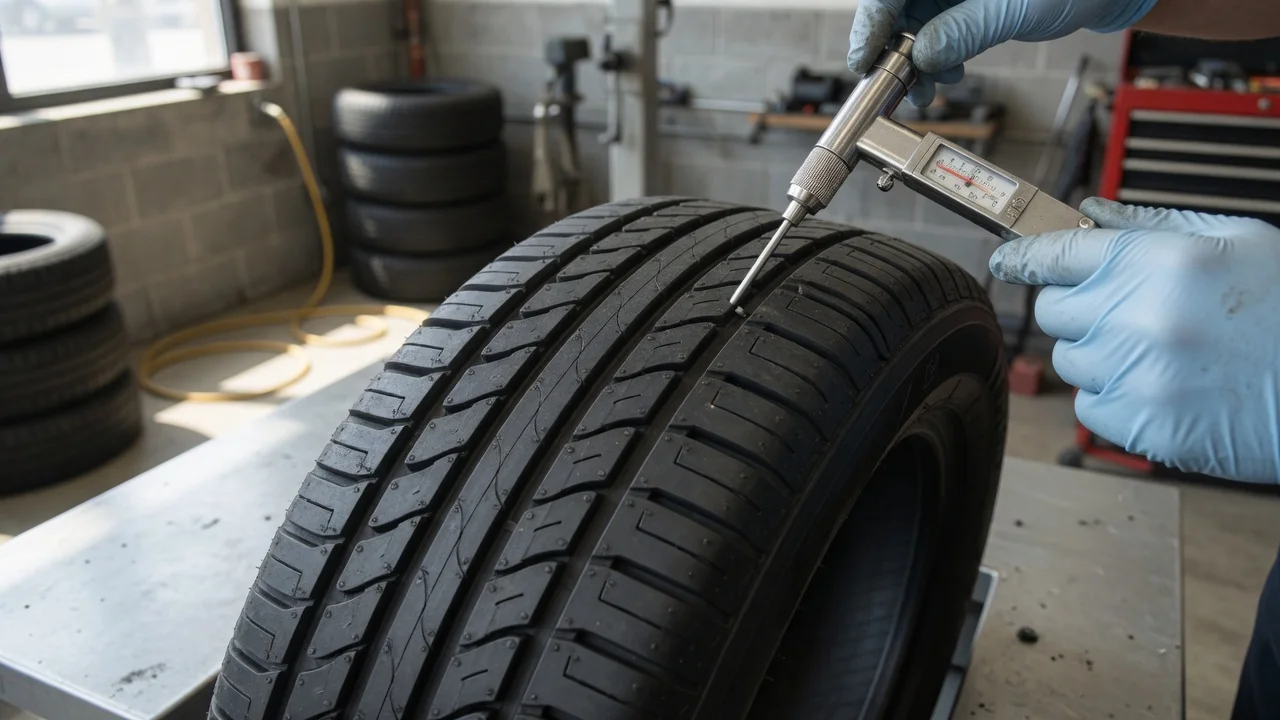
A tread depth gauge gives the most consistent reading, but you can also use the edge of a coin if a gauge is not available. For a passenger car, measure in the main tread grooves that run around the tire, not on the shoulder blocks or the raised tread elements. Take readings at several positions across the face of the tire and at multiple points around its circumference so shallow spots and uneven wear are not missed.
Insert the probe of the gauge into the groove until its base rests on the surrounding tread, then read the scale. Keep the probe straight rather than angled against the groove wall. Compare the outer, center, and inner groove readings. A difference between them often points to alignment, inflation, or suspension issues, so record the lowest value and the location where you found it.
Explain the units
Tread depth is commonly stated in 32nds of an inch in the United States. A typical new all-season or summer passenger tire may have tread depth beginning around 10/32 or 11/32 of an inch, but the exact starting depth depends on the tire model and category. Winter tires and some light-truck or all-terrain designs can begin deeper.
In millimeters, 2/32 inch is about 1.6 mm, 4/32 inch is about 3.2 mm, and 6/32 inch is about 4.8 mm. A metric reading such as 8 mm is therefore noticeably deeper than a 6/32 inch reading. When comparing a gauge result with a specification, keep both numbers in the same unit or convert accurately before deciding.
Compare readings with actual requirements
Wear bars are molded ribs that sit across the main tread grooves. When the surrounding tread wears down until it is level with these bars, the tire has reached the minimum indicator built into the tire. The bars are a visual reference, not a measurement of remaining performance.
A legal minimum is also only a floor for compliance in a given jurisdiction. It does not guarantee that the tire will grip well in every condition or that it should be kept in service until that depth. Vehicle manufacturers sometimes recommend replacement earlier for wet handling or winter performance, and tire makers may advise a different depth for snow use. Check the owner's manual and the tire manufacturer's guidance for the vehicle and tire model rather than treating one number as a universal safe limit.
Account for driving conditions
Deeper tread moves water away from the contact patch more effectively, so a tire with more remaining groove depth usually has better wet grip than a worn version of the same tire. As the grooves become shallower, the risk of hydroplaning on standing water increases, but the exact depth at which wet handling becomes unacceptable varies by tire, vehicle, speed, and road surface.
Snow traction also depends on tread depth and tread design. For winter use in deep snow or slush, many drivers replace tires before they reach the legal minimum, but there is no single universal depth that guarantees safe snow or ice performance. Driving habits and the severity of local conditions should influence the replacement point.
Make a replacement decision
Use the lowest tread depth reading found anywhere on the tire, not the average. If one groove or shoulder area is significantly shallower than the rest, the tire should be inspected for the cause of that uneven wear before a new tire is installed; otherwise the replacement may wear the same way.
Tread depth alone cannot establish tire condition. Cracks in the sidewall or grooves, bulges, cuts, exposed cords, punctures in non-repairable areas, vibration, and age all matter separately. A tire can have adequate depth but still need replacement because of damage or deterioration. Compare the measured depth, wear bars, visible condition, vehicle requirements, and your expected wet or winter use together before making the decision.