New Tire Tread Depth: What to Expect and How to Interpret the Starting Measurement
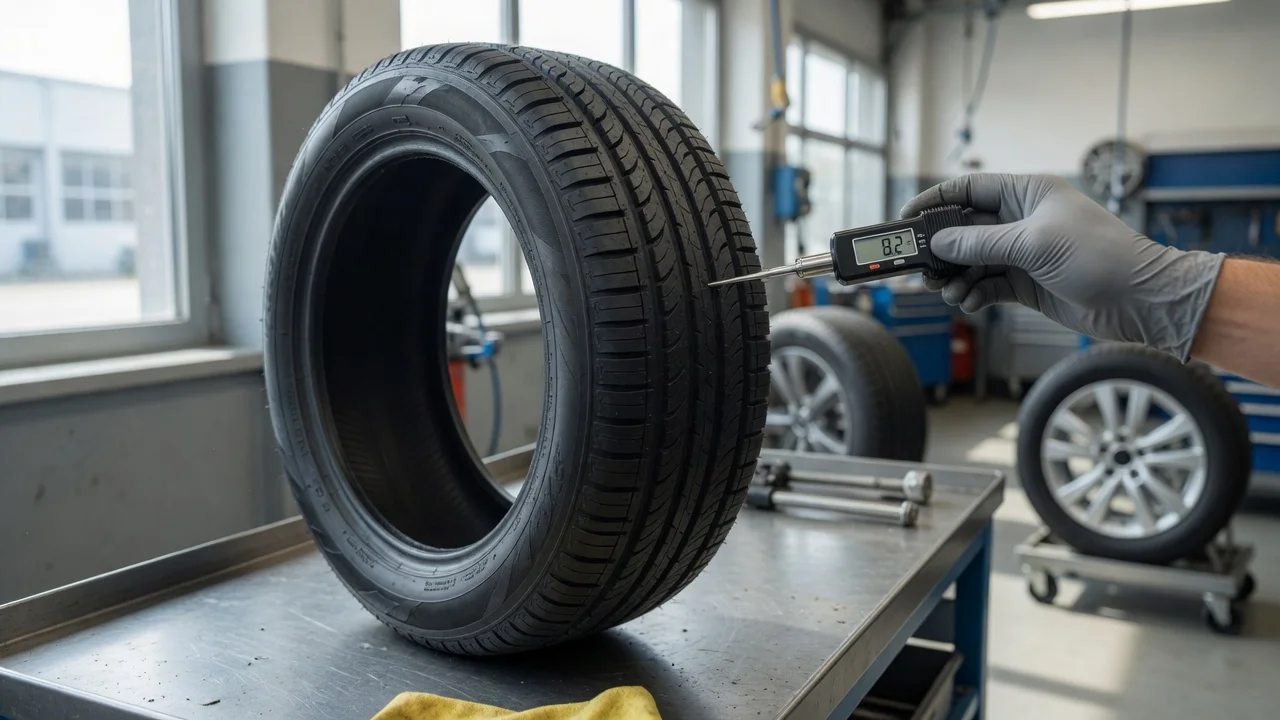
What new-tire tread depth is
New-tire tread depth is the depth of the main tread grooves when the tire has not yet been worn in service. It is the designed starting point of the usable rubber on that specific tire. Manufacturers choose the depth as part of the tread pattern, so there is one correct figure per product rather than one industry-wide standard.
A common reference point for many passenger all-season tires is about 10/32 inch of groove depth when new, which is roughly 8 mm. Summer performance tires often start shallower. Winter, all-terrain, and many light-truck tires often start deeper. The figure that applies to your tire is the manufacturer’s published new-tire depth for that size and pattern, or a careful measurement taken in the main grooves before the tire has accumulated significant mileage.
Shops and gauges in the United States usually report depth in 32nds of an inch. Many other markets use millimetres. One thirty-second of an inch is about 0.8 mm. Interpret any reading in the same unit as the specification you compare it with.
How tread depth works on the road
The tread is the outer rubber that meets the road. Grooves in that rubber give water an escape path and, on winter and off-road designs, extra edges that bite into snow or loose ground. Tread depth is the distance from the tread surface down to the bottom of those main grooves. As the tire wears, groove volume shrinks, so the tire moves water less effectively and hydroplaning resistance falls. Snow traction also declines as grooves and sipes get shallower.
Molded bars across the grooves, called treadwear indicators or wear bars, mark a common passenger-tire reference of 2/32 inch (1.6 mm) in markets that use that convention. That mark is a replacement cue, and in some places it is a legal minimum for highway use. Wet and winter performance can drop off earlier, and some vehicle makers specify replacement while more rubber remains. The new-tire measurement sits at the top of this wear window. A shallower factory reading on a performance tire is a design choice for that pattern.
How to interpret a starting measurement
A starting measurement is remaining main-groove depth on that tire. It becomes meaningful when you compare it with the published new-tire depth for the same product, size, and pattern. A touring tire and an all-terrain tire are built to different starting depths, so those two numbers describe two designs rather than two states of wear.
A reading close to the manufacturer’s new-tire specification means the tire still has essentially its full designed tread life. A reading clearly below that specification on a tire with little or no service mileage can mean a different product was fitted, the tire was previously used, the tread was scuffed during mounting or storage, or the probe was placed in the wrong part of the pattern. Small differences between inner, center, and outer grooves, or around the circumference, can come from where the probe sits in the groove. A large, consistent spread across a newly mounted tire points to inflation, mounting, or alignment problems that need correction before the tire is relied on. Matched depths across the set matter for stability and for systems that compare wheel speeds. When new tires are mixed with part-worn ones, follow the vehicle maker’s rules for which axle gets the deeper tread and how close the sizes must match. Groove depth is only one condition check. Age, cracking, punctures, belt or sidewall damage, and the tire’s load and speed ratings still apply when the grooves look new.
Tire category What a factory-new reading usually reflects; Passenger all-season and touring A mid-range starting groove depth sized for mixed-season wear life. Summer and ultra-high-performance A shallower starting depth consistent with a lower-void, handling-oriented pattern. Winter and dedicated snow A deeper starting depth plus dense siping for snow and ice edges. All-terrain and many light-truck tires A deeper, more open tread built for wear life and loose surfaces.
How to take a measurement you can trust
You need a tread-depth gauge, the tire’s size and pattern so you can look up its new-tire specification, and a vehicle parked on level ground with the parking brake applied. A probe gauge is enough. You can often reach the tread through the wheel well with the vehicle on the ground. If you raise the vehicle to see the inner shoulder, use the jacking points and stands in the owner’s manual. Measuring is a straightforward owner task. Judging whether an unexplained uneven reading on a new tire is safe to leave in service is work for a qualified shop.
Place the gauge in a main circumferential groove, clear of a wear bar, a thin sipe, or a stone ejector. Insert the probe until it bottoms in the groove and read the scale at the tread surface. Repeat at several places around the tire and across the inner, center, and outer grooves. Record the lowest reading and note any large spread. Label the unit as 32nds of an inch or millimetres so it matches the specification you will use. Compare the recorded depth with the manufacturer’s new-tire groove depth for that size and pattern. Treat a close match as a normal starting point. Treat a large shortfall, or a large difference across the tread, as a reason to have the tire identified and inspected before putting weight on the number. You are done when you have a unit-labeled reading from the main grooves at more than one location, plus a same-product specification. If that specification is unavailable, keep the reading as a baseline for later wear checks on that tire; it will not tell you whether the tire was at true new depth when it was mounted.
A coin held in a groove can hint at remaining depth later in the tire’s life. A gauge is the right tool for a starting measurement. If a shop printout lists depths on a just-installed set, confirm those figures were taken in the main grooves after mounting and inflation, then keep them as the baseline for later inspections.
Limits of the starting number
Starting depth does not, by itself, predict wet-braking distance, snow performance, or mileage to replacement. Compound, siping, void ratio, load, inflation, alignment, and driving style all change grip and wear rate. Legal minimum remaining depth is set by the jurisdiction where the vehicle is used, and it can differ from both the wear-bar height and a manufacturer’s earlier replacement advice. When those figures disagree, follow the strictest limit that applies to that vehicle and use. Exact new-tire specifications and local legal minima are product- and location-specific, so they cannot be reduced to one chart here.