NA Miata Adjustable Control Arms: Fitment and Selection
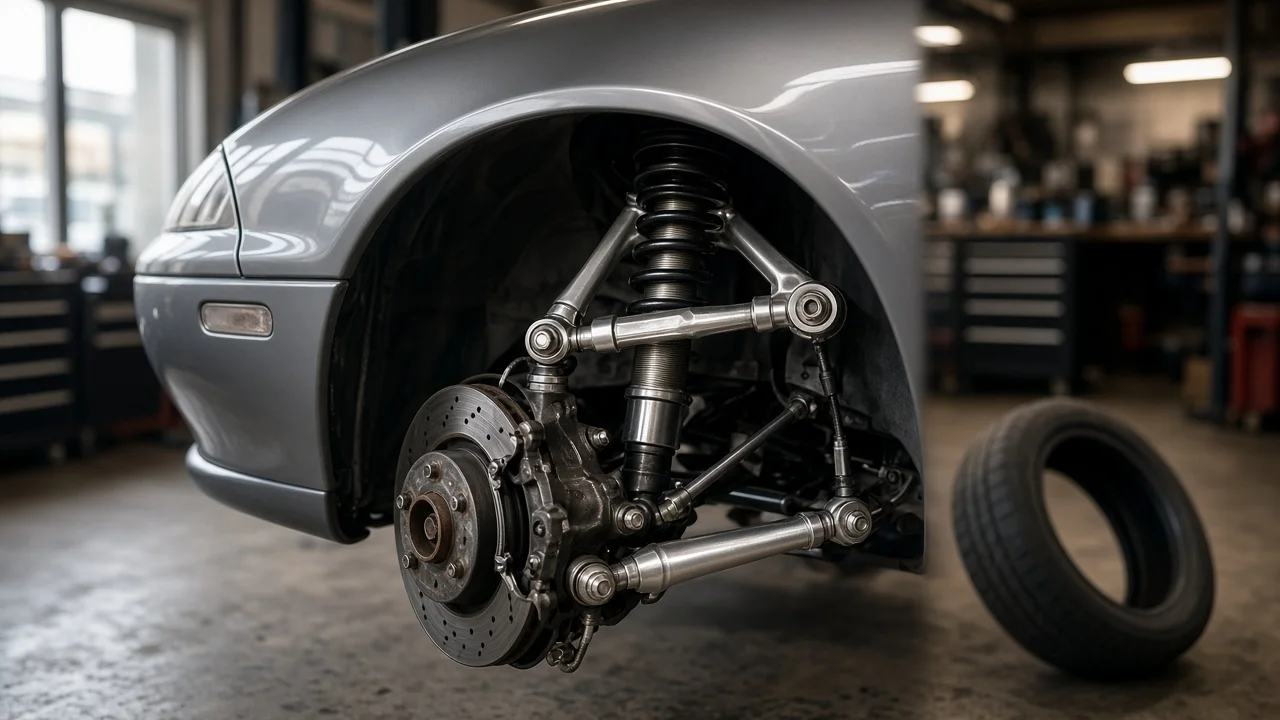
Adjustable control arms let an NA Miata owner regain alignment range that the factory eccentric bolts can no longer provide, usually after lowering or when chasing more negative camber for autocross or track days. They are not a cure for worn bushings elsewhere, loose steering or accident damage. This guide explains how to decide whether your 1990 to 1997 car needs them, what determines fitment, which design choices matter and what owning them involves.
Define the job the product must do
The NA uses double wishbones at all four corners. From the factory, front camber and caster and rear camber and toe are set with eccentric cam bolts at the lower control arm mounting points. On a car at stock ride height those cams normally give enough range for a street alignment, so adjustable arms add cost without solving a real problem. The case changes when the car has been lowered enough that the alignment shop runs out of adjustment, when your camber target for competition exceeds what the cams allow, or when corrosion or previous damage leaves a corner unable to reach the specification you want.
Be specific about how the car is used. A daily driver benefits most from quiet, long-lived pivots and minimal inspection. A dual-duty car needs a compromise between precision and comfort. A dedicated track car can tolerate more noise and maintenance in exchange for sharper response and wider adjustment. Also identify which corner is actually short of range before buying. Many kits are front upper arms, and some makers offer rear upper arms or other links, but a full set is rarely necessary if only one axle is out of reach. Include the follow-up wheel alignment and any replacement hardware in your budget from the start.
Check compatibility
Start with the model year range in the listing. The NB shares the same basic suspension layout, and some aftermarket arms are sold for both generations, which is why searches for NB Miata adjustable control arms often return the same products. Treat the seller's stated year coverage as the deciding fact rather than visual similarity, and ask the seller directly if your year is not listed. Then compare the interfaces: the ball joint connection to the knuckle or upright, bushing sleeve width and bolt diameter at the chassis mounts, and whether factory brackets for the brake hose or sensor wiring are replicated on the new arm.
Clearance is the second check. Arms intended for lowered cars may change the arm's shape or the position of the ball joint, so confirm there is room for your wheel offset, tire width, shock body and spring at full steering lock and full compression. Coilover top mounts and bump stop choices can also affect how much travel is available. Finally, inspect the existing mounting points before ordering. Older cars often have seized eccentric bolts or rusted mounting tabs, and a new arm will not fix a damaged chassis bracket. Knowing this in advance prevents a car stranded on stands waiting for parts.
Features that affect the choice
The pivot type shapes the ownership experience more than anything else. Rubber bushings isolate noise and vibration best but allow deflection under load. Polyurethane reduces deflection and lasts well, yet it can squeak and may need periodic lubrication depending on the design. Spherical bearings give the most precise location with no compliance, but they transmit more noise into the cabin, wear faster on a street car exposed to water and road grit, and need regular inspection for joint play. Choose the pivot that fits your use, not the one that sounds most aggressive.
Look next at how adjustment is made. Threaded designs with jam nuts can often be adjusted with the arm installed, which helps when fine-tuning, while some designs require removal or shims for each change. Check whether the ball joint is replaceable on its own or forces you to buy a whole arm, and whether it has a serviceable boot. Material and finish matter for corrosion resistance. Treat labels such as race proven or aircraft grade as marketing unless they come with specifics. Useful evidence includes a stated adjustment range, clear installation instructions, available replacement parts and a published fastener specification or a direction to use the factory service manual values.
Limitations and ownership costs
Installation requires proper vehicle support: lift the car at the manufacturer's recommended points and rest it on rated jack stands, never on a jack alone. Handle brake hoses and any sensor wiring carefully so they are not stretched while the arm is disconnected. Tighten every fastener to the specification supplied by the arm maker or the factory service manual. With rubber or polyurethane pivots, the inner bolts are generally tightened with the suspension loaded at normal ride height, because tightening them with the wheels hanging can preload the bushings. Set the arms to a sensible starting length, then have a full wheel alignment done immediately rather than driving on a guessed setting.
Ongoing costs include periodic inspection for joint play at ball joints and spherical bearings, checking that jam nuts remain tight, replacing torn boots and worn bearings, and paying for an alignment after any adjustment or ride height change. Adjustable arms cannot correct a worn steering rack, tired dampers, loose wheel bearings or a bent subframe, and they cannot tell you what settings to run. If a clunk, wandering or uneven tire wear appears after installation, stop and inspect the suspension before continuing to drive.
Build a practical shortlist
Compare candidates on the same points. Does the listed year range include your car? Which corner and which arm does the kit cover, and is that the one that is short of range? What pivot type does it use, and does that suit daily, dual-duty or track use? Is the adjustment range stated, and can adjustment be made on the car? Are the ball joints and pivots replaceable individually, with parts available? Does the kit include hardware and instructions with fastener values, or does it rely on reused factory bolts? What clearance has the maker stated for lowered ride heights and wider wheels, and what warranty terms apply?
Rank the remaining options by how well they match your use and the corner that needs help, not by price or bold claims. A kit that answers every compatibility question clearly is a safer purchase than one with a longer feature list and vague fitment notes. Before ordering, book an alignment with a shop experienced with adjustable arms on Miatas, and replace any seized eccentric bolts at the same time so the whole job is finished in one visit.