Choosing a Turbo Heat Shield for a BMW N54: Fitment, Features and Trade-Offs
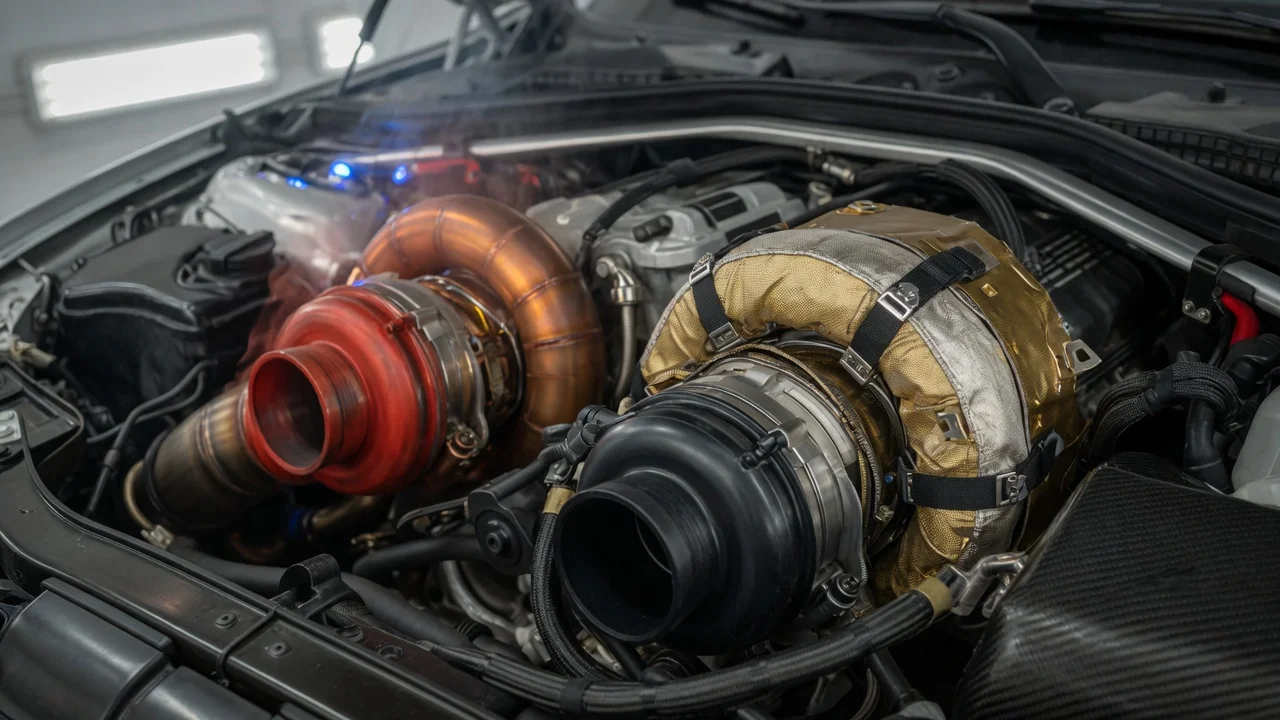
The BMW N54 packs two turbochargers along the exhaust side of a tightly packaged inline-six, so heat around the turbos reaches wiring, coolant lines, charge piping and nearby seals. A turbo heat shield or blanket can help manage that heat, but the right choice depends on the problem you are solving, the exact N54 car you own and what else has been modified. This guide covers how to narrow the options without relying on marketing claims.
Define the job the product must do
Start with the reason you are shopping. Most owners fall into one of three groups: replacing a factory shield that was damaged, lost or left off during turbo or downpipe work; reducing radiant heat in the engine bay on a tuned car; or chasing a noise or smell. The first two are clear purchasing decisions. The third needs diagnosis first, because a symptom report is not the same as a verified failure. A metallic rattle at warm idle or on tip-in is often blamed on a loose heat shield, but wastegate rattle is a widely reported N54 symptom with a similar sound. A burning smell is frequently oil from a leaking valve cover gasket or oil filter housing gasket reaching hot exhaust parts, and no shield fixes the leak itself.
Write down the symptom conditions before buying anything: cold start or warm engine, idle or under boost, over bumps or only at certain RPM. Then add the practical constraints. A daily driver on stock turbos needs something different from a track car with upgraded turbos. Budget, your comfort working in a cramped engine bay, and whether the turbos or downpipes are already coming out for other work all shape which product makes sense.
Check compatibility
Confirm the engine code, not just the model name. Several BMW models used the twin-turbo N54 during roughly the 2007 to 2013 period, including versions of the 135i, 335i, 335is, 535i, Z4 sDrive35i and the 1 Series M Coupe. Many of those nameplates switched to the single-turbo N55 around the 2010 to 2011 model years, and N55 heat shields do not interchange with N54 parts. Check the engine label or have the VIN decoded through a BMW parts catalog so you are working from manufacturer specifications rather than assumptions about a model year.
Next, match the product to your actual engine configuration. The front and rear turbos are shaped and oriented differently, so shields and blankets are usually specific to one position. Factory shields bolt to dedicated mounting points; some aftermarket downpipes omit tabs or brackets the original shield relied on. Upgraded turbos that keep the stock frame may still change housing dimensions, and larger single-turbo conversions make stock-fit parts irrelevant. Confirm clearance around oil feed and return lines, coolant lines, oxygen sensors and wiring harnesses. A shield that touches a line or sensor connector can transfer heat or vibration to exactly the part you meant to protect.
Features that affect the choice
There are three broad approaches. OEM-style stamped metal shields are rigid, reflect radiant heat away from nearby components and use the original mounting points, which makes them the lowest-risk replacement. Turbine housing blankets wrap the hot side of the turbo and keep more heat inside the housing instead of radiating it outward. Downpipe wraps and coatings address heat further along the exhaust. Blankets offer more coverage but are harder to fit around N54 plumbing, while rigid shields protect a narrower area but are easier to inspect and reinstall.
Separate useful evidence from labels. Claims that a product lowers intake air temperatures or adds power rarely state what was measured, where the sensor was placed or under what conditions, so treat them as unverified. A material temperature rating is more useful when the seller explains how it was determined. Pay attention to oil resistance: a fabric blanket can absorb oil from the gasket leaks these engines are known for, creating smoke and a fire concern, so look for a sealed or coated outer layer. Fastening matters too. Stainless hardware, springs or properly secured straps hold up better than ties that loosen with heat cycles. Some builders also question whether fully enclosing a cast turbine housing changes how it handles thermal stress; ask the supplier for guidance specific to N54 turbos.
Limitations and ownership costs
Installation is where much of the real cost sits. N54 turbos are mounted low on the exhaust side with limited access from above, so many owners fit shields or blankets only when the turbos, downpipes or related lines are already out. Doing it as a standalone job can mean paying for labor that is mostly spent gaining access. Budget for consumables as well: new gaskets for any disturbed joints, replacement nuts or studs if the originals are corroded or seized, and possibly clips or brackets that break during removal.
Plan on regular inspection rather than install-and-forget. At oil changes, look for oil saturation, fraying edges, loose fasteners and any contact with lines or wiring. Blankets in particular have a finite service life and should be replaced once contaminated or degraded. Be clear about what a heat shield cannot do: it will not fix wastegate rattle, oil leaks, boost leaks or worn turbo seals, and it has no direct link to stored diagnostic codes, so it will not clear a fault. Recording the part, installation date and condition in the car's service history makes later diagnosis much easier.
Build a practical shortlist
Use a short checklist to compare candidates. Does the listing confirm N54 fitment and specify front or rear turbo position? Does it suit your turbo and downpipe setup, including any aftermarket parts? Does it use factory mounting points or include suitable hardware? Is the material rating explained, and is the outer surface resistant to oil? Does it leave clearance for oil and coolant lines, sensors and wiring? Can you inspect it without major disassembly? Finally, what will installation cost on your car once access labor and gaskets are included?
If your car is stock, the original shield is missing or damaged and nothing else is wrong, an OEM replacement ordered by VIN is usually the simplest choice. If you run upgraded turbos or see sustained track use, a blanket or more extensive shielding may be worth considering, provided you can keep it clean and inspect it. If you started with a rattle or a smell, confirm the cause through a hands-on inspection before any heat shield goes on the list.