Mustang Adjustable Control Arms: Selecting by Generation
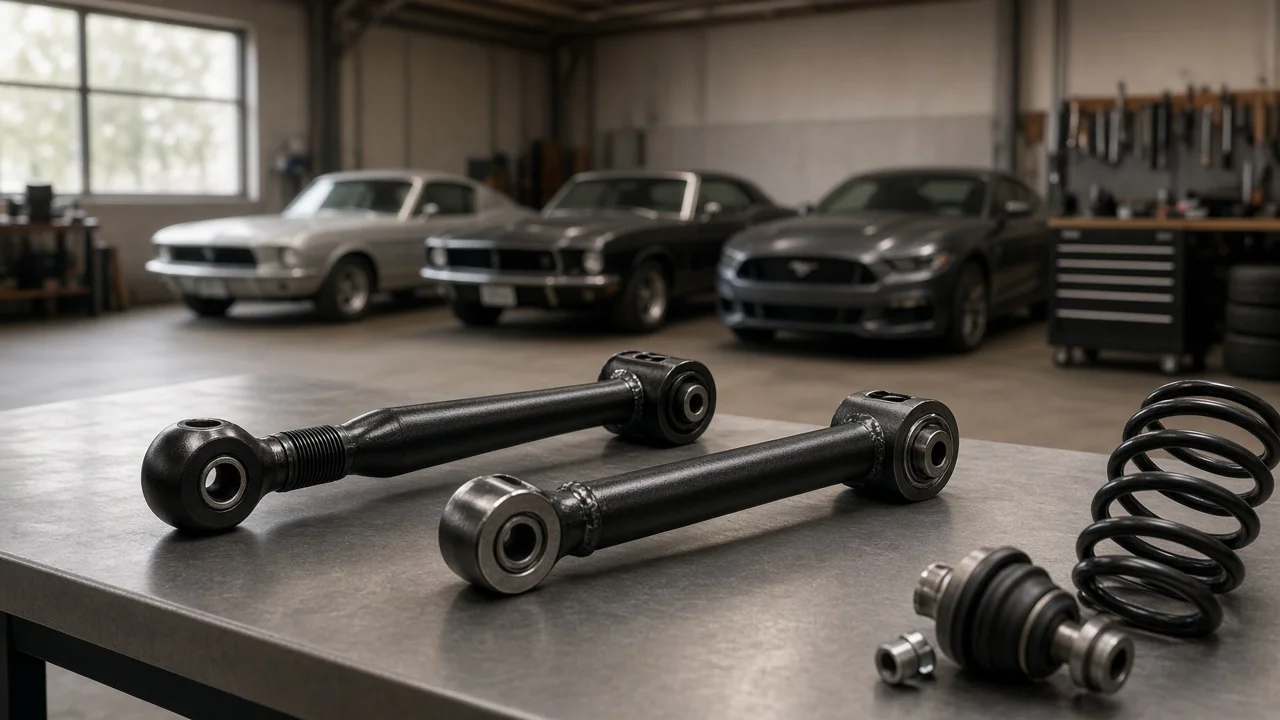
Adjustable control arms let a Mustang owner correct geometry that factory arms cannot, such as pinion angle, axle position or rear camber after a ride height change. They only help when they match your car's suspension design and solve a specific problem. This guide explains how to match arms to your Mustang's generation, how to separate useful features from marketing language, and what setup and upkeep to expect before you buy.
Define the job the product must do
Start with the reason you want adjustable arms. Common reasons include a lowered car that now has an off-center rear axle or a changed pinion angle, wheel hop during hard launches, a track car that needs rear camber or toe adjustment, and factory arms with torn or collapsed bushings. If your Mustang sits at stock ride height and the original arms are in good condition, adjustable parts may add complexity without a clear benefit. Write down how the car is actually used, whether daily commuting, weekend autocross, road course days or drag strip passes, because that decides which arms matter and which bushing type you can live with.
Next, list your practical constraints. The real cost includes a wheel alignment, possibly an angle finder for setting pinion angle, and more frequent inspections. Consider how much noise and vibration you will tolerate on the street, whether you have a level workspace and proper equipment for safe vehicle support, and whether you plan further changes such as springs or wheels that would require readjustment later.
Check compatibility by generation
Fox body (1979 to 1993) and SN95 (1994 to 2004) Mustangs with a solid rear axle use a four-link rear suspension with two upper and two lower control arms, and the rear coil springs sit on the lower arms. Adjustable upper arms are typically used to set pinion angle, while adjustable lower arms can help square the axle in the chassis. The 1999 to 2004 SVT Cobra used independent rear suspension, so solid-axle four-link arms do not apply to those cars. Confirm your exact axle type before ordering.
The S197 Mustang (2005 to 2014) uses a three-link rear with two lower control arms, a single upper third link and a Panhard bar that locates the axle side to side. An adjustable upper link changes pinion angle, and an adjustable Panhard bar is the usual way to re-center the axle after lowering. The lower arms carry the springs, as on earlier cars. At the front, S197 cars use struts with lower control arms, and front camber is often changed at the strut mount rather than at the arm, so confirm exactly what any front arm adjusts.
The S550 (2015 to 2023) and S650 (2024 onward) generations use independent rear suspension, so adjustable parts for these cars usually means rear camber arms, toe links and related links rather than a solid-axle link set. For any generation, check the listed model years, the mounting points the part attaches to, bolt sizes, whether factory hardware is reused, and clearance to the exhaust, sway bar, brake lines and wheels. When a listing covers several generations, verify the part number against your specific year and suspension layout.
Features that affect the choice
Pivot type has the biggest effect on how the car feels. Rubber bushings keep cabin noise low and allow some compliance, which suits street cars. Polyurethane bushings are firmer and reduce deflection, but they can squeak and may need periodic lubrication. Spherical rod ends and bearings give the most precise location but transmit more noise and vibration and need regular checks for joint play. Some arms combine a bushing at one end with a rod end at the other as a compromise.
The adjustment method matters during setup. Double-adjustable arms with left and right hand threads can usually be adjusted while installed, while single-adjustable designs often require disconnecting one end for each change. Look for secure jam nuts and published guidance on minimum thread engagement. Material choices such as steel or aluminum, and tubular or boxed construction, influence weight and stiffness, but labels such as race proven or extreme duty tell you little on their own. More useful evidence includes a stated adjustment range, clear installation instructions, the fastener specification for each joint, a protective finish, and whether bushings or rod ends can be replaced separately.
Limitations and ownership costs
Installation needs safe vehicle support: lift at the points listed in the owner's or service manual, set the car on rated jack stands on level ground, and never work under a car held only by a jack. On solid-axle cars the springs sit on the lower arms, so support the axle and control spring tension before removing them, and replacing one arm at a time helps keep the axle located. Rubber bushings should usually be tightened with the suspension loaded at ride height to avoid preload and binding. Use the manufacturer's or service manual torque values rather than guesses, set pinion angle using the product instructions, and schedule a wheel alignment after changing front arms or independent rear arms.
Ongoing costs include alignment visits, rechecking jam nuts and fasteners after the first few hundred miles of use, lubricating polyurethane bushings where specified, and inspecting rod ends for wear. Adjustable arms do not fix worn shocks, sagging springs or incorrect ride height, and they do not add grip by themselves. Poor settings can increase tire wear, cause handling imbalance or make wheel hop worse. If a factory arm was bent in an impact, have the chassis mounting points inspected before fitting new parts.
Build a practical shortlist
Compare candidates using the same checklist. Confirm the generation, model year and rear suspension type. Name the exact problem you are solving and the arm or link that addresses it. Choose a pivot type that suits your driving and noise tolerance. Check the stated adjustment range and whether the arm can be adjusted while installed. Note which hardware is included and whether the instructions provide fastener specifications. Finally, add up the total cost, including alignment, any needed tools and expected maintenance.
Narrow the list to two or three options that meet every requirement, then choose based on documentation quality and replaceable wear parts rather than broad ratings. If you are unsure which geometry is actually wrong, have a suspension shop measure ride height, axle position and alignment first so you buy only the arms your Mustang needs.