Muffler Repair Options: Patching, Welding, and Professional Service
What is the essential answer to my question?
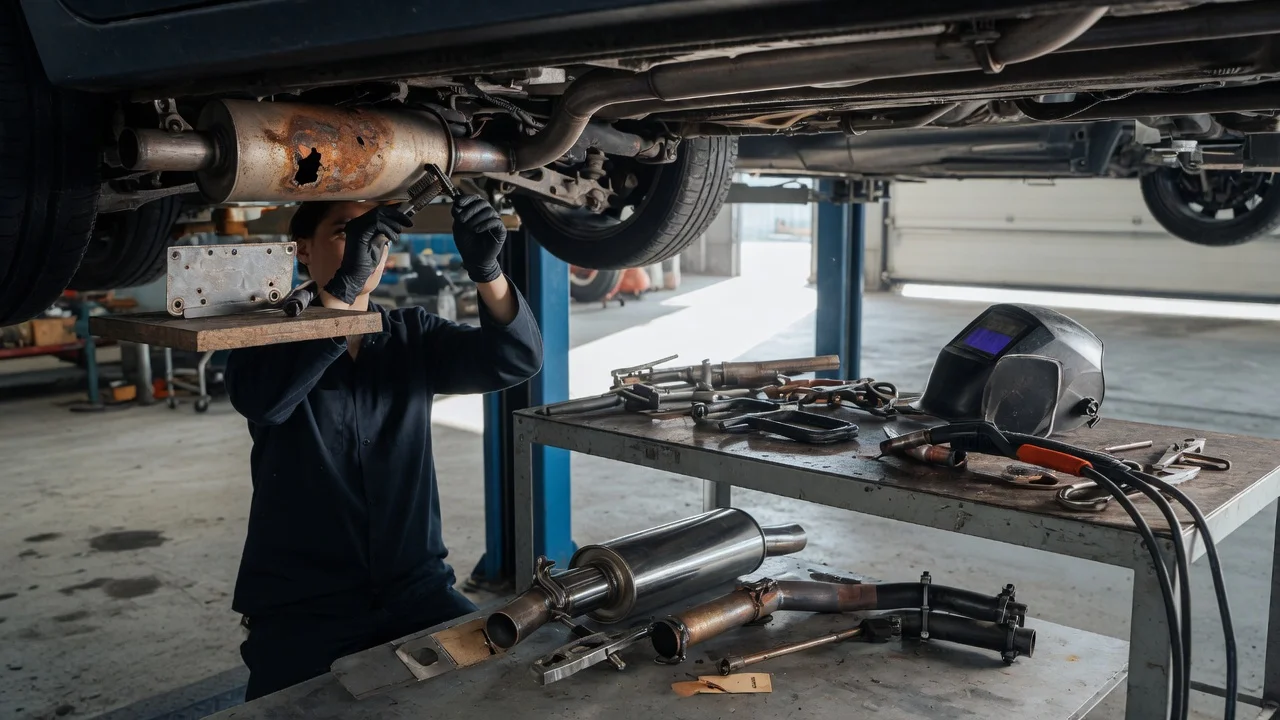
Muffler repair ranges from small external patches and welded seams to full replacement by a professional. The appropriate method depends on the size and location of the damage, the thickness of the surrounding metal, and whether the failure is limited to the muffler shell or extends into nearby exhaust pipes, flanges, or hangers. A minor pinhole or short seam split may be repairable with a temporary patch or a welded repair. Extensive rust-through, internal baffle failure, or damage next to a connection point often makes replacement more reliable than trying to restore a weakened shell.
Which option better fits my priorities?
The main repair alternatives are patching, welding, and professional service, which may combine inspection, repair, or replacement. They differ in durability, cost, required skill, and how well they handle rusted or thin metal.
Option | Best for | Typical durability | Practical limits; Patching | Small pinholes, short splits, temporary fixes | Short term; varies with product and surface preparation | Weak or rust-thinned metal may not hold a patch; Welding | Localized cracks, seams, or solid surrounding steel | Potentially longer term when the base metal is sound | Difficult on thin, heavily corroded shells; Professional service | Diagnosis, hidden damage, replacement, or poor access | Depends on repair or replacement performed | Higher upfront cost; may recommend replacement
Patching is preferable when the damage is small, the surrounding material is solid, and the goal is a low-cost repair. Surface preparation matters because exhaust deposits, rust, and moisture can prevent a patch from sealing. Patching is less suitable for a muffler with broad corrosion, because the repair may fail beside the patch as the weakened metal continues to deteriorate.
Welding is preferable when a crack or split is localized and there is enough clean, sound metal around the damage to accept a weld. It can produce a durable repair, but thin or rusted shells are difficult to weld without burn-through. A technician may still choose replacement if the surrounding area is too thin to support a reliable weld.
Professional service is the stronger choice when the noise or leak has more than one possible source, when damage is hard to reach, or when the muffler is severely corroded. A shop can inspect the entire exhaust path and identify whether the visible damage is the only problem. If replacement is needed, the new part may provide more predictable noise and leak control than repeated small repairs on an aging system.
What could explain this symptom, and what should I check next?
Loud exhaust noise, a rattle, a visible hole, or black soot around a seam can point to different problems. A hole or split in the muffler shell usually creates a louder or deeper exhaust note. A rattle may instead come from a broken internal baffle, a loose heat shield, or a failed hanger. Black soot at a joint can indicate a leak at the connection rather than damage in the muffler body.
Begin with a safe inspection of a cool exhaust system. Look for visible holes, rust-through, separated seams, or cracks. Check the pipes, flanges, gaskets, hangers, and heat shields, because a leak or noise near the muffler may originate in an adjoining part. If the metal is flaking, soft, or covered with heavy rust, patching or welding may not be reliable. A leak that is large, leaking ahead of the oxygen sensor, or accompanied by exhaust odor inside the cabin should be treated as a reason to stop driving the vehicle and have it professionally diagnosed.
A fault code is evidence to investigate rather than proof that the muffler itself is failed. Exhaust leaks can affect oxygen sensor readings and produce diagnostic codes, but the same codes can have other causes. Use a code as a starting point for a visual inspection and, where needed, professional diagnosis.