MTX Car Subwoofers
Choosing an MTX car subwoofer is a balance of output, enclosure fit, and the signal coming from the rest of the vehicle. Budget alone rarely predicts results, because a woofer that cannot breathe inside a cramped trunk or match the head unit voltage will sound weak even when power is available. Readers comparing options usually benefit from checking sensitivity, impedance, and box recommendations before focusing on wattage claims, since those factors shape how a driver behaves with typical speaker wiring and vehicle integration.
The direct answer
The most useful first step is to treat an MTX car subwoofer as one part of an audio system, not an isolated power figure. A unit marketed for high wattage still needs a clean audio source, sufficient enclosure volume, and an amplifier that remains stable at the load the voice coils present. If the box is too small or the signal clips, even a robust cone and surround can sound muddy or overheat during normal listening.
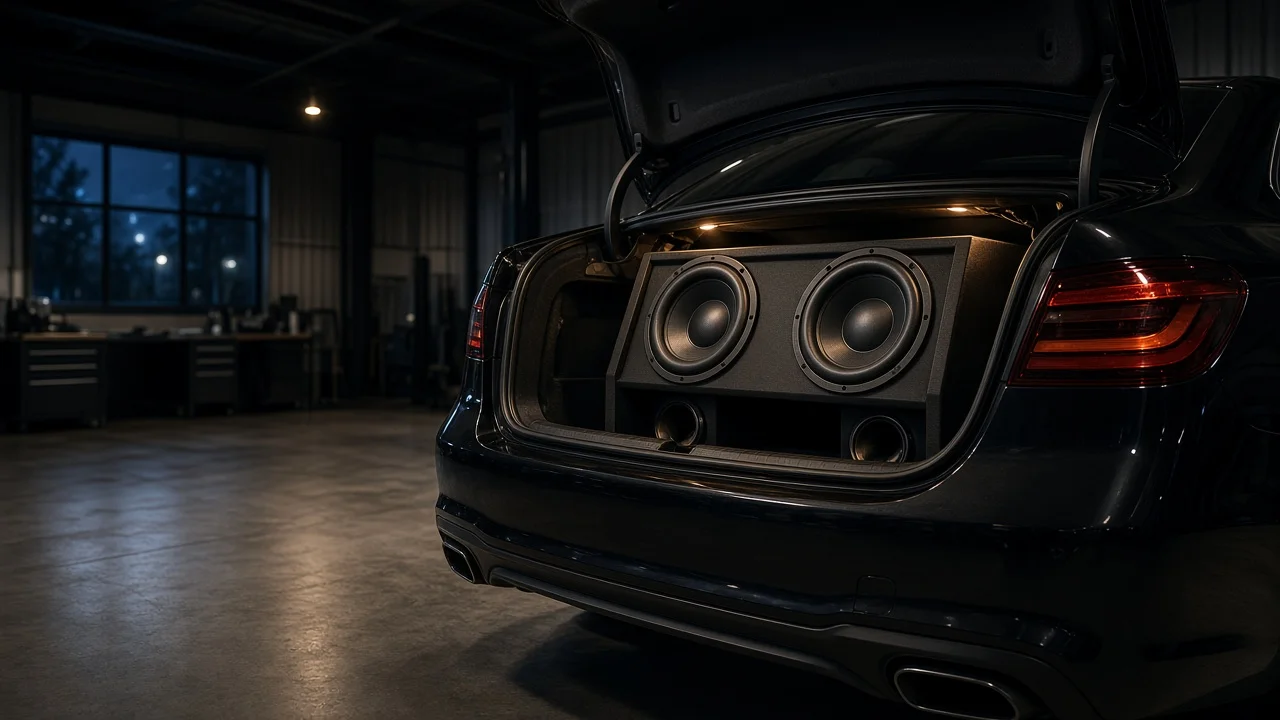
Practical selection should start with where the enclosure will live and how much airspace the driver requires. A sealed box tends to produce tighter, more controlled low end, while a ported or vented alignment can add output near the tuning frequency. Since different MTX models suit different cabinet types, confirming the recommended alignment prevents a purchase that fights the physical shape of the trunk or hatch area from the start.