MPGe Explained: Fuel Economy for Electric, Hydrogen and CNG Cars
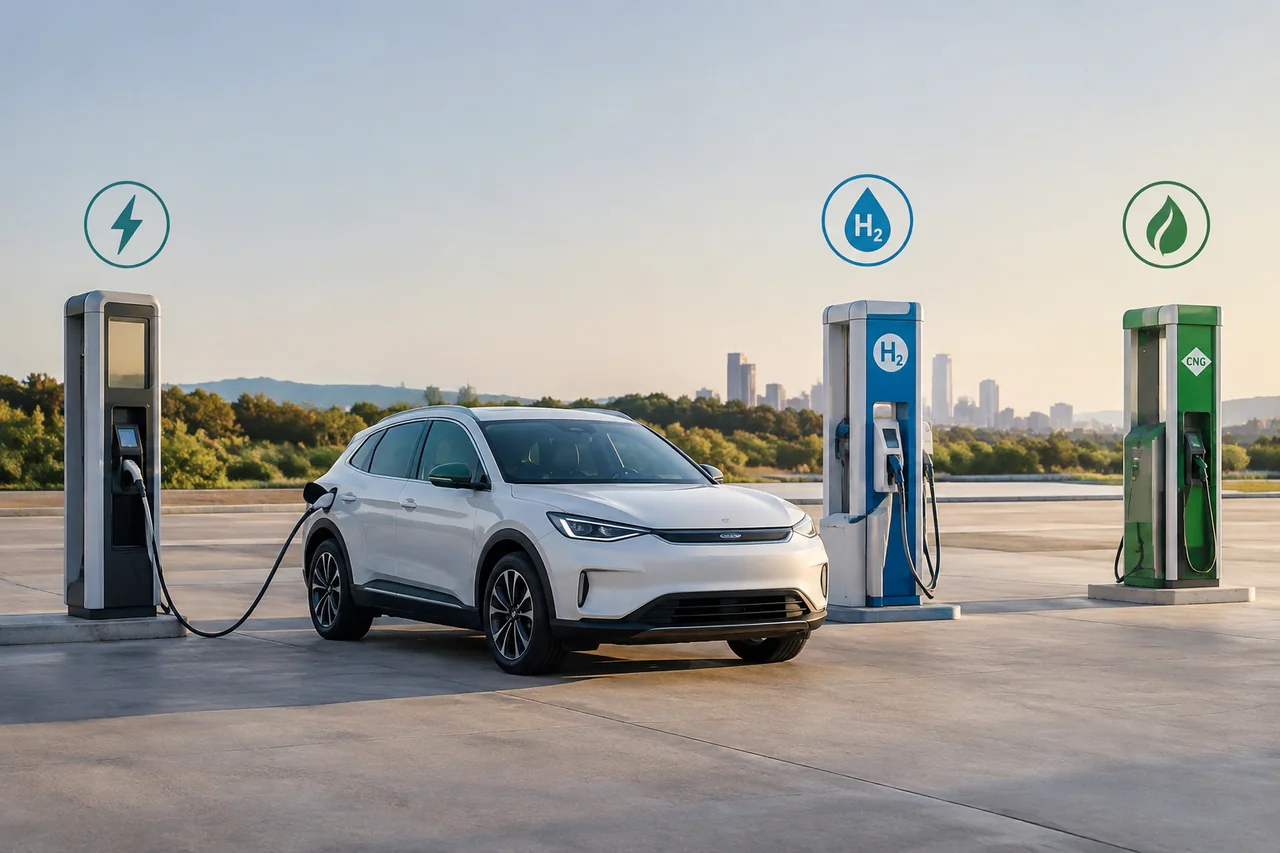
Comparing fuel economy across advanced powertrains means understanding MPGe, or miles per gallon equivalent. A hydrogen car fuel economy figure, an electric car fuel economy estimate, and a CNG car fuel economy rating all use the same energy-based yardstick as a gasoline vehicle, but they don't mean the car burns gasoline. Instead, MPGe translates electricity, hydrogen, or compressed natural gas into the energy content of one gallon of gasoline, helping you evaluate efficiency and anticipate everyday consumption.
What MPGe Measures and How the Energy Equivalent Works
MPGe expresses how far a vehicle can travel using an amount of energy equal to one gallon of gasoline. For a hydrogen fuel cell car, the onboard hydrogen is not burned like gasoline; it is converted into electricity to power the motor. The rating is a standardized way to compare different fuels that contain different amounts of energy per physical unit, so a hydrogen car fuel economy number can sit next to a gasoline car's mpg on a window sticker without misleading buyers.
The EPA uses a gasoline gallon equivalent of about 33.7 kilowatt-hours of energy. That value reflects the lower heating value of a gallon of gasoline, not the energy recovered from it in a particular engine. MPGe therefore measures energy use, not driving range, fuel price, or total environmental impact. A vehicle with a high MPGe may still have a modest range if its fuel storage is small, and a cheap fuel can make a low-MPGe vehicle inexpensive to operate. The label ratings also come from standardized lab tests with adjustment factors, so they represent typical expected performance rather than a guaranteed result for every trip.
Reading an Electric Car’s EPA Fuel Economy Label
An electric car's EPA label presents two energy-efficiency numbers. MPGe tells you how many miles the vehicle can go on the energy equivalent of a gallon of gasoline, while kilowatt-hours per 100 miles tells you how much grid electricity is drawn from the wall to cover that distance. The latter is more directly tied to your utility bill, but the MPGe scale allows a direct comparison with gasoline and other alternative fuels. A lower kWh/100 miles value means less electricity used per mile and a higher MPGe.
The two measures are mathematically connected: MPGe equals 3,370 divided by kWh per 100 miles. Because the label rounds to whole numbers, doing the arithmetic on sticker values gives an approximate result. The EPA consumption figure includes charging losses, meaning the energy that goes into the battery is less than what is metered at the outlet. Your dashboard may report only battery-to-wheels consumption, so numbers can differ from the official rating. Combined MPGe is weighted 55% city and 45% highway, and the label's range estimate is separate from efficiency; a heavier battery can extend range while reducing MPGe.
Understanding Hydrogen Fuel Cell Fuel Economy
A hydrogen fuel cell vehicle uses compressed hydrogen stored onboard and a fuel cell stack that combines hydrogen with oxygen to generate electricity. There is no combustion and no tailpipe carbon dioxide, only water vapor. The EPA assigns an MPGe figure by measuring how much hydrogen is consumed to drive the same test cycles as any other vehicle. That hydrogen car fuel economy rating puts the fuel cell car on the same comparative scale as battery-electric and gasoline models.
Hydrogen is dispensed by mass in kilograms. This makes units like miles per kilogram or kilograms per 100 miles more natural for tracking consumption than MPGe. One kilogram of hydrogen contains roughly the same energy as one gallon of gasoline, but a kilogram is a unit of mass while a gallon is a volume, so they are not interchangeable. Range depends on both usable hydrogen capacity and the rate of consumption, but automakers design storage pressure and tank size around packaging, not efficiency. Without official figures for a given model, general principles are the safe guide.
Understanding CNG Fuel Economy and Gallon Equivalents
Compressed natural gas is stored at high pressure in a heavy tank, but its energy content per physical cubic foot is lower than gasoline per gallon. Fuel economy for CNG cars is often shown in miles per gasoline gallon equivalent, or GGE. A GGE is the amount of natural gas that contains the same energy as one gallon of gasoline, providing a fair basis for comparison on an EPA fuel economy label. This allows a CNG car's efficiency to be read alongside gasoline or electric ratings.
Miles per GGE measures distance per standardized energy quantity, not per physical gallon of compressed gas. Because a tank's volume, pressure, and temperature affect how much natural gas it holds, the same tank can hold different amounts of energy on different days. Before interpreting a number, you must confirm the units on the label or dispenser. Tank size alone says nothing about fuel economy; a larger tank may simply provide more range at the same efficiency. Usable fuel quantity is what matters for real-world distance.
Using Fuel Economy Figures to Estimate Everyday Consumption
Real-world consumption deviates from the label because temperature, speed, climate control, load, and trip length all influence energy demand. Cold weather reduces battery efficiency, high speed increases aerodynamic drag, and short trips prevent the vehicle from reaching an efficient operating state. The effects vary by powertrain and driving pattern, so fixed penalty rules are not reliable. Instead, treat the EPA figure as a baseline and track your own use over time for a personal estimate.
Record the distance driven and the energy added across several charging or fueling sessions, using consistent units and filling to a consistent boundary. For electric cars, multiply kWh per 100 miles by your electricity rate to estimate energy cost per mile; for hydrogen, use kilograms per 100 miles and the price per kilogram. Add any charging session fees or subscription costs. MPGe does not account for upstream energy production, so it does not provide a complete emissions picture. Only compare ratings for the same model year and configuration, and label your own calculated figures as owner-derived, not EPA ratings.