Motorcycle Turbochargers: Harley, Hayabusa, Sportbike and Dirt Bike Kits
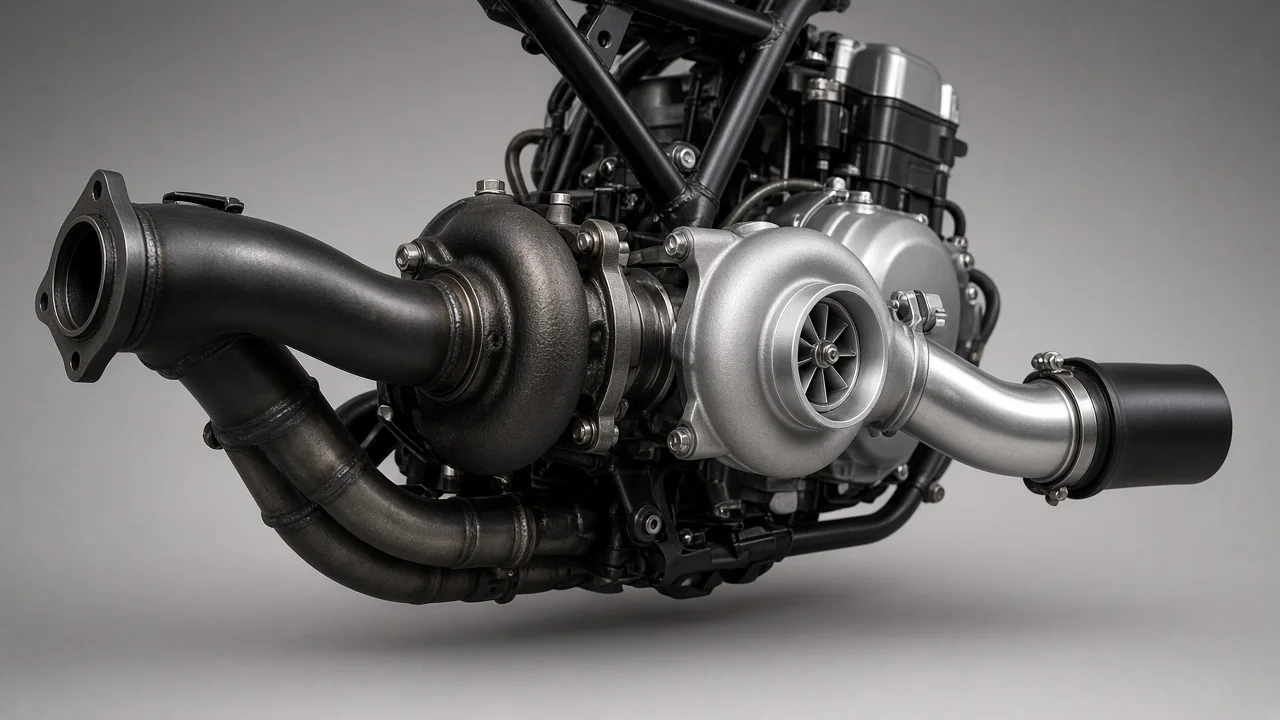
A motorcycle turbocharger uses exhaust energy to compress intake air, changing how a Harley-Davidson, Hayabusa, Honda, Kawasaki, sportbike, or dirt bike delivers power. Kit hardware, packaging, fuel delivery, and engine management matter as much as the turbo itself. Planning starts with the exact machine, intended use, boost pressure, heat, and calibration.
How a Turbocharger Works on a Motorcycle
A turbocharger on a motorcycle is forced induction: exhaust gas spins a turbine that drives a compressor, raising intake-air density so the engine can burn more fuel under load. Boost pressure is that extra intake pressure; a wastegate limits it by bypassing exhaust around the turbine. Charge piping carries the compressed air toward the intake, and intake temperature rises as air is compressed, so heat belongs in the same conversation as airflow.
More air is useless unless fuel delivery and ignition timing are coordinated. Engine management must match fuel and spark to load, engine speed, and intake temperature; a horsepower claim without that work is not engineering. Boost response depends on turbine size, exhaust energy, wastegate setting, and plumbing. On a motorcycle the hardware also faces rider heat, limited ground clearance, and tight intake and exhaust space, so packaging shapes how a turbocharger for motorcycles behaves.
What a Motorcycle Turbo Kit Needs to Include
A motorcycle turbocharger kit is more than the turbocharger. A complete system typically includes an exhaust manifold, charge piping, wastegate or other boost control, oil supply and return for lubrication, and engine-management support so fuel and ignition can follow boost. Heat shielding belongs with that list because the turbine sits close to the rider, plastics, and wiring. A product labeled a kit may still omit injectors, a pump, fabrication, or professional calibration.
Fitment must be checked against the exact model, year, engine configuration, and existing modifications, because turbocharger kits for motorcycles are rarely universal. Some offerings are model-specific with a documented parts list, installation support, and intended-use notes; others are custom and still need fabrication and replacement-part planning. Total project cost includes the turbocharger kit, fabrication, dyno tuning, testing, heat protection, fuel-system work, and ongoing maintenance of oil lines, clamps, and calibration.
Harley-Davidson and Sportster Turbo Kit Fitment
A Harley turbocharger search is not enough to choose hardware. Harley-Davidson engines, chassis, and model years differ in exhaust routing, foot controls, and fuel delivery, so a turbocharger for Harley-Davidson use must be confirmed for that family and year. Sportster turbocharger interest needs the same check: confirm the exact platform and carbureted or injected fuel delivery before treating any Harley turbocharger kit as suitable. Exhaust path, foot-control clearance, rider heat shielding, and service access decide whether a kit can live on that motorcycle.
A qualified builder evaluates engine condition, fueling, calibration, and drivetrain demands before recommending a turbocharger kit for Harley Davidson motorcycles. A tired bottom end, weak clutch, or unsupported ignition map can turn boost into a reliability problem. Turbocharger kits for Harley Davidson machines should be treated as options only when the manufacturer documents fitment and lists included components. Without that paperwork, a turbocharger for Harley-Davidson stays in planning rather than a named purchase.
Planning a Hayabusa Turbo System
A Hayabusa turbocharger project starts with identification, not a catalog page. Model year, generation, and existing engine or electronics modifications change manifold fit, sensor strategy, and whether a motorcycle turbocharger kit can bolt on or must be engineered. Stage labels do not standardize contents, engine requirements, or output. Two similarly named kits can differ in turbo size, fuel hardware, wastegate arrangement, and engine-management support, so the parts list and intended use matter more than the marketing name.
Intended use shapes power delivery, thermal management, fueling, and drivetrain assessment. Street, track, and drag use ask different things of the clutch, gearbox, and cooling. Engine health testing belongs in the assessment because a turbocharger for motorcycle use raises cylinder pressure and heat; compression or leak-down results and a documented professional calibration plan are part of deciding whether to proceed. Universal safe-boost figures and unverified generation-wide compatibility claims are not a substitute for that Hayabusa-specific work.
Honda and Kawasaki Street-Bike Turbo Applications
Honda motorcycle turbocharger and Kawasaki turbocharger searches describe a brand, not a fitment. Useful guidance needs the exact street-bike model, year, and engine identification, including whether fuel injection and a particular engine-management system are already in place. From there, establish whether a documented model-specific kit exists or whether the job is professional custom engineering of manifold, charge piping, oil supply and return, and calibration. Brand-wide kit availability should not be assumed from a few sportbike examples.
Fairing clearance, exhaust routing, lubrication, and access to compatible fuel and ignition control decide whether a turbocharger kit for motorcycle use is practical on that Honda or Kawasaki. Factory forced-induction history does not make a retrofit compatible; any example must be checked for its actual induction type. Named applications need substantiation from the kit maker or builder. Without that, a bike turbocharger conversation stays at engineering scope, not a brand-wide shopping list.
Dirt Bike Turbo Kits and Off-Road Operating Demands
A dirt bike turbocharger kit discussion starts with the exact machine, engine type, fueling system, and intended riding conditions. Trail, motocross, desert, and dual-sport use expose a turbocharger moto installation to different dust, mud, water, impact, and heat loads. Limited packaging space makes oil supply and return, charge piping, and heat shielding harder than on many street bikes. A broadly advertised small-engine kit does not establish fitment for a particular dirt bike.
Off-road, throttle response, traction, and heat management matter as much as peak boost. Low-speed technical riding can leave little exhaust energy for the turbine, while sudden throttle in loose dirt can overwhelm grip. Verified filtration and protection of hot rotating parts are planning items because dust and water find unprotected paths. Professional calibration must still match fuel delivery and ignition timing to how the bike is ridden, which is why the project is vehicle-specific work.
Tuning, Reliability and Signs That Need Professional Testing
Professional fuel, ignition, and boost calibration must account for engine condition, fuel requirements, intake temperature, and intended operation. Dyno tuning observes those variables under controlled load so engine-management changes follow measured behavior. New smoke, visible leaks, unusual noises, warning lights, or an abrupt change in power delivery are reasons to inspect; they do not prove the turbocharger failed. A fault code is evidence of a circuit or condition, not automatic proof a part has failed.
Stop riding and arrange professional inspection if oil-pressure warnings appear, the engine severely overheats, fuel is leaking, or sudden mechanical noise develops. Diagnosis uses controlled dyno testing, fuel-pressure checks, engine-health tests, and logged data to sort fueling, ignition, lubrication, or mechanical trouble. Inspection of clamps, oil lines, heat shielding, and charge piping is part of living with a turbocharger on a motorcycle. Warranty, insurance disclosure, and road-use or emissions rules may change with the conversion; those questions belong with the insurer, kit maker, and jurisdiction.