Motorcraft Glow Plug Relay Selection: Fitment, Features and Real Limits
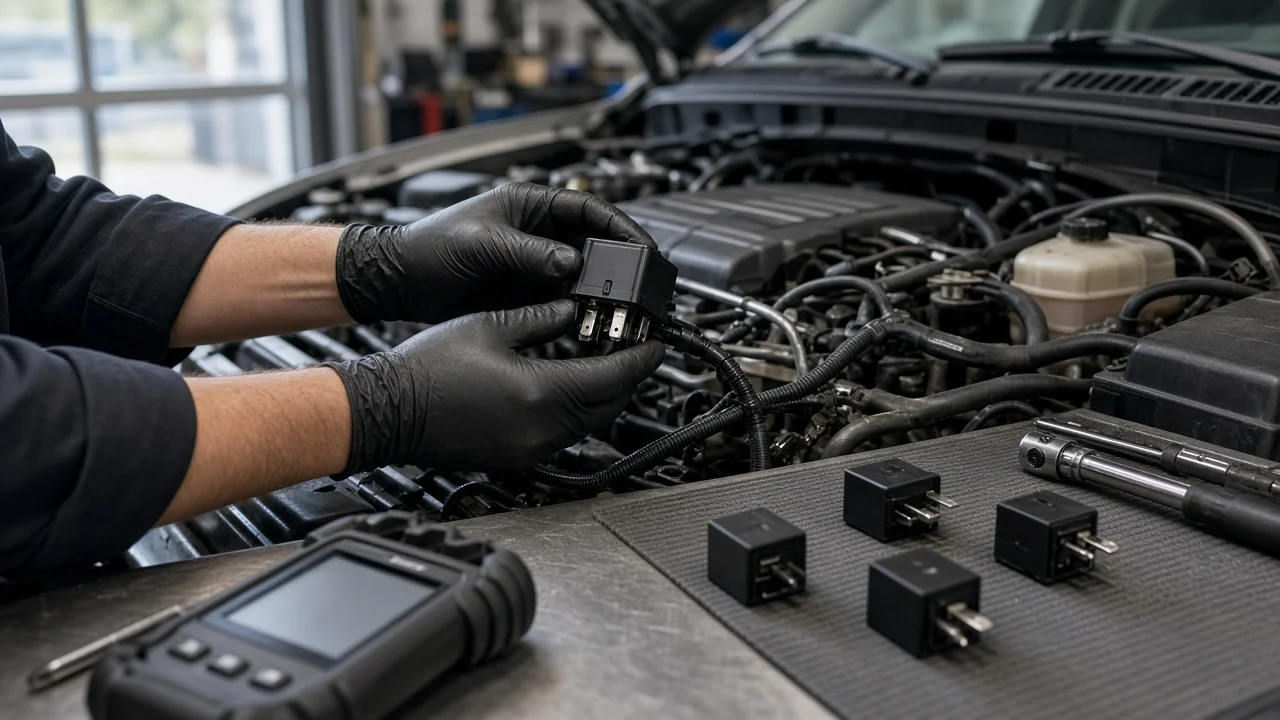
A glow plug relay is a small part with a heavy job: it switches high current to the glow plugs so a cold diesel can start cleanly. Choosing a Motorcraft glow plug relay comes down to three things. First, confirm your truck actually uses a relay. Second, match the part to your exact engine. Third, make sure the relay is really the fault before you spend money. This guide walks through that decision from a fuel-system mechanic's point of view.
Define the job the product must do
On Ford diesels that use one, the glow plug relay is a heavy-duty switch commanded by the engine computer. It does not heat anything itself. It connects battery power to the glow plug circuit for a limited time, based on temperature inputs, then opens again. When a relay fails open, the plugs stay cold. Expect long cranking, white smoke and rough running until the engine warms, mostly in cold weather. When it sticks closed, the plugs stay powered. That can drain the batteries and shorten glow plug life.
Before shopping, be clear about how the truck is used. A work truck that cold-starts outdoors every winter morning depends on the glow system far more than a garage-kept truck in a mild climate or one that is routinely plugged into a block heater. In milder conditions a failing relay can go unnoticed for months and then show up on the first hard freeze. Your climate, how much downtime you can accept and whether you do the work yourself all shape how quickly you need the part and where you buy it.
Rule out fuel-side causes of hard starting
Plenty of cold-start complaints blamed on the glow system are really fuel problems. Common examples are a restricted fuel filter, a weak fuel pump, low fuel pressure, air entering the supply side or a worn injector. Check the glow system electrically: confirm the relay clicks on key-on with a cold engine, verify voltage reaches the glow plug feed, and test the plugs themselves. On the fuel side, measure fuel pressure using the test port and procedure in the service information, replace an overdue fuel filter, and do a visual leak check along the supply lines for wetness or air intrusion.
Fuel systems, and on HEUI engines the high-pressure oil system, can hold dangerous pressure. Do not loosen lines on a running or recently run engine to look for flow, and do not improvise depressurization. Fuel trim figures you might watch on a gasoline engine are not a useful clue here, because diesel diagnosis leans on pressure readings, injector data and glow circuit tests. Winter fuel treatments can help prevent gelling, but no additive repairs a failed relay or a worn injector.
Check compatibility
Engine configuration decides everything here. Ford's 7.3L Power Stroke and the older IDI diesels use a separate glow plug relay. The later 6.0L, 6.4L and 6.7L Power Stroke engines use a glow plug control module instead. That is a different part with its own diagnostics, and a relay cannot substitute for it. If your truck has a module, a relay listing is the wrong product no matter how the price looks.
Once you know a relay is correct, match it to your vehicle with a VIN-based parts lookup or the part number marked on the existing unit. Model-year changes within one engine family can alter the part, so do not rely on engine size alone. Compare the connector and control terminals, the large power stud layout, and the mounting bracket or fastener points. Also check whether the replacement includes the hardware and insulating boots you will need. A relay that only roughly matches can leave a stressed cable or an exposed live terminal.
Features that affect the choice
Motorcraft is Ford's own parts brand, so a genuine Motorcraft relay is made to the Ford specification for its listed application. The practical benefit is predictable fit and connector match, plus behavior the factory control strategy expects. Aftermarket relays vary widely. Some carry labels such as heavy duty or upgraded, but a label proves nothing on its own. Look instead for a clearly stated application, a published current rating where the maker provides one, and warranty terms in writing.
Useful evidence also includes intact branded packaging and a part number that cross-references correctly to your VIN. Buy from a seller you can hold accountable for returns, because branded parts from unknown sources can be counterfeit. Whatever relay you choose, it must work with the factory control signal and the heavy factory wiring. Do not count on a different internal design or a higher price to fix a wiring or plug fault elsewhere in the circuit.
Limitations and ownership costs
Installation is usually simple, but the main feed to the relay is live at all times. Disconnect the batteries before touching the large terminals, and on dual-battery trucks that means both. Clean any corroded cable ends, tighten the nuts to the specified torque and refit the insulating boots so a dropped tool cannot short the stud to ground. Weak batteries also mimic glow system trouble by slowing cranking, so their condition is part of the real cost of a reliable cold start.
A new relay cannot fix failed glow plugs, a damaged harness under the valve covers on the 7.3L, loose connections or fuel delivery problems. On the 7.3L, the wait-to-start lamp is timed separately from the relay's actual on-time. The lamp going out does not prove the plugs were heated. After installation, confirm with a meter or test light that power reaches the plugs on a cold key-on and then cuts off. A replacement that sticks closed can damage new plugs and drain the batteries.
Build a practical shortlist
Run each candidate through the same short checklist: • Your engine uses a relay rather than a control module. • The part number matches your VIN or your original unit. • The connector, studs and mounting are identical. • Packaging and seller are verifiable. • Warranty and return terms are stated. Any candidate that fails one of these should drop off the list, whatever its price or marketing claims.
Before ordering, make sure the plugs and harness have tested good. Otherwise the relay may be only part of the repair, and combining the jobs can save labor. Weigh the price difference between a genuine Motorcraft part and an aftermarket alternative against the cost of doing the job twice, especially if your truck must start reliably every cold morning. With fitment confirmed and fuel-side faults ruled out, the right relay is usually the one that exactly matches your application and comes with clear support.